


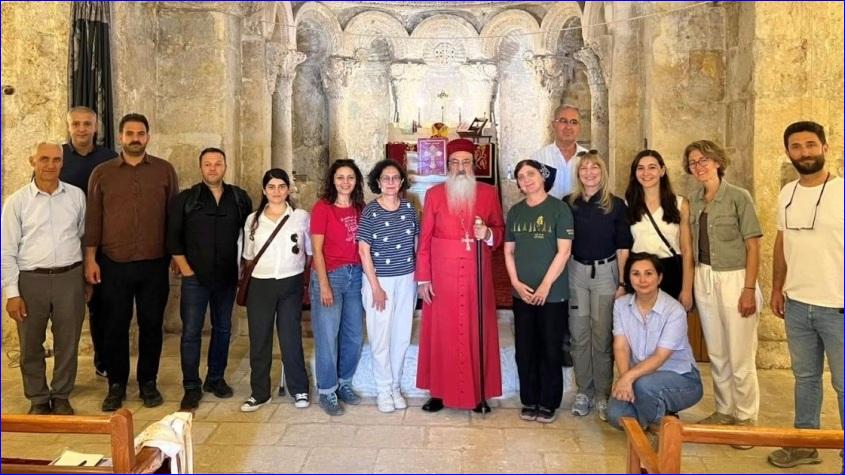
The field assessment focused on religious sites included in Turkey's UNESCO Tentative List under the nomination Late Antique and Medieval Churches and Monasteries of Medyad and Surrounding Area (Tur ?Abdin). Submitted in 2021, the nomination recognizes the region as a distinctive cultural landscape containing historic Assyrian Orthodox churches and monasteries dating from late antiquity and the medieval period.
Related: The Case of the St. Gabriel Assyrian Monastery in Midyat, Turkey
The UNESCO delegation visited nine sites during its field assessment:
- Mor Gabriel Monastery
- Deyrulzafaran Monastery
- Meryem Ana (Yoldath Aloho) Monastery in Hah
- Mor Yakup Monastery in Saleh
- Mor Loozor Monastery in Hapses
- Mor Abay Monastery in Killit
- Mor Sobo Church in Hah
- Mor Izozoel Church in Kfarze
- Mor Kuryakos Church in Urdnus
The sites form part of a wider heritage landscape extending across Tur Abdin, a limestone plateau in southeastern Turkey historically associated with Assyrian Christian religious and cultural life. UNESCO describes the broader region as containing numerous monasteries and churches, with architectural remains reflecting centuries of Christian religious practice and interaction with the surrounding landscape.
Among the sites inspected was Mor Gabriel Monastery, whose origins are traditionally traced to the late fourth century, while many of its surviving structures date to the sixth century. UNESCO identifies its sixth-century mosaics and architectural features as significant examples of Byzantine-era heritage east of Constantinople.
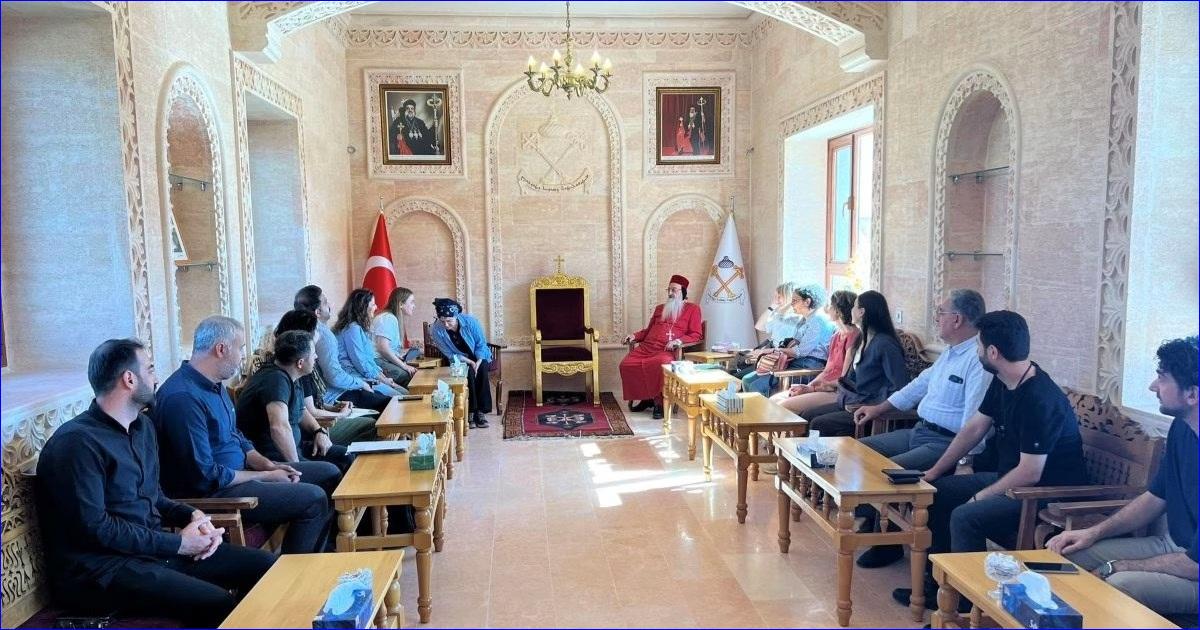
Deyrulzafaran Monastery, also known as Saffron Monastery, another major site included in the nomination, served as the seat of the Assyrian Orthodox Patriarchate from 1293 until 1932. Its surviving structures include a sixth-century church and burial chamber, making it one of the region's important centers of Assyrian religious heritage.
The other sites illustrate the diversity of Tur Abdin's ecclesiastical architecture. UNESCO documentation highlights the sixth-century origins of Mor Yakup Monastery in Saleh, the distinctive eighth-century stylite tower at Mor Loozor, and the historical significance of Mor Abay, which contains inscriptions dating to the 12th century. Mor Sobo Church in Hah is described as an early and influential example of the region's hall-type churches.
The field assessment comes as the UNESCO Tentative List continues to provide a framework for evaluating the potential World Heritage significance of Tur Abdin. Inclusion on the Tentative List does not constitute inscription on the UNESCO World Heritage List. A site must undergo a separate nomination and evaluation process before a final decision on World Heritage status is made.
UNESCO's approach to the Tur Abdin nomination encompasses not only individual monuments but also the relationship between churches, monasteries, villages, agricultural landscapes, and longstanding religious traditions. The organization identifies the continued use of Assyrian in liturgical life as one of the elements connecting the region's architectural heritage with its living cultural traditions.
For the Assyrian community, the sites represent more than isolated monuments. Together, they form a historical landscape in which architecture, worship, language, and collective memory have remained intertwined across centuries.
or register to post a comment.