


The dispute comes as the Iraqi government continues to encourage Christians living abroad to return to their ancestral homeland, while Church leaders maintain that protecting Church property and resolving long-standing land disputes are essential to restoring confidence in those appeals.
Related: Kurdish Confiscation of Assyrian Lands in North Iraq
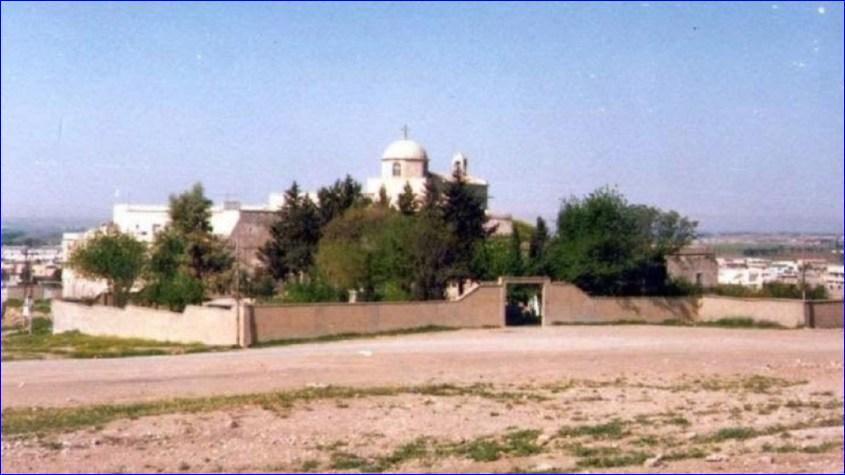
According to the Antonian Order of Saint Ormizda of the Chaldeans (OAOC), as reported by the Chaldean, Assyrian, and Syriac Platform, the monastery has lost approximately 1,400 dunams of land over the past several decades. More recently, an additional 60 dunams were included in expropriation plans on the grounds that they would be used for a residential complex intended for Christian families returning to Mosul.
The OAOC stressed that it does not oppose housing projects designed to support the return of Christians. However, it objected to any development at the expense of Church property and the monastery's endowment lands, arguing that the area designated for the project forms part of the monastery's historic ecclesiastical endowment.
Journalist Leon Barkho, writing in Al-Zaman, quoted Fr. Dr. Samer Soreshow, Superior General of the head of the OAOC, as saying that the Order fully supports initiatives encouraging Christians to return to Mosul. However, he emphasized that such projects should not be carried out on Church-owned land, adding that the Order would be willing to allocate land for housing if the properties it had previously lost were first restored.
Fr. Soreshow added that the OAOC's concerns extend beyond the loss of agricultural land. He said the proposed project would also incorporate parts of the monastery's historic cemetery, describing the move as a violation of the sanctity of the religious and historical site. He called on local authorities to halt the encroachments and preserve the monastery's archaeological and spiritual character.
The OAOC further stated that it possesses official documents and endowment deeds proving its ownership of the disputed land, emphasizing that protecting these properties is an essential part of preserving Iraq's Christian religious and historical heritage.
Church leaders view the resolution of disputes involving Christian endowments and Church property as a key test of the Iraqi government's commitment to encouraging Christians to return and resettle in their ancestral areas after years of displacement and emigration.
Officials in Nineveh Province have said they remain committed to supporting the return of Christian families and protecting places of worship and religious endowments. Meanwhile, the Diwan of Christian, Yezidi, and Mandaean Endowments continues to pursue cases involving endowment properties through legal and administrative channels.
The dispute surrounding Mar Girgis Monastery has also highlighted the broader challenges facing the property rights of the Assyrian people in Iraq, particularly those involving Christian endowments. Clergy, activists, and political leaders argue that resolving these long-standing disputes is one of the most important steps toward ensuring the long-term survival of Iraq's Christian communities and rebuilding confidence among those considering remaining in, or returning to, their ancestral homeland. They continue to call for stronger legal protections for Christian property rights and the preservation of Iraq's rich Christian religious and cultural heritage.
or register to post a comment.