


 Antonio Graceffo)
Aboud, dressed neatly and with perfectly coiffed hair, looks slim and strong, much younger than his 53 years. He smiles good-naturedly as a customer haggles with him over prices.
"You must be crazy!" the woman exclaims.
Related: Timeline of ISIS in Iraq
Related: Attacks on Assyrians in Syria By ISIS and Other Muslim Groups
Aboud laughs in resignation. "If you don't like, you can pay 800."
The woman pauses, tosses 250 dinars on the counter and storms out with the vegetables. Aboud watches her go, laughing and shrugging his shoulders.
As a Catholic in the Middle East, Aboud is accustomed to confronting life's challenges, and it will take more than a pushy customer to ruffle him. Aboud fled from religious persecution just over the border in Syria here to Erbil.
"Syria is dangerous for Christians. It is dangerous for all people who don't agree with al-Julani, but especially Christians," he says. "The people who follow him are dangerous."
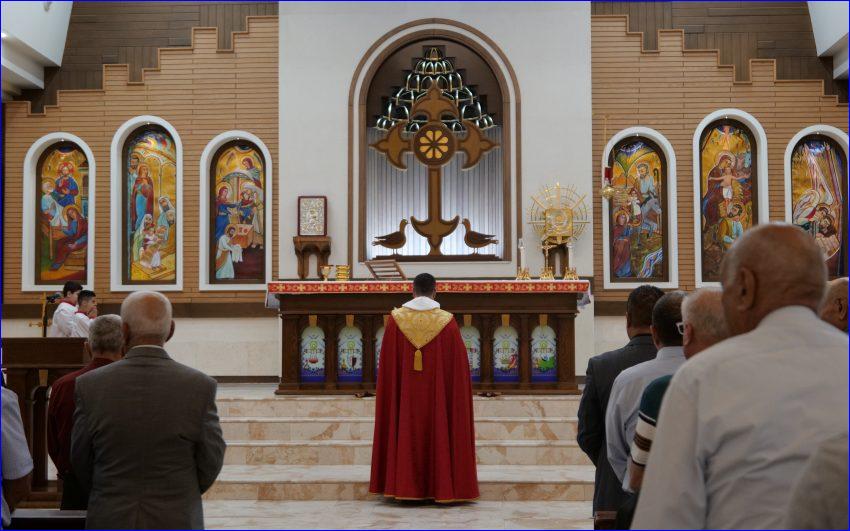
Aboud's shop is in Ankawa, the Christian neighborhood of Erbil, the capital of Iraqi Kurdistan. In a land where Christians can trace their heritage and faith back nearly two millenia, Erbil is one of the few remaining refuges for Christians, who've been hunted for decades by Al-Qaeda and ISIS. Now with regime change in Syria, Christians wonder whether it's better to stay in their ancestral lands or to leave in search of a safer future.
AFTER YEARS OF CIVIL WAR AND SHIFTING ALLIANCES, Syria is now under the control of Ahmed al-Sharaa, better known as Abu Mohammed al-Julani--the former al-Qaeda affiliate leader who seized power by force suddenly in December 2024. His ascent marks a new and troubling phase in Syria's turmoil and threatens to once again destabilize neighboring regions like Kurdistan and Iraq.
Although Al-Julani claims to have abandoned his former terroristic ways, many are skeptical. His forces, drawn from a patchwork of Islamist militias with roots in both al-Qaeda and ISIS, have consolidated control through fear and violence.
In July, horrific videos surfaced from Suweida, southern Syria: A long line of corpses on a blood-soaked sidewalk, a blood-covered baby lying lifeless in the back of a pickup truck, a doctor in blue scrubs sitting helplessly among the dead. Syria's new government claimed ignorance of the massacre and promised to investigate what it called renegades, but others said the militants involved had government ties. Most of the victims were members of the nation's Muslim-minority Alawite sect, but some Christians were also killed. What is certain is that Syria's leadership has not convinced its religious minorities it will protect them.
Meanwhile, ISIS is also resurging, with attacks through this past year underscoring growing danger from that direction. On Dec. 13, two U.S. soldiers and a civilian interpreter were ambushed and shot in Palmyra, in central Syria. The killer was a single ISIS gunman, according to the U.S. Department of Defense. In June 2025, a suicide bomber linked to ISIS struck a Greek Orthodox church in Damascus, killing 25 worshippers and injuring 63. The month prior, ISIS launched an assault on the new Syrian government forces, killing or wounding seven soldiers. And two months before that, ISIS militants carried out an axe attack during Babylonian-Assyrian New Year celebrations in Duhok City, in Iraqi Kurdistan, injuring two.
But even more concerning was an ISIS attack earlier in the year in Deir ez-Zor, Syria. The city lies in Rojava, the Kurdish-led autonomous zone where many Christians have sought refuge. The attack killed four Syrian Democratic Forces (SDF) fighters, a particular blow as the SDF is a multi-ethnic force composed of Kurds, Christians, Arabs, and other minorities that defend the region of Rojava together.
 Antonio Graceffo)
Kurdistan broadly defined is the swath of land where Syria, Iraq, and eastern Turkey meet, and Kurds are the majority ethnic people group. More specifically, Iraqi Kurdistan is a semi-autonomous region within Iraq that exists largely thanks to support from the United States. It has its own secular government, military, and even issues its own separate Kurdistan visa to those arriving at the airport in Erbil.
During the peak of the ISIS sweep through the Middle East, minorities in Syria fled to Kurdish-controlled areas, and those in Iraq fled to Kurdistan. Iraqi Kurdistan accepted tens of thousands of Christians from both greater Iraq and Syria, as well as smaller numbers from Turkey, Iran, and other Middle Eastern nations.
"Here is a place of freedom," says a man named Dlo. He's a Muslim Kurd working in logistics for NGOs in Iraq. "Erbil was never controlled by ISIS because the Peshmerga (Kurdish military) are really powerful. They were able to defend it."
ISIS advanced to within 30 miles of Erbil, launching attacks from Mosul, the group's self-declared capital, and sweeping across the Nineveh Plains, the ancestral homeland of the Assyrian Christians. Many were slaughtered in horrific fashion, and tens of thousands fled deeper into Kurdistan and into Erbil.
For now, the city is not only relatively well-off for the region, it feels safe. A man named Sirwan confirms this: He invites me--a perfect stranger with a camera and a Captain America T-shirt--in for a cup of hot sweet tea. "People here are nice, kind, good-hearted, offering all this kind of stuff," he said. "And the important thing is, it's very safe. Wherever you go, it's very safe."
Sirwan told me he doesn't care about a person's race or religion. "What matters," he said, "is that people do the right thing. This is for the good of our country."
Christians have long lived here peacefully alongside their Kurdish Muslim and Yazidi neighbors, both of whom share deep roots in the region's history. The Kurdish-led administration of Rojava continues that legacy of coexistence, respecting freedom of religion and protecting diverse communities.
Over and over again, Muslim Kurds told me they accepted Christians and rejected extremism. Dlo says Christians and Muslims lived together peacefully until ISIS came. Now Syria's new government is sowing the same seeds of ethnic and religious division that fueled the terror group's rise a decade ago.
TRADITION RECOUNTS that the Apostle Thomas preached the gospel in this region, establishing churches among the ethnic Assyrians that had lived here since before the Babylonians and Medes came to power in 612 B.C. Assyrian and Chaldean churches survived through successive Islamic caliphates and Mongol invasions. From persecutions under the Ottomans to persecutions of modern-day Iraq, Christians have endured in this land until now.
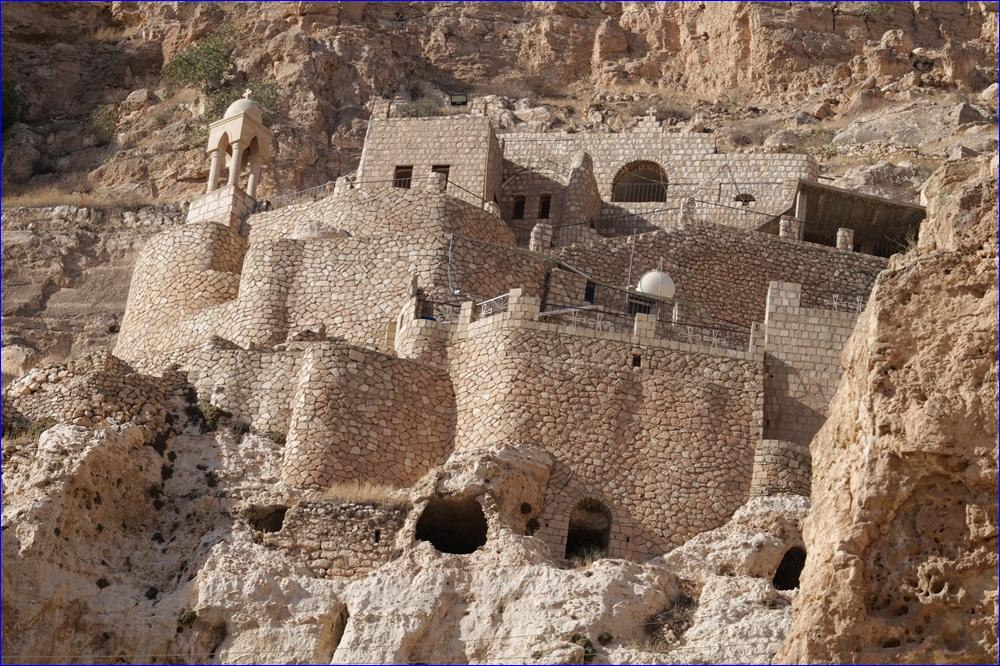
The Nineveh Plains are home to some of the oldest continuously inhabited Christian towns in the world, with churches and monasteries dating back to the earliest centuries of the faith. About 50 miles northwest of Erbil, the 7th century Rabban Hormizd Monastery overlooks the Christian town of Alqosh, traditionally believed to be the burial place of the prophet Nahum.
Athra Kado is a Chaldean Catholic, born and raised in Alqosh. He's also Nineveh branch director for the Assyrian Democratic Movement, a political party that's motto is "Because our homeland is our survival ground."
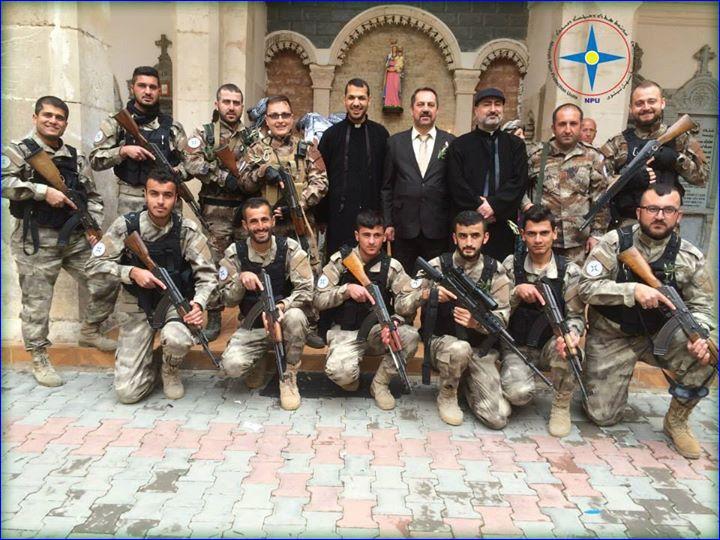
From the flat stone roof of his home, he looks out over the town, a maze of pale stone houses with terraced roofs and thick walls of clay and rock blending seamlessly into the surrounding hills. He recalls how when ISIS swept across Iraq in 2014, local Christians formed militias like the Nineveh Protection Units to defend their towns.
"When ISIS came within 8 miles, we sent our wives, daughters, and small children away," he said. When their families were safe, the men and older boys returned, armed with Kalashnikov rifles, and took up positions along the perimeter. The warning system was simple: "If you heard the church bell, it meant ISIS was coming," Kado says. After several tense days when it seemed fewer than a hundred Christian militiamen would have to defend the town against the entire ISIS army, Peshmerga forces arrived and drove back the militants.
Hundreds, possibly thousands, of Christians were killed, and many more fled their homes. Only a few have returned to places like Mosul.
The swell of ISIS to power betrayed a fault line in the community. Not everyone in the town belonged to ISIS, but many supported the group enough to stay. The slaughter of Christians didn't bother them.
"So the Christians are afraid of the mentality of those who stayed with ISIS," Chaldean Catholic priest Father Savio tells me.
"The people are still afraid, especially from the people who were there before ISIS," Savio continues. "They were there with ISIS. And after ISIS, they are still there."
Alqosh is unique among Iraq's Christian towns in that most of its residents returned after the war. Despite the challenges and the threatening danger, Kado says he will stay in his homeland. He was born there, and he insists he will die there.
"I have a tradition of 3,000 years," Kado says. "Every nation has culture and ethnic identity. My culture is beautiful, and I want to keep it."
But it seems Kado is in the minority. Over the past 25 years, the Christian population in Iraq and Syria has declined by more than one million people. Those not killed by ISIS fled to Kurdistan or farther abroad in search of safety. Many traveled through Turkey and across the Mediterranean, hoping their exile would only be temporary.
Back in the produce shop in Erbil, Fadi Aboud tells me he and his family are safe for now in Kurdistan, where they can freely practice their religion. He misses his home country and wishes he could return, but he has given up hope that Syria will ever stabilize. He and his family have applied for asylum in Australia.
or register to post a comment.