


Related: Brief History of Assyrians
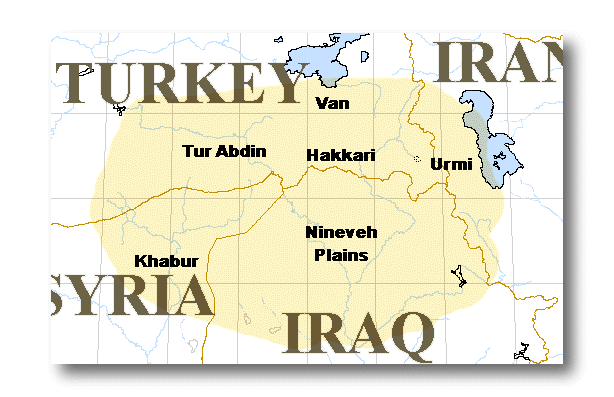
Assyrians are not newcomers to the land they inhabit; they are its original civilizational architects. From ancient Ashur and Nineveh to the villages of the Nineveh Plain, Hakkari, Tur Abdin, and Urmia, Assyrian presence is documented in cuneiform tablets, classical sources, church records, and living oral traditions. Long before the emergence of modern ethnic or national identities in the region, Assyrians cultivated the land, built cities, developed laws, and transmitted knowledge that shaped human civilization itself. No ethical or legal framework can credibly argue that such a people lose their inherent rights because they were later made a minority through violence and expulsion.
Related: Assyrians: Frequently Asked Questions
International law and moral philosophy are clear on this point. Indigenous rights are based on historical continuity and cultural connection to land--not on present-day numerical strength. If numbers alone determined legitimacy, then genocide, ethnic cleansing, and forced migration would become effective tools for erasing rights. The Assyrian case tragically illustrates this danger: massacres, deportations, and systematic marginalization reduced their numbers, but none of these crimes extinguished their historical claim. On the contrary, they reinforce it.
Related: The Assyrian Genocide
To argue that Assyrians must "earn" their rights by demographic weight is to reward injustice and normalize historical crime. No people should be asked to justify their existence on their own land simply because they survived catastrophe. Assyrians did not abandon their homeland by choice; they were driven from it. Those who remain continue to safeguard its churches, language, and memory, often at great personal risk. Their attachment to the land is not symbolic--it is lived, inherited, and ongoing.
Related: Timeline of ISIS in Iraq
Related: Attacks on Assyrians in Syria By ISIS and Other Muslim Groups
The future stability and moral credibility of the region depend on acknowledging this truth. Recognizing Assyrian rights based on historical roots is not a threat to others; it is a corrective to injustice and a foundation for coexistence. A land that honors its oldest peoples strengthens its legitimacy and pluralism. For Assyrians, the demand is neither dominance nor exclusion--it is dignity, protection, and the recognition that history, not headcounts, is the true measure of belonging.
Guest Editorial Policy
or register to post a comment.