


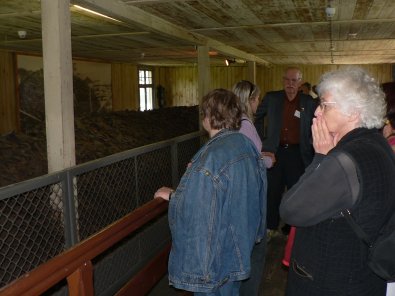
 (AINA) -- Several days ago the group to whom I was invited to speak visited Poland. We were all taken to Stutthoff not far from the city of Gdansk. (Stutthoff is a concentration and extermination camp that almost no one has heard of). An uncomfortable and unpleasant sensation spread among us. It became stronger as we approached the place. This was the place where the Nazis arrested the first Polish intellectuals and used them as slave laborers. The camp later evolved into a death camp -- a slaughter house for humans. 820,000 people lost their lives here.
On the way from the bus to the entrance of the death camp a friend whispered to me, "There are two persons here with us who have a personal relationship with this camp; one of them had a father here and the other, an uncle."
After the visit another friend, Karin Sääf, and I sat exhausted in the hotel lobby and asked each other what was our worst emotional experience during the visit to the death camp. "It touches us very deeply when someone you know here on this conference has had a personal relationship with this place," she said. "Naturally it was horrible enough for us to visit here at all, but it's even worse if we know that one of us had her father as a prisoner and relates with the place on an entirely different level."
I agree with Karin. Had we not had a direct connection to the camp because of our friends, it would have felt more like fiction, like it really didn't happen or because happened over 60 years ago it was just history.
In the photo you can see a pile of shoes. Everything from the prisoners was reused, shoes and clothes, but also skin, human fat and hair. Many German soldiers slept on pillow filled with human hair and washed themselves with soap made from human fat.
When we walked around the barracks I got a curious feeling inside. A feeling that I was initially ashamed of, but now, home in Sweden I understand where it originated. I felt envious. Perhaps it sounds very strange but I envied the Jews. They have places where their genocide took place that they can visit. They have monuments erected all over the world and their genocide is officially recognized. Since then they also established their own country where, among others, the people speak a common language.
The genocide of the Assyrian (Syriac and Chaldean) people occurred more than 90 years ago but the wound is still unhealed and it lives on generation after generation. We have all heard the terrible stories of the survivors; we have also heard the tales of persecution and oppression that followed which drove us into the Diaspora far from our roots.
When we wander through those places where our forefathers were slaughtered the feelings I get are many times stronger than what I felt in Stutthoff. Naturally, these feelings become so deep because everyone in this group has a relationship to the place. Every Assyrian has this dreadful relationship.
Who will remember the Assyrian genocide in the future? Where are the concentration camps where Assyrians were killed? Where are the museums? Where are the monuments?
Today in Turkey, Iraq and Iran Assyrians live on the edge of a knife, always fearing the next genocide, not considered equal citizens because they are who they are, ethnically Assyrian and religiously Christian in a Muslim ocean.
The governments of Turkey, Iran and Iraq should build monuments to the Assyrian genocide. This is as a challenge to these governments to do the right thing, to recognize the genocide and to begin the process of treating the Assyrians as equal citizens.
It is not so much to ask for three simple monuments. Can Turkey, Iran and Iraq rise to the challenge?
Guest Editorial Policy
or register to post a comment.