


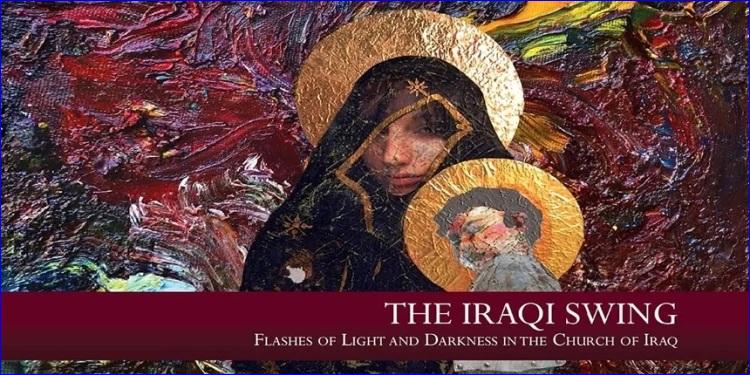
The book begins with a portrait of life in many of the communities in Iraq, as illustrated by the splendid black-and-white photographs taken by Fr. Juan Mateos, SJ, a distinguished liturgist of the Byzantine and Syriac Churches, in the mid-20th century (the book's first photographic section). The vitality and joy of the people are evident in moments of daily and liturgical life, while the geographical area covered here is northern Iraq, the Nineveh Plain, and what is now Iraqi Kurdistan. This joy turned to sadness with the Ba'ath Party's rise to power (1968), which led to the expulsion of the Jesuits and the closure of Baghdad College and Al Hikma University. These events were followed by the bloody Gulf Wars, the assassination of Saddam, and finally the political and cultural upheaval caused by the barbarism of ISIS.
The authors evoke that charismatic period in the history of the Church (11th--13th centuries) known as the Syriac Renaissance: Muslim and Christian ateliers worked side by side to create manuscripts, architecture and sculptural decorations of unquestionable beauty and originality. That unique era, in which a love of beauty transcended differences in faith, remained alive until the mid-20th century.
Then the dispersion of the communities, caused by massive emigration (of the former 2.5 million Christians, about 250,000 remain in Iraq), led to the severing of the vital connection of Christian communities to their homeland, to their native languages (Syriac and Aramaic), and to the Syriac-language liturgy. Although they are Iraqi citizens, Christians today are not always granted their constitutional rights; the perceived marginalization causes disorientation and despondency, further fueling the drive to migrate. This situation, which has been ongoing for several years, has given rise to a new theological perspective and sensibility, known as "The Theology of Refugees," centered on the negative experiences of these Iraqi Christian communities, which seem to follow in the footsteps of God understood as a migrant.
Three painters and one sculptor from Baghdad -- Dahlia Khay Azeez, Bassam Sabri Butruss Nagara, Salam Idwer Yaqoob Al-Loos, and Haitham Yalda Matooka -- provided assistance to the authors, who thus used the language of art, colors and forms in space to reach out to those far away: the Iraqi Christians who have been living abroad for years and who may have forgotten their native language (second color photo section of the book).
Not words, then, but the language of art becomes for the authors the new bearer of the faith of their forefathers and of Christian life with its joys and solitudes. The intense colors and distinct forms convey to those far away the hope that present-day Mesopotamia embodies. The scattered communities, like a small flock, courageously and vibrantly proclaim their existence and continued presence in their homeland to those who, from afar, feel the emptiness of the land of their past. Art, as a new language free from worn-out words, is today the burgeoning rhythm of the swing, openly professing in Iraq the one faith in Jesus Christ the Lord.
The Iraqi Swing. Flashes of Light And Darkness in the Church of Iraq, by Vincenzo Ruggieri and Rocco Roberto Vaiana (eds), was published in Rome by Valore Italiano Editore, 2026, 176, €65.00.
or register to post a comment.