


Related: The Assyrian Genocide
His account sheds light on the suffering endured by the Assyrian people of Iwardo, their courage and resistance, and the solidarity that sustained them during one of the darkest periods in their history. He also recalls the individuals who risked their lives to protect their people and reflects on his enduring connection to his ancestral village, its history, and its cultural heritage.
Above all, his testimony reminds us of the importance of preserving these memories and passing them on to future generations, so that the history, heritage, and identity of the Assyrian people may never be forgotten.
Please Introduce yourself
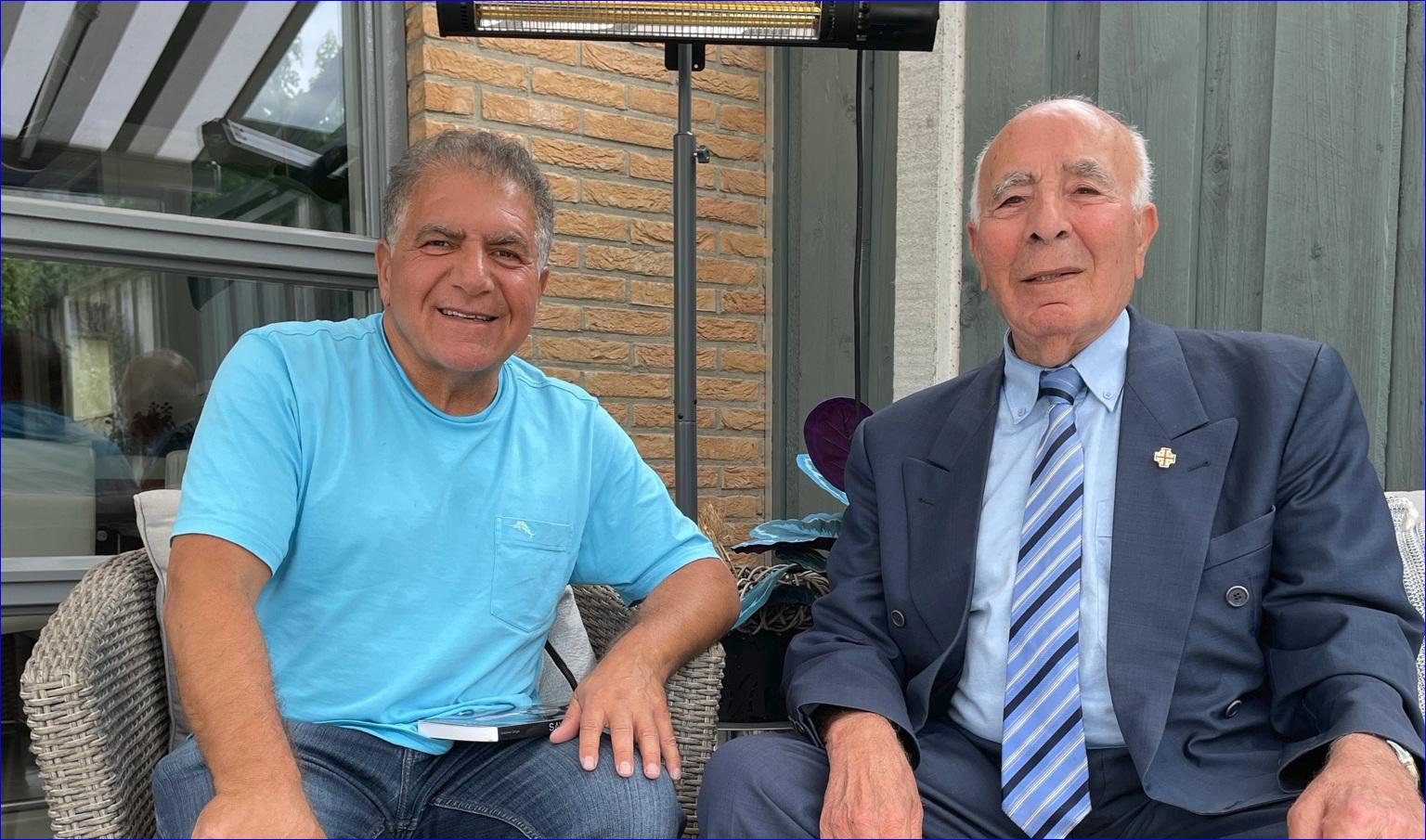
I am Issa Grigo of Iwardo. I am the son of Gallo and Basna Grigo. I was born in Iwardo in 1935. I was the youngest of my siblings. Our living conditions were not easy. Each of us worked at a different job. One of my brothers was a farmer, and I was a shepherd. That is how we provided for our family. That was the way of life at the time.
My father was one of the notable representatives of the village and helped organize the resistance in Iwardo. I lived with him for 35 to 40 years. I heard and learned a great deal from my father, and I learned a lot from my mother too. My mother married in her twenties. She was from the Hannike family, who live in America. Since I could not read or write, I constantly repeated what I heard from my mother and father so that I would not forget it.
I never went to any school. I was a shepherd until I was twenty. I married at eighteen. We had a son whom we named Edip. When I turned twenty, I went into military service. While I was away, our second son, whom we named Aslan, was born. When I finished my service, I returned home. But what did I find when I got home? Both of my sons were dead.
When I returned to the village from the army, the villagers and my brothers saw me approaching and came out to meet me. My brothers kissed me and then turned their faces away. They were sorrowful. Finally, after walking about five hundred meters, we reached the house. My brother had a few little girls, who were wandering around us. I looked at them, searching for my own children. My father noticed, embraced me and kissed me.
"My son, I know you are looking for your children, but you no longer have any," he said.
The younger one had died on a Monday and the older one on a Saturday. My older son was three years old. When he saw his mother and the others crying, he too began to cry without stopping. He murmured "my brother" as he wept, and in the end, he also lost his life.
When I heard this from my father, what could I do but be overcome with great pain and grief? My wife was in the next room, ill and in mourning. When evening came, she came to me, said "Welcome," and began to cry. Crying had by then become a part of her life.
When our relatives and acquaintances heard that I had returned to the village, they came to visit, both to welcome me and to offer their condolences. After a while I took my wife to Mardin, a few hours away, to see a doctor. Then my nephew Besim Akdemir, who was studying in Istanbul, came. He convinced me to take my wife to Istanbul and have her seen by a doctor there. In those days, going from where we lived to Istanbul was as hard as going to the moon is today. Istanbul was very far away. In the end I went to Istanbul. If I began to tell what I experienced there, there would be no end to it. It is best that I not open that subject for now.
Everyone knows and talks about how the people of Iwardo stood by one another and resisted during the genocide. Could you tell us, to the extent you know, what happened in Iwardo during the genocide from beginning to end?
I will tell what I heard from my father and from other people. The massacre in Iwardo did not happen only in 1915. There was also a massacre in 1841, another in 1870 and another in 1895. In all of these events it was not possible to take Iwardo.
When the genocide began, the news that reached our village was this: the government in Istanbul had given an order that those who refused to become Muslim were to be killed. Those who accepted conversion to Islam would be spared.
Because of the smaller-scale massacres that had happened earlier, the people of Iwardo had experience in how to protect themselves. My grandfather Tuma d'be Grigo, Savme Sa'cyo and many others said they would not surrender and would resist.
Circo, the son of Priest Esmer, was the representative of the Priest Aho family. Gallo Sabo, whom you have all heard of, was there too. They all came together and assessed the situation. They had decided to resist, but they needed weapons.
As a result of the discussions, they reached a consensus that everyone in Iwardo between the ages of 12 and 70 should have a weapon. They then set out to buy weapons. After some time, they obtained weapons from the region.
This became known to the Muslim villages around Iwardo as well. But the people of Iwardo paid no attention. They gathered and discussed how they would resist possible attacks. They were well organized and had formed groups to take on different duties.
When the attack began, each of these groups would have a separate task. For example, a group of six people was assigned to pick up the dead and bury them. Another group, made up of women, drew water from the wells around the village, carried it to the wells inside the village, and then covered those wells. Into the wells they could not cover, they threw filth to keep the enemy from using the water.
Iwardo's name had become known, and news had spread that it was arming and preparing. Those who could escape from B'seriye and other places came to take refuge in Iwardo.
Who was leading the resistance in Iwardo at that time?
There were three leaders: Gallo Grigo, Gallo Sabo and Priest Circo. But each of them wanted to be the leader. Since they could not agree among themselves, they decided to call Mesud Mirza, who lived in the village of Mizizah near Iwardo.
Mesud was a deacon who had been educated at St. Gabriel Monastery. He came to Iwardo, and they sat with him and explained the situation. They told him, "We cannot accept one another as leader. But we are all agreed that you should be our leader." Mesud told them "Many of you are more experienced and knowledgeable than I am. But I want to tell you this: you are choosing me as leader, but if you do not stand by me, I cannot accept this offer." So, they went to the Church of Mar Husabo. They promised to stand by Mesud under all circumstances and swore an oath to support him. That is how Mesud came to be chosen as leader.
Later, the massacre slowly began to approach Iwardo. Sad news was coming from Midyat, near Iwardo. Together with Mesud, Priest Circo, Süleyman d'be Hanna, Hapsuno d'be Sabo, Musa d'be Miksi d'Brahim, Gallo d'be Grigo and Hanne d'be Hobil formed a seven-member higher leadership committee. They would gather at a place in the middle of the village and discuss the decisions to be made there. The person who announced the decisions to the outside was Mesud. That is how affairs in Iwardo were run.
What was the role of women in this resistance? Did you hear anything about this?
Women and men carried out this resistance together. The women were also extremely active. Making bread and preparing food were foremost among the responsibilities the women took on.
One of those attacking our village was approaching the back of our house. My father told my grandfather, who was on the roof, to go inside. My grandfather replied, "Hey, what do these people want from us?" The moment my father said, "They want to kill us," a Muslim attacker aimed at my grandfather Tuma d'be Grigo. The bullet he fired hit my grandfather in the side of his belly.
My grandfather was wearing baggy trousers like those worn by priests. The attacker was happy because he thought he had killed a priest. He climbed up and began to scale the wall to make sure my grandfather was dead.
At that moment, on the other side of the house, there was a girl named Nisane d'be Havsiko, daughter of Priest Isoh, who was originally from Iwardo. As the attacker was climbing up, she brought a heavy stone down on his head and killed him there. The women also took an active part in this resistance.
What was the real difficulty? The entire Muslim population had descended on them. How long did this resistance last?
The people of Midyat of course resisted too. But if we speak only of Iwardo, the attack began on the afternoon of 9 July 1915. Soldiers had surrounded the village. There were about eleven thousand soldiers. Kurdish tribesmen and many surrounding Muslims also took part in the attack. It was said that members of eleven tribes were present in total. Together they numbered over twenty thousand. They cooked their meals there and waited, fully equipped.
Do you know the names of some of the tribes that took part in the attack?
Yes, I do. There were the Raman tribe, the Lahibisbini, the Mahalmi, the Samikis, the Hawerkelis, the Deksuris, the Salihis and the Ladomanis. All these tribes attacked Iwardo together with the soldiers.
The attackers on Iwardo did not have killing people as their only aim. Many of them were also attacking in order to seize beautiful women or girls.
The people of Iwardo were resisting from certain points around the village. But when the attacks intensified, it became difficult to resist from those points. So, they gathered in the Church of Mar Husabo and continued the resistance from there.
In the house of the Grigo family there were brave fighters. Among them were men from Bote, Kaferze, Benkelbi, Iwardo and the Zerikes of Midyat. There were about twenty of them. They did not come down from the roof and fought off the attacks from there.
My mother was nineteen at that time. She had not yet married my father. She used to tell us about those days like this:
Mesud was on the roof. In a very courageous tone of voice, he told the others they must keep resisting the attacks, calling the people to be brave. He was lifting their morale.
Night had fallen. Thousands of people were in the Church of Mar Husabo. The enemy had entered the village. But the attackers had a disadvantage: they were strangers to the village. They were cursing Jesus Christ. In the middle of the night, they met a resistance they had not expected at all. The survivors began to flee out of the village.
If a strong resistance had not been shown, the defense would have collapsed within a few hours and Iwardo would have been taken. On the first night of the attack, we lost three brave people as martyrs: Lahdo Kittino, Hanne Sabo and Galle d'be Sahin.
Many young women ended their lives by throwing themselves into wells so as not to fall into Muslim hands. The fear and trauma that some young girls experienced continued for years. My mother told us about these things constantly.
May God show those days to no one!
To sum up, there were not as many deaths in Iwardo as in other villages. Bishop Ablahat from Upper Kafro was also in the Church of Mar Husabo. He told the resisters, "Kill in order to protect yourselves."
The attackers were very disturbed by the church bell. So, they made this decision: on Sunday morning, before the church bell rang, a soldier's bugle would be sounded, and everyone who heard it would attack the village from where they stood.
Musa Aasso of Midyat had military experience. He warned that the bugle being sounded in the early hours of the morning was a signal to attack.
In this attack twenty-six Assyrians lost their lives. The other side suffered hundreds of casualties and did not manage to enter the village. The blockade and attacks on Iwardo continued for about sixty-five days.
When the Iwardo resistance is mentioned, many people talk about the importance of salt. Why is that?
Yusuf Hanna, one of those who took part in the Iwardo resistance, told this story about the salt many years ago.
The village had run out of salt. Yusuf Hanna, Circo d'be Hobil and Gallik of Bote went to Enhil to bring salt. They stayed one night in Enhil. When darkness fell, they set out to return to Iwardo.
As they approached Iwardo, the soldiers and other attackers saw them. They began to rain bullets on them. They could not enter the village and fled in another direction. They went to a place called Kalco and took shelter in an empty cave at the top of the mountain. There was a woman with them. Circo d'be Hobil, meanwhile, was hiding a little farther on, in a pit in the middle of the plain.
Circo later described what happened to him:
"Two bearded men approached where I was. Looking at me, they were hurling heavy curses at Christians. I could have shot both of them, but morning had begun to light up. I was alone, right in the middle of the plain. I gave up on shooting them.
They passed me and went toward Kalco. There they were looking at the caves. With them was Aliko Cavarko of Iwardo. He told the attackers, 'The Christians are inside this cave.'
Yusuf and Galike Butoyo, who were inside the cave, began to defy them. At that, the attackers hesitated to go in. After a short while a large crowd of attackers gathered at the cave entrance.
A Muslim from Hallage began shouting, 'Come on, let's go in, what can they do to us?' He was the first to enter the cave. Yusuf, who had a weapon in his hand, said later that he pulled the trigger without hesitation. When the others saw the man shot, they grabbed him by the legs and dragged him out of the cave.
The two sides were firing at each other. The attackers were now afraid to approach the cave entrance. They kept firing from a distance. One of the bullets fired hit a rock inside. A fragment of rock flew and struck Yusuf in the eye. Because of this, Yusuf lived the rest of his life with one eye. This incident caused him to lose an eye. But despite losing an eye, he had not given up the fight."
Yusuf was my brother's father-in-law. He told us these events until he died. He used to say: "Gallik of Bote had a pistol belonging to the Hermizlis. I had a rifle. The woman with us was unarmed and had come with us from the village of Enhil. Aziz'ke d'be Ahmado and his brother Resit'o came to the cave. They said to us, 'Yusuf, surrender! There will be peace today. Sheikh Fethullah will come. I give you my word; they will not kill you.' I answered Aziz Agha, We will surrender ourselves to your conscience."
So the three of us came out of the cave and surrendered. After we handed over our weapons, they tied us up and brought us down the slope from where we were.
Our vineyards are around there. I know the area very well. If a film were shot there one day and I were among the crew, I could tell exactly what happened, one by one. We have grown old. Stories like these need to be filmed.
We had gone down the slope. The regiment commander, the soldiers and Aziz'ke were talking among themselves. At that moment a Muslim with a large knife in his hand came running out of the crowd and plunged the knife into the belly of the bound woman. The woman died on the spot.
Yusuf said "I shouted Aziz'ke! We surrendered to your conscience. You see, now they are killing us too!"
Aziz'ke called to his brother and told him to stand against them. At that, Resit shot at someone from the other side and killed him. Then the sheikh who had killed the Christian woman took off the cap on his head and shouted, 'Stop! Do not kill each other over Christians. One of them died and one of ours died. Let us regard it as though it never happened.'
From there they brought Yusuf and Galike to Iwardo. They were held there until Sheikh Fethullah came."
Who was Sheikh Fethullah? Why did he want to help the Christians?
First of all, the fact that Iwardo had been held under siege for more than two months had exhausted everyone in that atmosphere of hot conflict. The Kurdish tribes in the region were also killing soldiers in order to sell their weapons and then selling the weapons they had seized to the people of Iwardo.
Some Muslims living in Iwardo would also bring weapons to certain points of the village and sell them to us. Outside, the word given was that the soldiers in Iwardo were being killed by "rebels." The soldiers were worn out. They wanted the fighting and the siege to end somehow. They were waiting for someone to persuade the Assyrians to surrender.
A sheikh in a green robe came from Dara. He asked the people of Iwardo to come down. Three people from the upper part of the village went down to meet him. The sheikh swore by religion, faith and the Qur'an that nothing would be done to them if they surrendered, and he asked them to hand their weapons over to the army. But what he said and the oaths he swore did not convince the three who met with him.
"We want to go up to the village and consult the others," they said. They went up and consulted Mesud and the others. They said, "What they told you is a lie. Do not trust him and tell him to go away."
This message was conveyed to the sheikh. At that, the sheikh lamented to those around him, saying, "I was going to uproot them. But they did not fall for the trick."
Later the Mutasarrif of Mardin went to the Assyrian Church Patriarchate at the Deyrulzafaran Monastery and asked that the Assyrians in Iwardo be persuaded to surrender. The Patriarch sent Priest Yuhanun and Monk Iso to Iwardo together with soldiers.
They camped somewhere below the village. A few people from the village went to them and discussed the guarantees that would be given. But the promises were not sufficient. The representatives of Iwardo did not accept these either. Thus, the mediators who had come to get the people of Iwardo to surrender returned with no result.
Later a third team of mediators came. They said that no massacre had taken place in the Assyrian village of Enhil, that the villagers had agreed to become Muslim and that nothing bad had been done to them. They told the people of Iwardo, "You too become Muslim and be saved."
The answer given to them was: "No, you are lying. We are in contact every day with our people in Enhil. We do not accept Islam. Get out of here!"
Aziz'ke was the agha and leader of the Semikis. The Semikis consisted of the villages of Karsaf, Enhil, Daline, Barumunus and Dayvanke and the tribes living in those villages. All of them were called Semikis. Aziz Mehmet was their leader.
Aziz'ke's thinking was this: Sarhano was the father of Sarohano. Sarohano had been held in Harput Prison together with Semun Hanne Haydo, Haco, Aliko and Çelebiyo. Sarohano had a medal given by the state and had ties with the state.
Aziz'ke said that Iwardo did not belong to the Semikis and that control there was in Sarohano's hands, because Iwardo belonged to the Osmanos.
At that, the state forced Sarohano to come to Iwardo. Sarohano sent a courier to Iwardo saying he would come but asked that no honor be shown to him. He said that officially there was no such thing and advised them to keep defending themselves if they had the strength.
Later Sarohano came near the village and sat in the shade of a large rock opposite the Grigos. Two representatives from the village went to meet him. There were soldiers around them. Sarohano knew Assyrian. He told the people of Iwardo to reject what he was about to say. The talks then continued in Kurdish and Turkish.
The people of Iwardo said they recognized neither him, nor his government, nor Diyarbakir, nor the administrations of Ankara and Istanbul.
Sarohano spoke in Assyrian again and told them not to trust anyone, and that the only one they could trust was Sheikh Fethullah, the son of Sheikh Brahim. He advised them to call on him as mediator and not to reach an agreement with anyone else. The people of Iwardo replied "We understand."
They told the soldiers that they wanted Sheikh Fethullah of Ankaf as mediator. Government officials also went to Sheikh Fethullah and explained the situation.
Sheikh Fethullah said he was aware of the matter. The officials conveyed that the Assyrians wanted him as a mediator for peace. At that, Sheikh Fethullah said, "If there is a massacre or treachery involved, I will not come."
The officials told him they had given their word that they wanted peace. That is how Sheikh Fethullah came to accept going to Iwardo.
On the day Sheikh Fethullah came to Iwardo, Yusuf (the one who lost an eye) was being held by the soldiers in a Muslim house in Iwardo. A call was made to the Assyrians, asking them to meet with Sheikh Fethullah.
Sawme Sahyo went to Sheikh Fethullah. He was asked who the Assyrian notables were. Sawme Sahyo answered: "The Assyrian notables are Tuma d'be Grigo, Gallo Sabo, Priest Circo and Mesud."
At that, these men were asked to come to Sheikh Fethullah.
Tuma d'be Grigo said he was hard of hearing and had also lost his sight, and asked that someone else be sent to represent him. It was decided that Saho d'be Murad of Arnas would go in his place. Gallo Sabo said he did not trust Muslims and would not go. A man from Midyat was chosen in his place.
The chosen men decided to go to the meeting together with Priest Circo and Mesud. Sawme Sahyo accompanied them.
At that time there was not a sound in Iwardo and its surroundings. Everyone was holding their breath. A tent had been set up for Sheikh Fethullah on the plain below the village. The weather was very hot. When they approached, they shook hands with Sheikh Fethullah and the regiment commander. The regiment commander said to those who had come:
"We represent the army. You will hand over 500 weapons to us. Then the army will lift the siege and peace will be made." Mesud said, "We do not have five hundred weapons. Where will we find five hundred weapons for you?"
The regiment commander replied:
"Mesud Agha, where will you find them? You are killing a hundred people a day here. The number of weapons you have is beyond counting. Not one of the five hundred will be missing."
Mesud said, "What kind of peace is this? This is coercion."
After thinking for a short while, the regiment commander said, "Come on, let it be a hundred fewer and let us agree."
Sawme Sahyo touched Sheikh Fethullah's garments and asked him to intervene.
Sheikh Fethullah said, "For my sake, let us reduce it by another hundred, and let it be three hundred weapons."
Mesud answered, "Let us go up to the village and we will hand the three hundred weapons over to you."
According to Yusuf's account, the soldiers went up to the village and collected three hundred weapons from in front of the door of Silo Grigo's house. Silo Grigo is my uncle.
Yusuf had brothers named Hanna, Süleyman, Nacman and Eliyo, and they were six brothers in all. They were brave men. Members of the Priest Aho family came and seized the weapons. They said, "If Yusuf is not released, we will not hand over these weapons and we will not make peace."
Aziz'ke wanted peace to be made. He managed the tension and the talks there well and explained the situation properly. Sheikh Fethullah said, "Solving this problem is not difficult. We will find a remedy for this too." Then he asked for his nephew Sheikh Sitki to be called.
When Sheikh Sitki came to him, he said to him: "We will take the weapons and withdraw the soldiers. You will go up to the village. If the Muslims do not release Yusuf, let the Christians to whom you have surrendered kill you."
Just as this agreement was being reached, the sound of a rifle came from the village. A man named Isa Zero had shot, with his rifle, a man from Koçan who was standing in front of him. For a moment it seemed that chaos would break out.
Understanding that it was an accident, the commander said, "Nothing will happen. Hundreds of people have died; let this one be a sacrifice for them. We will not break the agreement we made over this."
After the soldiers took the weapons, they withdrew. Sheikh Fethullah and Sheikh Sitki went up to the village and to the house of the Grigos.
After leaving there, they headed to Tur Izlo and went toward St. Malke Church. Priest Circo, the son of Priest Esmer, walked with Sheikh Fethullah to Mor Malke. From there they went on to Ihvo, Dayro Du'Slibo, Hah, Bisorino and other Christian villages.
As they approached the villages, Priest Circo told the villagers that he was Priest Circo, that the siege of Iwardo had been lifted, and that people could come out of their hiding places and resume their lives in peace.
Priest Circo stayed in those areas with Sheikh Fethullah for forty days. Then they returned to the village of Bote. Many people had been killed in Bote.
While they were there, a Muslim man came to Sheikh Fethullah and said he had a question. The man said, "I killed seven Assyrians. Where will my place be?"
Sheikh Fethullah replied, "Where do you want to be?"
The man said, "I want to be in paradise."
Sheikh Fethullah asked him, "From whom did you hear that one goes to paradise by killing seven Assyrians?"
The Muslim answered, "I heard it from the mosque imam."
At that, Sheikh Fethullah said, "You and that mosque imam will both go to hell. What had the Assyrians done to you that you killed seven of them?"
The man answered, "They had done nothing. I killed them only to go to paradise."
From this it is understood that many Muslims took part in the slaughter of Christians in order to go to paradise.
According to the information I have, peace was achieved when Sheikh Fethullah went to Iwardo. But afterward many Assyrians who set out to return to their villages were killed. What do you know about this?
For example, in our house there were one hundred and fifty people from outside, including seventy-five from the Zereke family alone. During the period when the village of Iwardo was under blockade, all these people ate there.
Among the caravans that came from the Garza region there was an Armenian girl. She too stayed in Gallo Grigo's house. Her name was Nure, but they called her Nurike. When she came to Iwardo, she went to Gallo Grigo and told him that her family had been killed and that the caravan she had come with had scattered. She said she knew no one and asked where she could go. Gallo Grigo said to her, "You will not go anywhere. You are my daughter and you will stay with us." Two years later she was married to an Armenian young man from our area.
After peace was achieved, Mesud went first to Enhil and then to the village of Kafro, and was killed after settling there. Do you have any information about this?
Yes, he was killed in Kafro. But I do not have definite knowledge about why he was killed.
Were the Kurdish tribes in the region carrying out the oppression and massacres because the Assyrians were Christian? How should we understand this?
It certainly had a great influence. The Kurdish tribes and aghas in the region did not let the Assyrians raise their heads. The Assyrians were constantly kept under pressure and crushed. The aghas in the region kept killers and tribesmen around them and gained power through them. They used the power around them for plunder and looting. This is how the agha system worked. To be an agha, one also had to have courage. That is how people made a name for themselves.
In that painful period, were there any Kurdish tribes or other figures who came to the aid of the Assyrians?
In Antep Prison there were Semun Hanne Haydo, Çelebiyo, Gallo Grigo and Divano of Harabe. My father was with them too. Later most of them were held in Harput Prison. Aliko Batte and Semun Hanne Haydo had escaped. Çelebi was released from prison later.
It is true that they had committed oppression before. It is a known fact that Çelebiyo and Sarohano killed Semun Hanne Haydo's father. But after he got out of prison, Çelebiyo promised that he would not leave any Assyrian without protection and that he would take back from those who had seized their property and lands.
Muslims had settled in the homes of Assyrians who had been forced to flee their villages to save their lives and had seized their goods and property. For example, after leaving Mizizah, Mesud and his relatives had been forced to live outside their village for six or seven years. It was thanks to Çelebiyo that they were able to return to their village. Those who had settled in their homes did not want them to come back. After Sheikh Fethullah, Çelebiyo too was of very great help to the Assyrians.
I heard from many people that for the aghas to be aghas, they somehow needed slaves living under their rule. Was this the reason Çelebiyo helped the Assyrians? What do you say?
Not exactly. Çelebiyo's help with the Assyrians was not limited to the area where he lived. For example, he also helped the Assyrians in Halach. The De Basso family had abandoned the village and were not allowed to return. Çelebiyo took them back to the village.
The Muslims in the village said they would give him one gold lira per family if he did not resettle the Assyrians in the village. Çelebiyo answered, "Even if you gave me not one but eighty liras, I would not accept. Because I have promised not to leave any Assyrian outside, out in the open."
Çelebiyo helped many Assyrians in similar ways.
Do you have any advice for young people and others on what lesson they should draw after the genocide?
May our people look after one another. Love is capable of everything.
After leaving the village you went to Istanbul, and years later to the Netherlands. You live here now. Did you ever return to Iwardo, your village?
I moved from Iwardo to Istanbul. After staying there twenty years, I came to the Netherlands. I have been living here for twenty years.
My son Gabriel had married. Forty years after I left, we visited Iwardo with him, his wife and his mother. There were only a few people left in the village. I went to my father's grave. The moment I saw the grave I began to tremble. I threw myself over it and began to sob. The first day my father died came before my eyes, and I wept just as I had that day.
While I was lying over the grave weeping, the voice of an Assyrian came to my ears from inside the church. He was saying to me: "Instead of weeping over your father's grave, come, do not abandon your village and your father's grave. Return to your village and live here, do not weep!"
We stayed in the village a few days. Then we returned to the Netherlands. But my mind stayed in the village. I went back to my father's grave. I restored from top to bottom the house where my father lived, where he sheltered hundreds of people and shared his food and water with them. I take my son there from time to time. I would also like to call on the other villagers who left Iwardo to go and visit their villages.
I want my son to follow in his grandfather's footsteps.
Does it disturb you when you hear that the genocide is denied?
Of course it saddens me. When the genocide is mentioned, the Church of Mar Husabo and Iwardo come alive before my eyes. It is as if I see once more those brave figures who protected their people. My hands never held a weapon, but I kissed the hands that did.
What is your message to our people and to the youth?
I want every young person to take ownership of the story of their father and grandfather. Iwardo is not only mine and my son's village; it is the village of all of us. There are people living in Iwardo now. I send my respect and greetings to all of them from here. I gave them the key to my house. They look after the house.
I do not know how and where my death will take place. But right now, I am alive. If I go to Iwardo and die there, I would like to be buried there. If I die here, I would like to be buried here. Earth is earth, it makes no difference. My son is hearing this conversation too. If I die in the village, I want my grave to be there. If I die here, taking my body to the village would be of no benefit to anyone.
Many Assyrians from Germany, the Netherlands and many other countries are returning to their villages in Tur Abdin. Does this development make you happy?
Of course, very much. For example, in Iwardo the quarter of Priest Aho has almost been rebuilt. This gives me great joy. I look at every house built there as if it were my own and I rejoice.
I would like to add something. I am very glad that you came and that we had the opportunity to speak face to face. I had thought of you many times. I did not have your phone number, nor did I know where you were staying. I prayed to God that one day He would grant me the opportunity to meet you in person and have this conversation. And today, that prayer has been answered.
Sabri Atman is the director of the Assyrian Genocide Research Center.
or register to post a comment.