


 Walid Mourad)
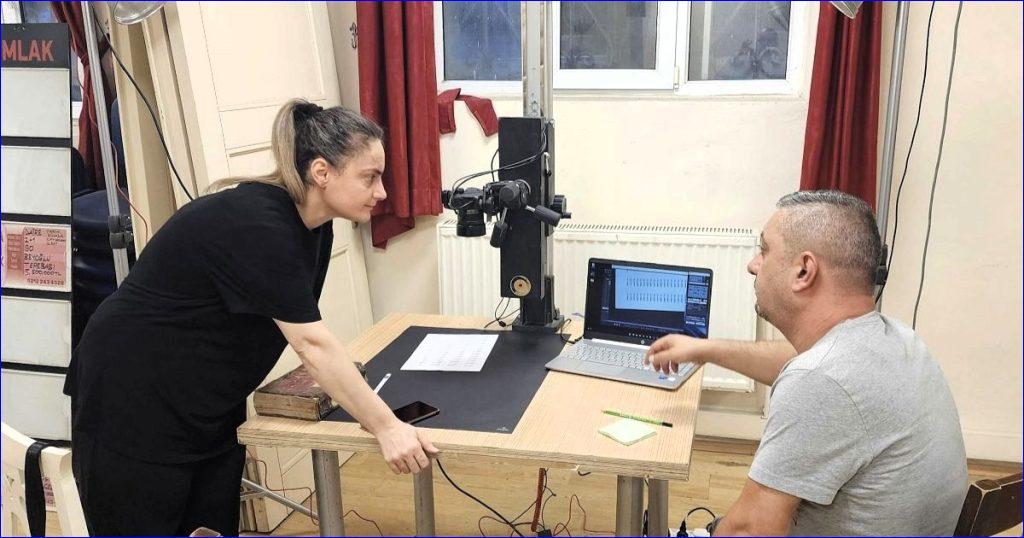
The collection, now accessible through HMML's digital Reading Room, comprises 90 manuscripts and two printed books digitized in 2024 through a partnership with the Centre Numérique des Manuscrits Orientaux (CNMO), an organization based in Iraq. The materials were cataloged the following year and include liturgical texts, historical accounts, ecclesiastical records, and documents reflecting the lives of Christians across the region.
An Archive Shaped by Displacement
The archdiocese was established in 1966, following decades of population decline and emigration that resulted in the consolidation and suppression of several earlier dioceses. It became Turkey's sole Assyrian diocese, overseeing the country's remaining Assyrian communities.
The changes were part of a broader demographic transformation affecting Christian communities in southeastern Turkey. The violence and mass displacement of the 1915 Sayfo Genocide, followed by decades of instability and conflict in the region, forced many Christians to leave their ancestral towns and villages. Survivors and subsequent generations relocated to other parts of Turkey, as well as Europe, Iraq, Syria and elsewhere.
As the Assyrian population in southeastern Turkey declined, the archdiocese gradually relocated its principal base from Omid to Istanbul. Its community now worships at Holy Trinity Cathedral in the Beyoglu district, a church historically associated with Istanbul's Greek Byzantine Catholic community.
The Assyrian population in Turkey has experienced some growth in recent decades, partly through the arrival of refugees from Iraq.
The manuscript collection reflects these successive movements. While many documents originated in Omid and other southeastern towns and villages, others were produced in Istanbul or gathered by François Yakan, a Assyrian Church leader who has also worked with Iraqi refugees.
Documents Spanning Multiple Christian Traditions
Beyond its significance for Assyrian history, the collection provides a broader picture of the religious and intellectual connections linking Eastern Christian communities.
Alongside Assyrian liturgical texts, the library contains materials associated with Melkite Greek (Rûm) Catholic and Assyrian Christian traditions. Among them is a Assyrian Catholic publication printed by Jesuits in Beirut in 1877, a historical account concerning a dispute within the Armenian Catholic Church, and a Assyrian grammar written by a Maronite scholar and published in Rome in 1628.
The collection also includes legal records compiled by representatives of the Melkite Patriarchate in Istanbul during the final years of the Ottoman Empire. These documents offer additional insight into the administrative and legal affairs of Christian communities during a period of profound political transformation.
Other materials extend beyond strictly religious subjects. The manuscripts include medical writings, among them an Arabic version of the Hippocratic Oath, as well as a Assyrian liturgical book believed to have originated among Christians in Kerala, southern India.
The geographical and linguistic diversity of the materials illustrates the extensive intellectual and religious networks that connected Christian communities across the Middle East and beyond.
The collection's preservation also complements earlier HMML projects involving Assyrian manuscripts in Turkey, including collections at Mar Hirmiz Assyrian Church in Merde (Mardin) and Mar Petyun Assyrian Church in Omid.
Record of the Community After the First World War
One of the most historically significant documents preserved in the collection is a register of Assyrian families compiled by priest Yûsuf Tüfenkçi between 1920 and 1925.
The register documents families living in cities across southeastern Turkey and other locations, providing a record of the community in the immediate aftermath of the mass violence and displacement that devastated Christian populations during the Sayfo Genocide.
Its importance extends beyond genealogy. The document represents an effort to identify and document the surviving community at a time when established social structures, religious institutions and family networks had been severely disrupted.
Another significant item is an Arabic version of prayers for peace issued by Pope Benedict XV during the Sayfo Genocide. The manuscript, identified in HMML's catalog as CCI 00064, preserves a plea for an end to violence and the restoration of security.
Its inclusion alongside the family register offers a glimpse into the circumstances and concerns of Christians attempting to rebuild their communities in the aftermath of the genocide.
The preservation of such records is particularly important given the difficulties historians face in reconstructing the experiences of Christian communities whose populations were dispersed and whose institutional archives were frequently fragmented.
Academic research has also highlighted the historical importance of Assyrian manuscript collections from the Omid region. A 2022 study published in the journal Past & Present, titled Archiving Faith: Record-Keeping and Catholic Community Formation in Eighteenth-Century Mesopotamia, examined how manuscripts preserved information about families, religious institutions, and communal relationships.
Researchers Lucy Parker and Rosie Maxton argued that these manuscripts functioned as more than religious texts, serving as a dispersed archive that helped maintain communal connections and preserve Assyrian identity across generations.
Their research examined records of baptisms, ordinations, deaths, family relationships, and other events documented in manuscripts that circulated between churches and private owners.
Making Historical Records Accessible
HMML's digitization initiative forms part of its wider efforts to preserve endangered manuscript collections and make historical materials accessible to researchers and the public.
By transferring physical manuscripts into digital formats, the organization helps safeguard documents against deterioration while allowing scholars to examine materials that might otherwise remain difficult to access.
The newly cataloged collection is available through the organization's online Reading Room, where researchers can explore the digitized manuscripts and printed materials.
The project was carried out in cooperation with Iraq-based CNMO, whose team members Vania Yokhanna and Sanhareeb Jano participated in the digitization work in Istanbul.
For the Assyrian community, the collection represents an important documentary record of its historical presence in southeastern Turkey, its religious traditions and the challenges that shaped its development.
The preservation of the manuscripts also offers historians a means of examining the experiences of a Christian community whose history extends far beyond its present-day institutional and geographical boundaries.
or register to post a comment.