


Related: By Foot To China: Mission of The Church of the East, to 1400
These efforts are being led by academic researcher Dr. Erica C. D. Hunter, a specialist in Syriac and Eastern Christian studies and an affiliated researcher at the Faculty of Asian and Middle Eastern Studies at the University of Cambridge in the United Kingdom. She presented her latest research at an international academic symposium held in Urumqi from 31 October to 1 November 2026, attended by more than 180 researchers from 15 countries and regions.
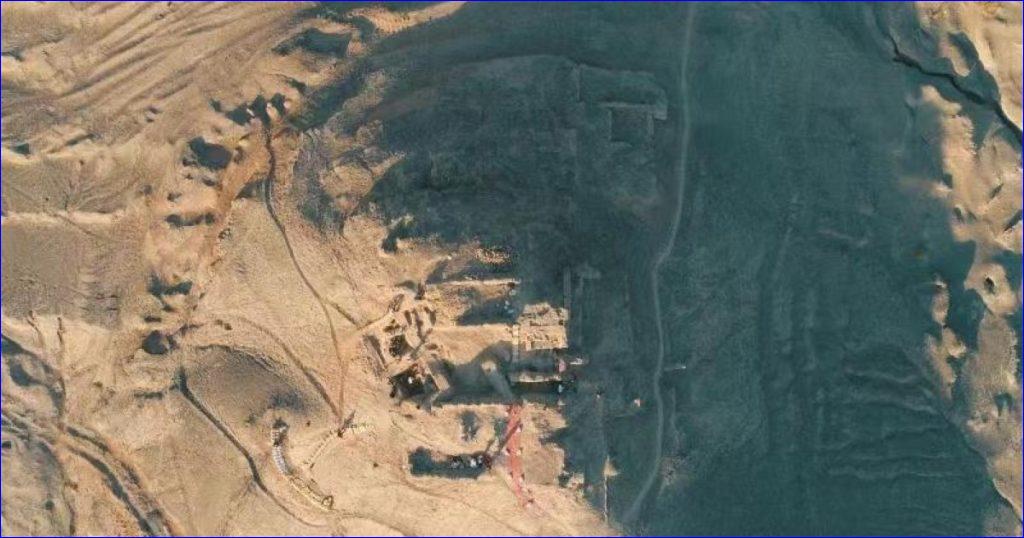
According to a report published by China's Xinhua News Agency on 12 November, Hunter's research focuses on Syriac manuscripts and Christian documents discovered at Xipang Monastery, also known as Shuïpang, near the city of Turpan. The archaeological site has historical links to the Church of the East, known in Chinese sources as "Jingjiao," meaning "Luminous Religion."
Manuscripts Eeveal the Eastward Spread of Christianity
The discoveries in Turpan are more than isolated religious artefacts. They provide valuable historical material for understanding how the Church of the East expanded beyond its homeland in Bethnahrin (Mesopotamia), reaching Central Asia and China, while interacting with the communities, languages and cultures it encountered along ancient trade routes.
German expeditions operating in the Turpan region in the early 20th century had previously uncovered a monastic library at the Xipang site during excavations conducted between 1904 and 1907. The collection contained approximately 1,100 manuscript fragments written in Syriac script, in several languages, including Syriac, Sogdian and Old Uyghur, with a limited number of Persian texts.
According to a study by Hunter titled "Syriac, Sogdian and Old Uyghur Manuscripts from Bulayïq," the collection included approximately 450 Syriac-language fragments, around 550 Sogdian fragments written in Syriac script, and documents in other languages.
The study indicates that most of the Syriac texts date from the 9th to the 13th centuries and include liturgical materials and religious writings, among them fragments of the "Hudra" book, one of the most important liturgical books in the tradition of the Church of the East.
These manuscripts are particularly significant because they document not only the spread of Christianity but also how Syriac was used in religious life and local languages such as Sogdian and Old Uyghur which reflect the multilingual nature of the Christian communities that lived in the region.
Recent Excavations Reconnect Fragments Separated by History
More than a century after the German expeditions, the site entered a new phase of archaeological research. In 2021 and 2023, Sun Yat-sen University in China, in cooperation with the Xinjiang Institute of Cultural Relics and Archaeology and the Turpan Research Institute, conducted systematic archaeological excavations at the monastery.
The excavations uncovered large quantities of texts and documents associated with Jingjiao, Buddhist texts and Taoist writings, providing further evidence of the religious and cultural diversity that characterised the region during the Middle Ages.
The findings are particularly important to Hunter, who is seeking to connect the newly discovered materials in China with manuscript collections preserved in Berlin, where a large portion of the materials removed by German expeditions before World War I eventually ended up.
Xinhua quoted Hunter as comparing the two collections to the two arms of a human body, suggesting that each represents part of a single history whose full picture cannot be reconstructed without bringing them together.
Liu Wensuo, a professor at Sun Yat-sen University and the archaeologist overseeing the excavations, also highlighted the role of Hunter's research in reconstructing the monastery's functions and understanding the nature of monastic life there.
From Bethnahrin to the Capital of the Tang Dynasty
The historical presence of the Church of the East in China dates back to the 7th century, when the monk Alopen arrived in Chang'an, the imperial capital at the time, now known as Xi'an, in 635.
Historical sources indicate that Emperor Taizong of the Tang Dynasty permitted the spread of Christian teachings and the construction of a church in the capital in 638, marking the beginning of a documented period of Eastern Christian presence within the Chinese Empire.
One of the most prominent surviving testimonies to this presence is the Xi'an Stele, erected in 781 and inscribed in both Chinese and Syriac. It documents the spread of Christianity, known as Jingjiao, in China and its connection to the religious tradition of the Church of the East.
The stele is significant not merely as a religious document but also as a rare testament to the interaction between Christian traditions originating in the Middle East and Chinese culture. It demonstrates how Christian communities of the time were able to express their faith within a different linguistic and cultural environment.
These historical records are consistent with the findings in Turpan, which indicate that the Christian presence was not confined to major cities but extended through a network of monastic and commercial centres connected to the Silk Road routes linking Bethnahrin, Central Asia and East Asia.
A Heritage that Transcends Geographical Boundaries
These discoveries once again highlight the importance of Syriac manuscripts as a fundamental source for understanding the region's religious and cultural history, not merely the history of the churches that produced them. For centuries, Syriac served as a language of worship, writing and knowledge transmission, helping preserve the religious and intellectual heritage of Eastern Christian communities across distant geographical regions.
In this context, SyriacPress previously reported on researchers' efforts to reunite Syriac manuscripts scattered across libraries and research institutions. The report noted that parts of this heritage still require further study and documentation, including a Syriac manuscript preserved at the Turpan Museum in China.
Another report by SyriacPress highlighted archaeological discoveries in the Central Asian city of Ilibalyk, where more than 140 Christian graves dating from the 13th and 14th centuries were uncovered. The discoveries also included tombstones bearing crosses and inscriptions in Old Turkic written in Syriac script. These findings provide further evidence of the spread of Church of the East communities and their interaction with local cultures in the heart of Asia.
Together, the Turpan manuscripts, the Ilibalyk tombstones and the Xi'an Stele offer a broader historical picture of Assyrians, whose presence extended far beyond their geographical homeland, reaching across vast distances through the trade routes and cultural exchanges that connected the Middle East with Asia.
or register to post a comment.