


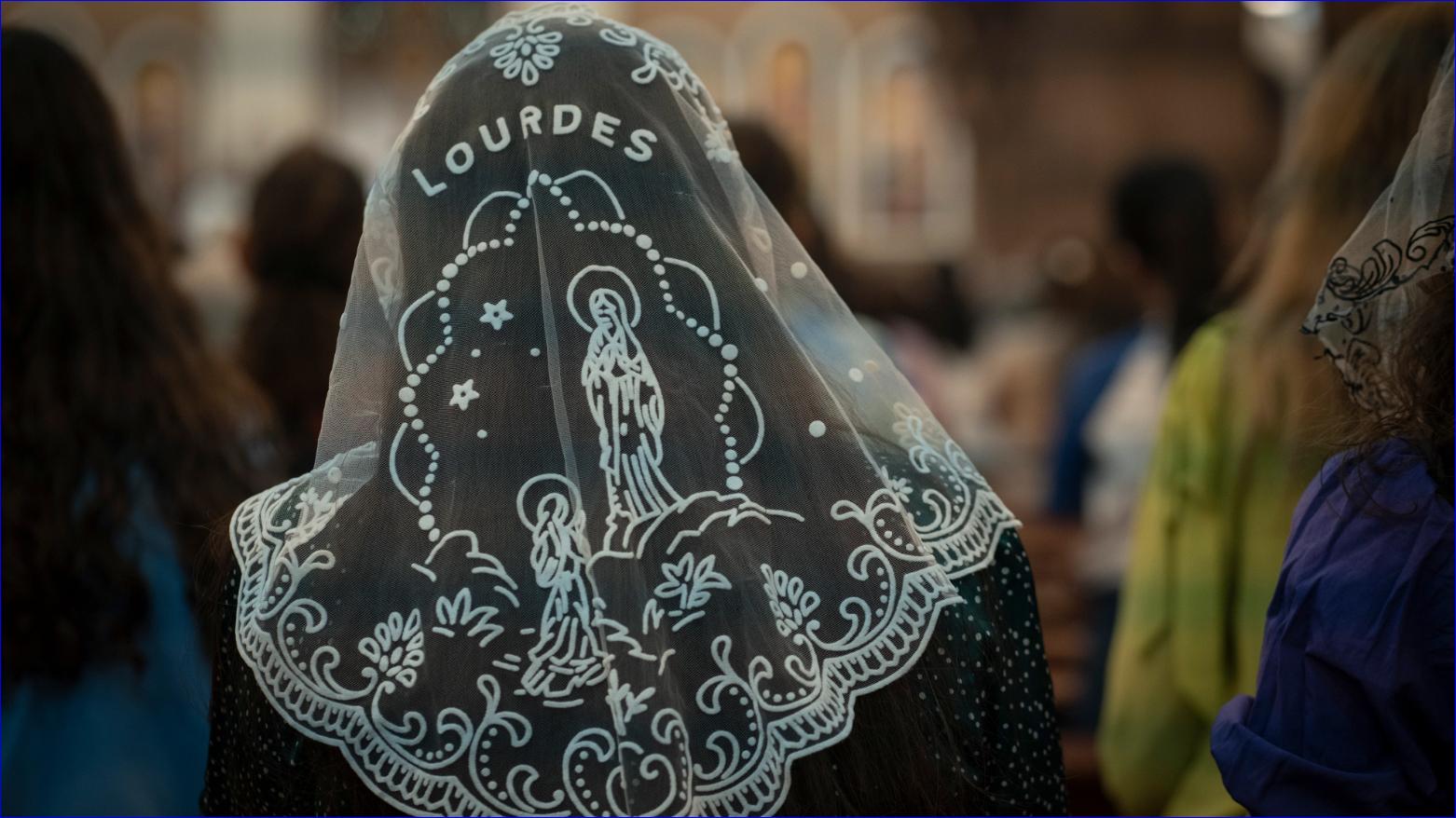
Christians, one of Iraq's indigenous communities, experienced large-scale displacement following years of terrorist attacks and the rise of ISIS. Iraq's Christian population exceeded one million after the fall of the former regime in 2003, but many later left Baghdad and other provinces, with large numbers seeking safety in Alqosh and different parts of the Kurdistan Region.
For Samer Younis, that history is also personal.
Speaking to Kurdistan24 from his modest home, Samer recalled the explosion that severely injured his leg and changed the course of his family's life.
"When I stepped out of my place, a powerful explosion occurred and my leg was severely injured," he said.
Samer said he managed to inform his family that he had survived, but the injuries left him disabled and unable to work. He also lost his livelihood and home in Baghdad.
"For many years now, no one and no authority has asked about our situation," he said.
His wife, Samira, keeps old photograph albums as reminders of the family's previous life in the capital.
"After the fall of the regime, all we experienced was illness, the destruction of our home and loss," she said.
She said her husband has been confined to the house for 22 years and described the family as having been marginalized despite government institutions that were supposed to address displacement.
Samira was particularly critical of the Ministry of Migration and Displacement, arguing that even when the ministry was allocated to Christians, the arrangement did not improve their circumstances.
Her remarks reflect frustration among some displaced Christian families who say political representation has not necessarily translated into practical assistance, return or restored security.
That concern also emerged in a separate Kurdistan24 interview with Ano Jawhar, Secretary of the Christian Alliance, who argued that Iraq's Christians should focus on securing constitutional rights and genuine political representation rather than simply obtaining government posts.
Speaking on Kurdistan24's Basi Roj program on Oct. 18, Jawhar said the Soyana Christian bloc holds three of parliament's five Christian quota seats and argued that this gives it a legitimate claim to the Ministry of Migration and Displacement.
But he said the larger issue was who genuinely represents Christian communities.
"In Iraq, we fight for rights, not positions," Jawhar said.
He argued that if political parties cannot agree on a Soyana nominee, the prime minister should appoint a competent independent Christian who enjoys broad support within the community.
Jawhar also raised concerns about the Nineveh Plains, alleging that armed groups and outside political interference have weakened independent Christian representation and complicated efforts to normalize conditions and encourage displaced families to return.
Read More: Christian Alliance Calls for Genuine Representation in Iraqi Government
He also called for changes to Iraq's quota system, proposing separate voter registers so that Christians and other communities would elect candidates for their own designated seats without votes from outside those communities.
Jawhar argued that the existing system allows larger political parties and armed groups to influence quota representation.
He also said large numbers of Iraqi Christians have moved to cities in the Kurdistan Region, which he attributed to greater security and coexistence there.
For displaced families such as Samer and Samira, however, political debates over representation remain closely tied to the unresolved question of return.
Their experience shows that displacement is not simply about leaving a home during a period of violence. Years later, it can mean lost property, unemployment, disability and a continuing sense that institutions have failed to provide a path back.
Christians interviewed by Kurdistan24 in Alqosh and the Kurdistan Region said federal promises have not yet been enough to restore that confidence.
For them, the question is not only whether officials encourage displaced Christians to return, but whether security, rights and meaningful representation are strong enough to make that return sustainable.
or register to post a comment.