


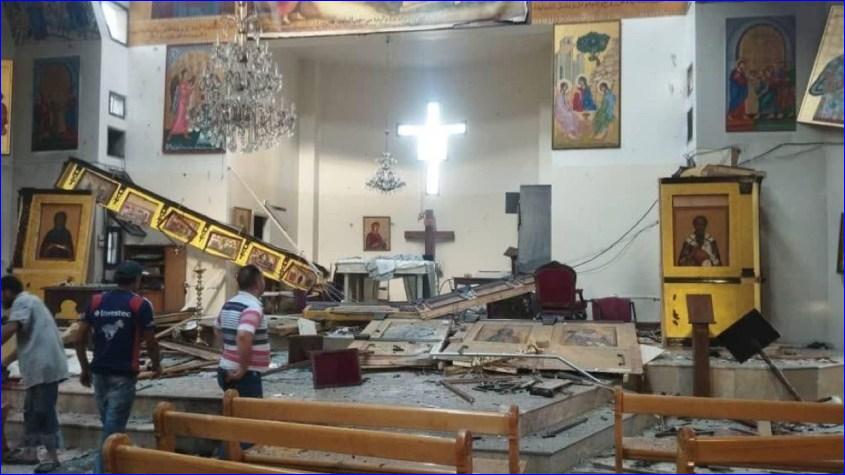
The Protection of Syrian Religious and Ethnic Minorities Act, introduced on 16 October, would require the US secretary of state, in coordination with the director of national intelligence, to identify senior Syrian officials and affiliated individuals credibly accused of participating in, facilitating or concealing serious human rights violations.
The report would be submitted to Congress within 90 days of the legislation's enactment. The bill would also require the administration to determine whether targeted sanctions should be imposed against those implicated, potentially including asset freezes, visa restrictions and other financial or immigration-related penalties.
The proposal comes amid continued reports of violence, unlawful detention, forced displacement and religious persecution affecting communities across Syria. Its introduction signals an effort by some members of the US Congress to make accountability for such abuses a more explicit part of Washington's approach to the country's future.
"Protecting religious freedom and fundamental human rights must remain a priority as Syria navigates its future," Mackenzie said. Congress must strengthen oversight and identify those responsible for serious violations.
Mackenzie, a Republican representing Pennsylvania's seventh congressional district, has also engaged with members of the Syrian-American community and congressional colleagues over concerns about religious persecution in Syria.
Assyrian and Christian Organizations Welcome the Initiative
The bill has received support from In Defense of Christians (IDC), the American Syriac Union (ASU) and the Alawites Association of the United States. The European Syriac Union (ESU) has separately called on Washington to translate its concerns into concrete measures to protect communities across Syria.
Robert Ozgun, president of the ASU, said the legislation addressed the need for accountability for persecution, forced displacement, extrajudicial killings, forced religious conversions and other serious abuses. He stressed that Syria's indigenous communities, including the Assyrians, Armenians, Rûm, Kurds, Druze, Alawites, Yezidis and Jews, need more than political assurances to secure their future in their ancestral homeland.
Their continued presence, Ozgun said, depends on security, accountability, equal participation and protection of their identities, heritage and historic presence.
The ASU welcomed Mackenzie's initiative in a public statement, describing it as an effort to protect vulnerable communities and saying it looked forward to continuing its work with his office.
Richard Ghazal, executive director of In Defense of Christians, likewise endorsed the proposal, arguing that the future of Syria's Christian communities and their ancient heritage depends on whether those responsible for persecution are held accountable.
The legislation, Ghazal said, would provide a framework for identifying individuals implicated in serious abuses and pursuing targeted consequences against them.
The Alawites Association of the United States also backed the bill. Its president, Dr. Morhaf Ibrahim, described accountability as essential to preventing further violence, protecting civilians and securing a future based on dignity, equality and the rule of law.
European Syriac Union Calls for Concrete Action
The European Syriac Union (ESU) urged the United States to use its political influence to address persecution and human rights abuses against Syria's religious and ethnic communities.
"The United States is one of the key actors supporting Syria's current transitional government. Therefore, it has a significant responsibility to help prevent persecution against minorities, protect civilians, and ensure that those responsible are held accountable. The United States has the political influence to help stop these abuses, and it must use that influence," ESU said in a statement.
It called for decisive action to ensure that Christians, Alawites, Druze and other communities can live in safety and enjoy equal rights and dignity.
The ESU's statement also underscored a broader concern among Assyrian organizations, that expressions of international support for Syria's diverse communities must be accompanied by measures that produce tangible protections on the ground.
Accountability Remains the Central Question
The proposed legislation would not automatically impose sanctions on Syrian officials. Instead, it would require the U.S. government to assess credible allegations of serious abuses and determine whether existing US sanctions authorities should be used against those responsible.
Its practical impact would therefore depend on the bill's progress through Congress, its final provisions, and the administration's subsequent decisions.
The initiative, for Syria's religious and ethnic communities, raises a central question about the country's transition, whether assurances of inclusion and national unity will be matched by effective safeguards against persecution and discrimination.
The organizations supporting the bill see accountability as a prerequisite for lasting stability, arguing that no community should be forced to live in fear because of its religious or ethnic identity.
Whether the proposal advances into law remains to be seen. But its introduction, alongside calls from Assyrian and Christian organizations for stronger international engagement, places the protection of Syria's vulnerable communities squarely within a growing debate over the responsibilities of foreign governments toward the country's post-transition future.
or register to post a comment.