


Demolition Orders and Church Property
In a public statement, the Federation said the demolition of a house belonging to a Assyrian owner on 6 October 2026, and the sealing of four other properties pending possible demolition had deepened concerns among Assyrians in the diaspora and in Azech.
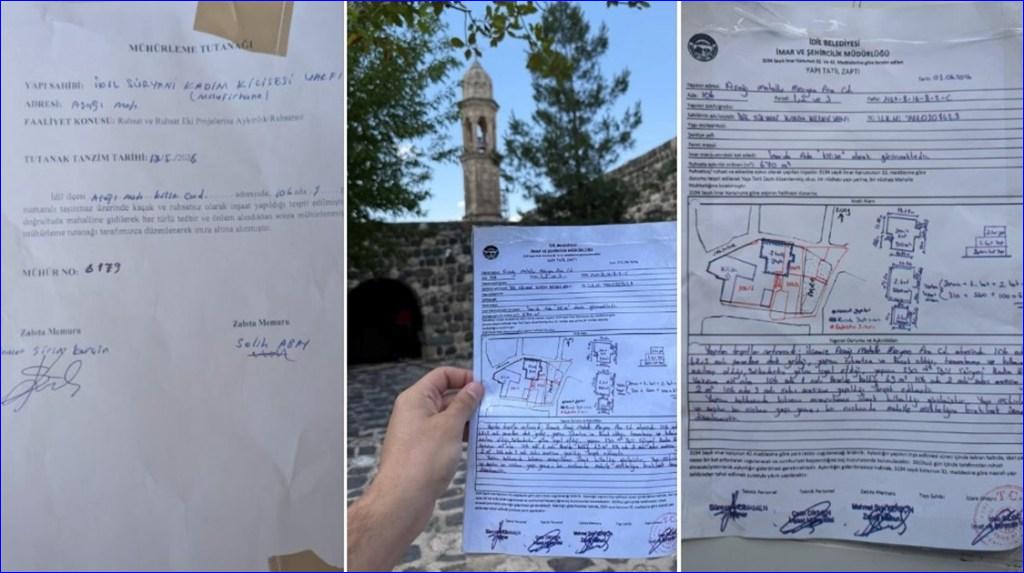
According to the International Idil (Azech) Assyrian Federation, municipal authorities first sealed a newly constructed guesthouse belonging to the Assyrian Orthodox Virgin Mary Church in Azech. The municipality cited violations of zoning regulations. On 6 October, the municipality proceeded with the demolition of a house belonging to Alyet Karagöl. Four additional properties belonging to Süleyman Karagöl, Ibrahim Konutgan, Semun Gösteris, and Filiz Tokus were subsequently sealed with the stated intention of demolishing them.
The sealing and enforcement of the demolition orders, the Federation claims, must be examined in the context of the mayor's personal relationship with members of the Assyrian community and the circumstances surrounding the affected properties. It described the demolition of Karagöl's home as an escalation in a dispute that threatens the security of Assyrian families who have returned to their ancestral lands after spending decades in the diaspora.
Political Allegations Against the Mayor
Kayir, elected mayor in 2024 as a candidate for the pro-democracy DEM Party, initially took office amid expectations that she would serve impartially the town's Assyrian, Kurdish, and other residents. However, the Idil Assyrian Federation alleged that member of the Azech municipal council Ekrem Simsek started influencing her official decisions. The Federation accused Simsek of exercising undue influence over the mayor after which the mayor's municipal authorities were used to advance personal interests and take retaliatory measures against Assyrian residents.
The statement said that Mayor Türkan Kayir was expelled from the Assyrian organizations of which she was a member and from the DEM Party. She remained politically independent before joining the ruling Justice and Development Party (AKP) on 14 August 2026.
The Federation characterized the political switch as highly significant regarding the demolition orders and claims that the mayor believed her new political affiliation would offer protection for her actions.
Disputed Claims Over Building Regulations
The Federation also challenged the municipality's apparent reliance on zoning regulations, arguing that enforcement should be applied consistently rather than selectively against Assyrians. It argued that the allegations warranted scrutiny of whether municipal regulations were being enforced consistently and whether the affected residents had been afforded equal treatment under the law.
The Federation claimed that nearly 80 percent of the buildings in Azech, including public buildings, were constructed without comprehensive urban planning or building oversight or all necessary permits. It further alleged that the mayor's private residence, built by Türkan Kayir after she became mayor, violated building regulations and was located within a protected historical area of the town.
A Community's Fragile Return
Beyond the immediate property dispute, the International Idil (Azech) Assyrian Federation situated the demolitions within a longer history of violence, killings, unsolved murders, and displacement affecting the Christian Assyrians in the area.
The statement referred to the killing of Mikael Bayro in Azech as part of a history of killings and violence against Assyrians that, it said, extended across Tur Abdin. It also drew a direct historical connection to the Sayfo, the genocide and forced displacement of Assyrian, Armenian, and Pontic Greek populations during the Ottoman era, particularly in 1915.
The Federation said the resulting pattern of emigration and displacement had contributed to the depopulation of Azech's Assyrian community. Azekh is known historically as Beth Zabday and lies in the southeastern Turkish province of Sirnak. The current population is majority Kurdish. In the past it was majority Assyrian.
Over the past two decades, some Assyrian families have returned to the town and to Tur Abdin, seeking to rebuild their lives, restore properties and reconnect with their ancestral homeland. The Federation described the latest demolition measures as a threat to those efforts. It said the prospect of a Assyrian mayor being used against members of her own community was particularly painful for families seeking to preserve their presence in the town.
The statement warned that the current dispute could undermine relations among Azech's communities and weaken the determination of Assyrian families to remain on or return to their ancestral lands.
Calls for Intervention
In its concluding statements, the Federation called on Assyrians in Azech, their supporters and Assyrian communities abroad to oppose what it described as an attempt to intimidate residents and undermine their presence.
It also appealed directly to Turkish President Recep Tayyip Erdogan, political party leaderships, relevant government officials and the wider Turkish public to intervene and urged Turkish authorities to prevent what it characterized as efforts to sabotage the return of Assyrians to their homeland.
At the heart of the dispute are questions that extend beyond individual properties, whether municipal powers are being exercised fairly, whether residents can challenge demolition decisions through transparent legal procedures, and whether returning Assyrian families can rebuild their lives with confidence that their rights will be protected.
The statement of the International Idil (Azech) Assyrian Federation and its allegations remain to be independently established. Clarification from the Azech municipality and relevant authorities on the legal grounds for the demolition and sealing orders, the status of any appeals, and the allegations against the mayor and municipal council member would be necessary to establish the full circumstances of the case.
or register to post a comment.