


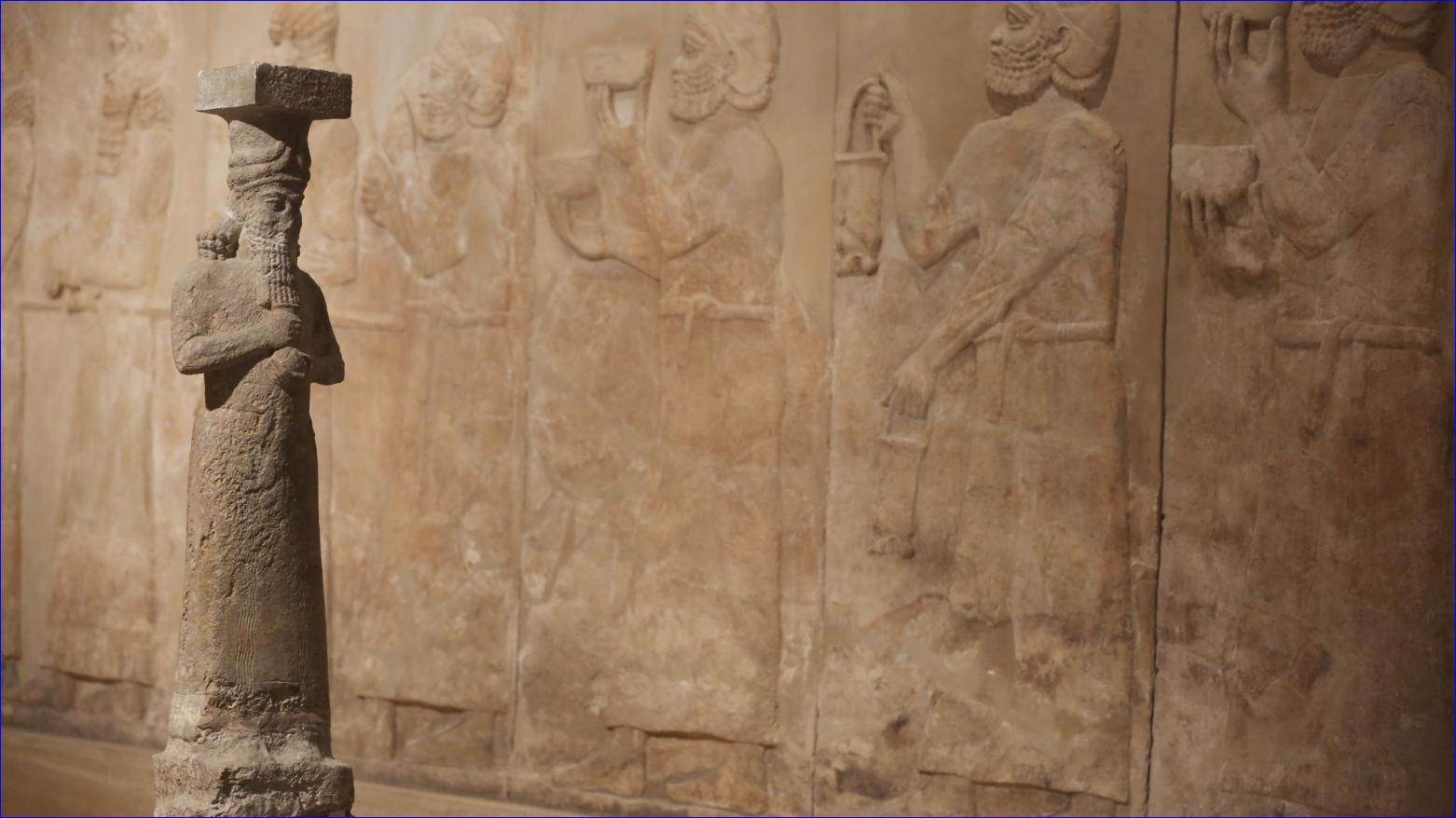
 AFP)
AFP)
The ministry said the latest recovery was achieved through sustained legal work intended to protect Iraq's cultural and civilizational heritage.
Its Directorate for the Management of Foreign Claims is continuing to follow cases involving Iraqi antiquities abroad, while coordination is underway with the Ministry of Foreign Affairs, the Iraqi Embassy in Washington and other relevant authorities to recover additional objects.
The latest return forms part of a much longer effort.
Iraq has lost antiquities through several distinct waves of theft and destruction, including museum looting during the 2003 invasion, widespread plunder of archaeological sites and later losses during ISIS's control of parts of the country between 2014 and 2017.
The looting of the Iraq Museum in Baghdad in 2003 became one of the most visible episodes.
In a 2005 account published in the American Journal of Archaeology, investigator Matthew Bogdanos estimated that roughly 14,000 to 15,000 objects had been stolen from the museum. That assessment corrected much larger early figures that had placed the number at around 170,000.
The stolen pieces included cylinder seals, jewelry and important sculptures.
Not everything initially believed missing, however, had been looted.
The Irish Times reported in June 2003 that the Treasure of Nimrud had been recovered from flooded vaults beneath Iraq's central bank, where it had been hidden before the 1991 Gulf War. Museum employees also disclosed another location where objects had been placed for protection before the 2003 invasion.
The distinction is important because Iraq's cultural losses cannot be measured solely through museum inventories.
Archaeological sites across the country were also subjected to extensive looting.
In a 2008 study published in Antiquity, archaeologist Elizabeth C. Stone used satellite imagery to examine damage to sites in southern Iraq. Her research found widespread evidence of looting, particularly around the period of the 2003 invasion.
Stone estimated that such activity could have produced hundreds of thousands of objects for the illicit antiquities market.
That figure was an academic estimate based on the scale of looted sites rather than a verified count of individually documented stolen artifacts.
A further wave of destruction and trafficking followed the territorial expansion of ISIS.
Reuters reported that during the group's occupation of parts of Iraq from 2014 to 2017, antiquities were both destroyed and smuggled, adding another layer to the country's already extensive cultural losses.
Despite those setbacks, Iraq has secured several major recoveries.
In August 2021, the Associated Press reported that more than 17,000 looted artifacts recovered from the United States and other countries were handed back to Iraq's Culture Ministry.
Further objects were returned in subsequent years. Reuters documented another presentation in Baghdad in July 2024 involving antiquities repatriated from the United States and other countries.
Among the best-known recovered objects is the Gilgamesh Dream Tablet, a roughly 3,500-year-old clay tablet bearing part of the ancient Epic of Gilgamesh.
The object had moved through the international antiquities market before eventually being displayed in Washington.
U.S. authorities seized the tablet in 2019, and a court ordered its forfeiture in July 2021. By December of that year, the tablet had returned to Iraq and was displayed in Baghdad.
Its journey illustrated one of the main difficulties facing Iraqi authorities: stolen antiquities can move through multiple dealers, collections and countries before their origin or legal status is challenged.
Past recovery operations have involved international cooperation, law-enforcement seizures, raids and voluntary returns, methods documented by Bogdanos in his work on Iraq's missing antiquities.
Repatriation, however, addresses only one side of the problem.
Preventing further looting remains an ongoing challenge.
A 2018 review in the Annual Review of Anthropology identified limited resources, uneven enforcement and continued market demand among the factors that sustain archaeological looting and illicit antiquities trafficking.
For Iraq, that means cultural-heritage protection requires both the recovery of objects already taken abroad and stronger measures to prevent additional losses at home.
The Justice Ministry's announcement of more than 80 newly recovered antiquities adds another group of objects to those already returned over the past two decades.
The ministry says its legal work will continue, with the Directorate for the Management of Foreign Claims pursuing further cases in coordination with diplomatic missions and other Iraqi institutions.
The latest recovery is therefore one step in a process that remains far from complete: identifying missing antiquities, tracing their movement through international markets and collections, establishing ownership, and securing their eventual return to Iraq.
or register to post a comment.