


 İHA)
İHA)
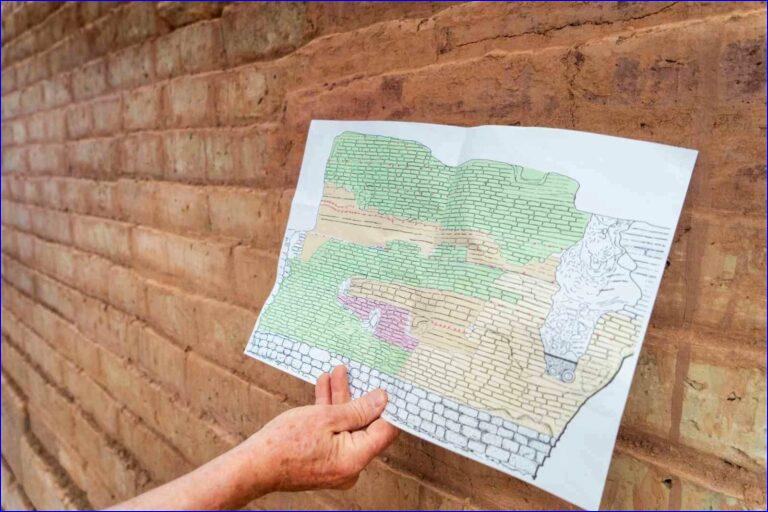
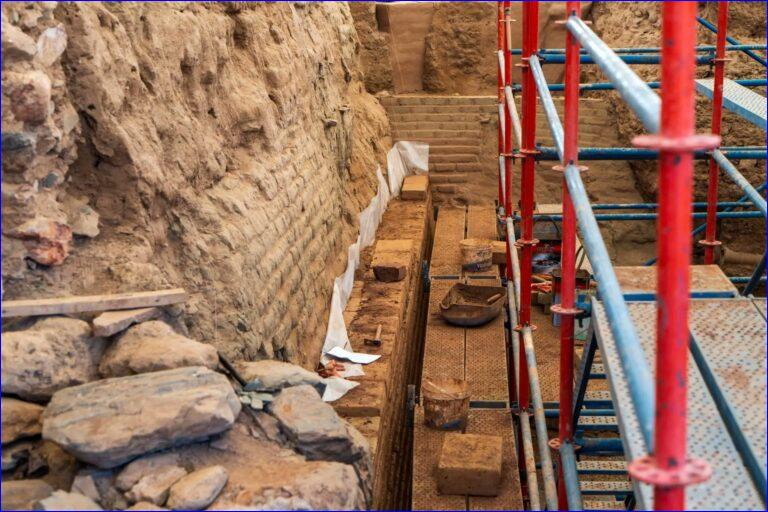
The fortification, built during the final century of Lydian independence, measures approximately 20 meters (66 feet) thick and survives in places to a height of 12 meters. Among its thousands of mudbricks, researchers have identified fired bricks, a building material associated with Assyrian and Babylonian construction traditions. Excavation director Professor Nicholas Cahill believes that craftsmen displaced by the collapse of the Assyrian Empire may have helped the Lydians develop their monumental defenses.
The possibility has emerged as specialists continue efforts to preserve the exposed fortification. Their work is also bringing renewed attention to the engineering skills of a kingdom whose influence extended across much of western Anatolia before its conquest by Persia.
A Fortress Unlike Anything Else in Ancient Anatolia
Sardis occupied a strategic position beneath Mount Tmolus, overlooking the fertile Hermus River valley. Its steep acropolis provided a natural stronghold, while a separate defensive circuit enclosed the lower city, protecting an urban area of approximately 108 hectares.
The lower-city fortification was unknown to archaeologists until 1976. Excavations subsequently revealed an extraordinary structure, built and repeatedly modified using mudbrick, stone and massive earthworks.
According to Cahill's published study of Sardis, the wall reached a width of 18--20 meters along much of its course. In certain places, sloping earthworks increased the overall width of the defenses to an estimated 30--40 meters. Surviving sections stand as high as 10--13 meters, although the original height remains uncertain.
The scale was exceptional for the region. Even though Sardis was considerably smaller than Mesopotamian capitals such as Nineveh and Babylon, its fortifications rivaled their defensive walls in size.
The structure also reveals different phases of construction. An early mudbrick wall stood on a relatively low stone foundation, while later builders reinforced sections with a substantial outer facing of large stones. They added sloping deposits of sand and gravel outside the wall, creating an obstacle intended to prevent attackers from approaching the main defenses.
At the western entrance, a monumental gate opened onto the road toward Smyrna and the Aegean coast. Its passage was approximately 5.5 meters wide, and archaeologists have identified wheel ruts in the ancient road surface.
The result was a fortress built on a scale rarely encountered in the ancient Mediterranean. It also raises a question about the origins of the expertise required to construct it.
 İHA)
İHA)
Could Assyrian Builders Have Reached Sardis?
The most intriguing clues are the fired bricks found within the Lydian fortification. Mudbrick was widely used in ancient Anatolia. Builders mixed earth with water and other materials, shaped the mixture into blocks, and allowed them to dry. Fired bricks required an additional manufacturing stage involving deliberately controlled heat.
Cahill has drawn attention to the use of fired bricks at Sardis during the late seventh and early sixth centuries BCE. He notes that the technology was unusual in contemporary Greek and Anatolian architecture but familiar in Mesopotamia, where Assyrian and Babylonian builders had long used it in major construction projects.
The historical circumstances make a connection plausible. In 612 BCE, a coalition led by the Babylonians and Medes captured Nineveh, one of the great capitals of the Neo-Assyrian Empire. The empire's remaining political centers fell in the following years, bringing an end to Assyrian imperial power.
The upheaval may have displaced skilled workers, including architects, engineers, and craftsmen. Some could have found employment in other kingdoms, including Lydia, which was expanding its influence in western Anatolia.
Cahill has suggested that such builders may have introduced construction knowledge to Sardis, where the Lydian kings had the resources to undertake enormous building projects. The hypothesis would help explain both the wall's dimensions and its unusual materials.
However, the presence of a particular building technique does not establish the identity of its builders. No inscription or other direct evidence has yet demonstrated that Assyrian craftsmen worked on the Sardis fortification.
The bricks provide a possible connection between the two architectural traditions, rather than proof of a documented migration.
 Carole Raddato, Wikimedia Commons)
Earlier Excavations Reveal More Evidence of Lydian Engineering
Research elsewhere at Sardis has added another dimension to the question of how the Lydians acquired and developed their building techniques.
In his report on the 2023 excavation season, Cahill described a refuse pit discovered beneath later structures in Field 49, an elevated area believed to have formed part of the Lydian palace complex.
The pit dates to the later seventh century BCE. Alongside local and Corinthian pottery, archaeologists recovered fragments of deliberately fired mudbrick.
Cahill identified the fragments as the earliest known fired bricks from Sardis and, in his assessment, the Mediterranean world. He noted that comparable technology was already known in contemporary Assyrian and Babylonian cities, suggesting that the Lydians may have learned the technique from eastern neighbors.
Importantly, the bricks from Field 49 were not recovered from the defensive wall itself. They belong to a separate archaeological context, but demonstrate that fired-brick technology was present in Sardis during the period when the kingdom was developing its monumental architecture.
Other discoveries show that large-scale construction had begun even earlier. Excavations in 2019 uncovered part of an early mudbrick building beneath later palace-area structures. Its substantial walls, reinforced with timber, were approximately 80 centimeters thick.
Charcoal from one of the wooden posts produced a radiocarbon date range of 996--837 BCE, placing the structure among the earliest known examples of monumental architecture at Sardis. The dating suggests that the city's building traditions developed over several centuries, long before Croesus became king.
These discoveries reveal a kingdom with considerable architectural experience of its own. The Assyrian connection, if confirmed, would therefore represent an exchange of specialist knowledge rather than the sudden introduction of monumental construction to Lydia.
From the Wealth of Croesus to the Persian Conquest
Sardis became one of the most important cities of the ancient world during the seventh and sixth centuries BCE. Its prosperity was closely associated with the Pactolus River, which carried gold-bearing deposits from the mountains. Access to precious metals helped the Lydians develop coinage, an innovation that transformed economic exchange across the Mediterranean and beyond.
The kingdom reached the height of its power under the Mermnad dynasty. Alyattes consolidated Lydian authority, while his successor Croesus became famous for his wealth, military campaigns, and diplomatic relations with the Greek world.
The construction of the massive fortification belongs to this period of Lydian expansion, although its different phases cannot all be assigned securely to individual rulers.
The kingdom's fortunes changed dramatically when Croesus confronted the rising Persian Empire. Around 547 BCE, Cyrus the Great captured Sardis, ending Lydian independence. Archaeologists have uncovered destruction layers associated with the conquest, including burned buildings, weapons, and human remains.
A study published in Hesperia in 2025 examined nine silver coins discovered with the remains of their owner in the Persian destruction layer. Their considerable wear suggests that they had circulated for more than 14 years before the city's fall, providing evidence relevant to the chronology of Croesus's reign and his monetary reforms.
The fortification also bears traces of the conflict. Excavations have revealed burned timber, arrowheads, and mudbrick that was exposed to such intense heat that parts of it became vitrified. Following the conquest, sections of the defensive wall were deliberately demolished. Fallen material buried portions of the lower structure, unexpectedly helping to protect them from erosion and later stone removal.
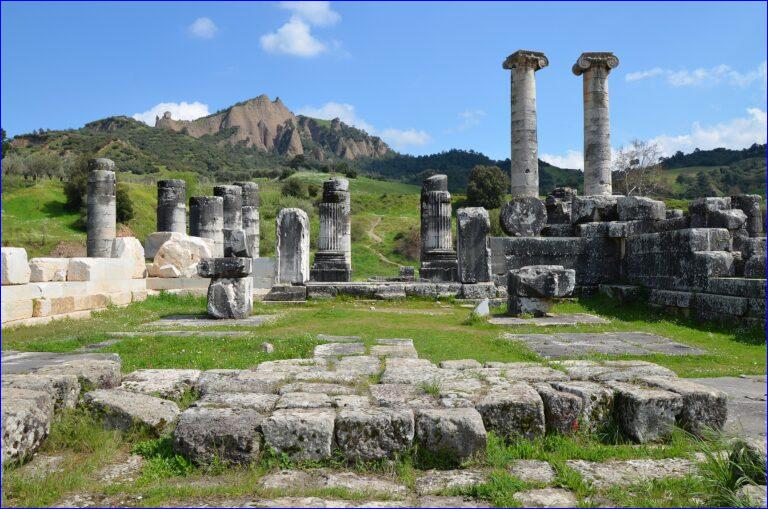
Sardis nevertheless survived the end of the Lydian kingdom. It remained an important administrative and commercial center under Persian rule and continued to develop during the Hellenistic, Roman and Byzantine periods. Its surviving monuments include the Temple of Artemis, a monumental Roman bath-gymnasium complex and one of the ancient world's notable synagogues.
Preserving the Walls of an Ancient Kingdom
The same mudbricks that have survived for more than 2,600 years now present a challenge for conservators. Much of the Lydian fortification remained protected beneath layers of earth for centuries, but once exposed, its ancient surfaces became vulnerable to rain, wind, and changing temperatures. Preserving the wall requires more than repairing visible damage: the original materials must be protected without erasing the evidence of how the Lydians built their defenses.
The Sardis excavation team has spent years developing a conservation strategy for the structure. In 2019, specialists tested a protective mudbrick covering on a section of the wall damaged during construction of the İzmir--Ankara highway in the 1950s. A protective roof was completed over part of the fortification in 2023, providing additional shelter for the exposed remains.
The latest conservation project takes this work further. Specialists first created a highly accurate survey of the surviving wall, recording the dimensions, textures, and colors of its ancient bricks. These measurements guided the production of replicas designed to closely match the original building materials. A separating layer was then introduced between the historic masonry and the new brick facing, allowing the team to protect the ancient structure without building directly against its surface.
The work is particularly important because the wall contains more than an impressive example of Lydian engineering. Its original mudbricks and fired bricks preserve evidence that may help researchers understand how construction techniques developed at Sardis and whether knowledge from Mesopotamia influenced the city's builders. Protecting these materials will allow future archaeologists to investigate questions that the present excavations have not yet resolved.
What the Walls May Still Reveal
Sardis, together with the nearby Lydian burial mounds of Bin Tepe, joined the UNESCO World Heritage List in 2025. Its monumental defenses remain among the clearest surviving expressions of the wealth, ambition, and engineering capabilities of the Lydian kingdom.
The continuing research is gradually revealing the scale of a city whose reputation has long been dominated by the gold of Croesus.
Its walls tell another story: that of a kingdom capable of mobilizing enormous resources, adapting its architecture over generations and potentially drawing on knowledge from distant civilizations.
Yet the fired bricks raise a question that wealth alone cannot answer. Did the Lydians develop this construction technique independently, or did craftsmen from the collapsing Assyrian Empire bring their knowledge westward? Archaeologists have not established a direct connection, but the evidence emerging from Sardis offers an opportunity to investigate how technical expertise moved between the ancient world's great powers.
or register to post a comment.