


We live in tumultuous times, where the topic of immigration is highly controversial. Yet I connect the memories of my family's history of intergenerational trauma and escape to my personal experiences bringing my opinion to light: immigration should be open borders; immigrants should NOT be discriminated against.
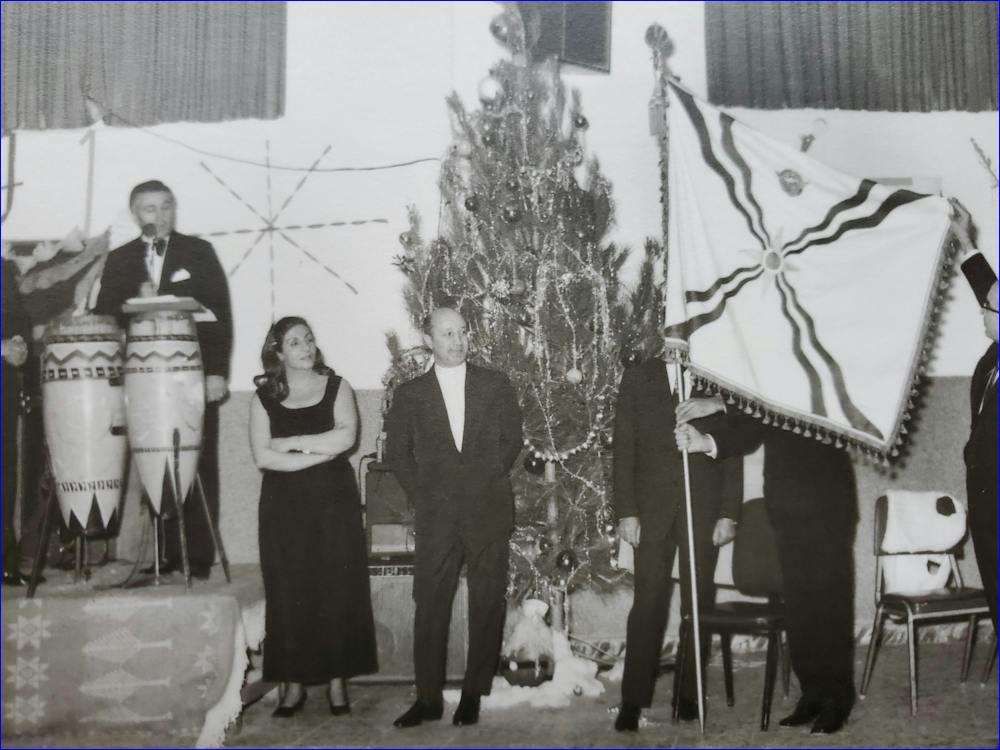
My family has been living in diaspora for well over a century. My great-grandmother, Luba Bet-Alkhas, was a young woman in Russia in the late 1920s when the Russian Revolution's aftermath made staying there impossible. She and her husband, my great-grandfather, Elisha, fled south, eventually settling in Urmia, a city in the Assyrian region of northwestern Iran. They built a life there.
In parallel, my paternal grandfather's family fled the 1914--1918 genocide that the Ottoman Empire carried out against Assyrians, Armenians and the Greeks. When the Ottomans invaded Iran to massacre and ethnically cleanse Assyrians in Urmia and its surrounding villages, the women and children in my grandfather's family fled to the British refugee camps built in Baghdad (in current-day Iraq), while the men joined an Assyrian regiment fighting the Ottoman army alongside the British, who had promised the Assyrians that if they helped the British defeat the Ottomans, they would have a homeland of their own. World War I ended, and the British reneged on their promise. Some of my grandfather's family eventually made their way back home to Iran, though others stayed in Iraq. Either way, "home" became a concept with more than one answer.
60 years later, my grandparents fled again. This time, from the 1979 Iranian Revolution, along with my father and aunt, who eventually made their way to the United States.
I am absorbed by immigration because of my family's personal memories of intergenerational trauma of escape from political persecution and violence. Through working with nonprofits that serve gender-based violence survivors, I saw clear patterns in the trauma clients carried: Many women from West Africa were survivors of female genital mutilation, and those from Ecuador and Colombia had fled gender-based violence severe enough to make staying a matter of life and death. Each case was severe and it was very quickly proven to me how poorly run the immigration system is.
I won't pretend I can do justice to what they told me, and I don't think it's my place to retell their stories in detail; they aren't mine to tell. What I can say is that I sat with people who had survived traumas I struggle to even hold in my imagination and who still found the strength to trust a stranger with a piece of it.
None of these lives are similar, but the same thread runs throughout: having to build a new life in a new home after fleeing violence.
When my family fled Iran in the late 1970s, gaining legal status in the United States was difficult, but it was not the ordeal it is today. Now, it is nearly impossible. In June 2026, 94% of asylum cases were denied. Hundreds of immigration judges are being fired, and asylum denial rates are higher than ever. Immigration and Customs Enforcement (ICE) detain and deport people who have been here for years, who have their lives here. Some of our own peers here at Hopkins had their visas abruptly revoked in 2025.
None of this makes the country safer. It just makes it crueler, and it's simply baffling to think that a first-world country like this one can make such mistakes.
Immigration policy should not be built around suspicion. Every person fleeing from violence deserves to be treated as a person, not as a security threat or a line item to be denied. My great-grandmother was not a threat, neither was the rest of my family who came thereafter or the woman I described at the start of this piece. Immigration policy should exist to give them, as it once gave my family, an honest chance at life and a chance at the American dream.
Sabrina Bet-Mansour is a senior from London, England studying International Studies.
or register to post a comment.