


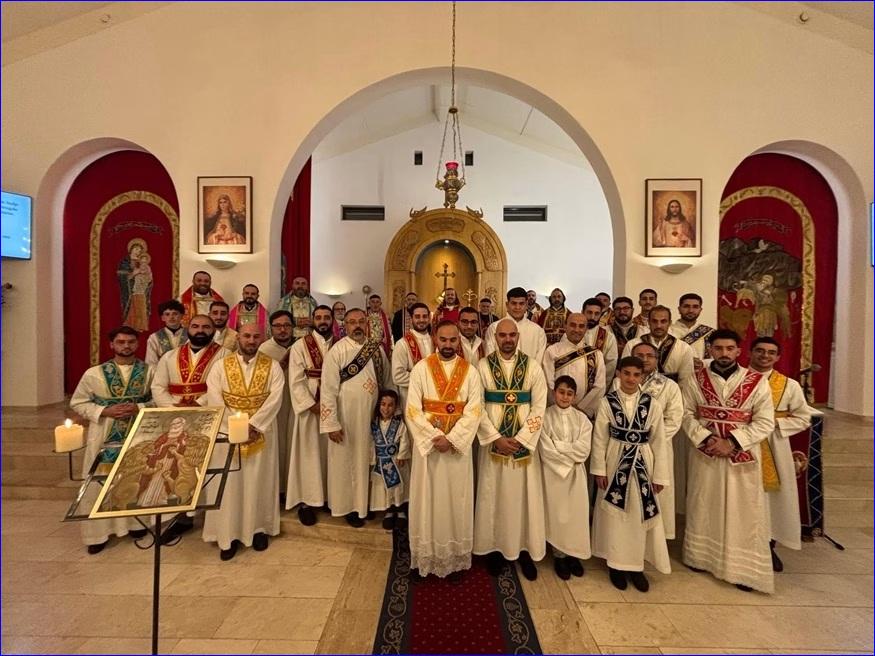
For a few hours each week, a town in the east of the Netherlands becomes a gathering place for a people whose history stretches deep into the Christian Middle East.
Yet the scene is unmistakably contemporary, too. The children were born here. Their parents built their lives here. After the liturgy, worshippers leave the sanctuary for a communal hall, where plates are shared, conversations overlap and news travels from one family to another.
This is how an old tradition survives, not only in the language of its prayers, but around tables, among children and In a Dutch town, an ancient Christian tradition finds a new homein the ordinary rhythms of community life.
For more than three decades, the church on Roelf Bosmastraat has been at the center of Syriac Orthodox life in Rijssen. The parish now includes about 220 families, or roughly 800 people. "Our church is the place where everything comes together," Ilhan Coga told De Week Van Rijssen, the community's board secretary. "Here we share our faith, our culture and our norms and values. That creates a strong sense of connection."
From the Middle East to Twente
The story of the community in Rijssen is also a story of migration. During the 1970s and 1980s, Syriac Orthodox families began arriving in Twente from Turkey and Syria. They came looking for security and freedom, leaving behind villages, towns and communities where Christian families had lived for generations. Rijssen became home.
The welcome they received has not been forgotten. Members of the community still speak of Dutch host families who opened their homes, local churches that offered support and municipal officials who helped newcomers find their footing.
For families arriving from the Middle East, these gestures were more than practical assistance. They were the beginning of a relationship with a place that would eventually become home.
Today, Syriac Orthodox residents are woven into the wider life of Rijssen. They are entrepreneurs, teachers, civil servants, and professionals. Their children grow up in Dutch schools and speak Dutch as naturally as any other language.
But identity can sometimes be less obvious than belonging. "People sometimes think we are Muslims," Coga said. The misunderstanding, he added, usually becomes an opportunity to explain. "We tell them that we are Christians with a very old tradition. Often, people simply don't know."
The Language that Remains
Inside the church, the distinction is unmistakable. The liturgy is largely sung in Syriac, a language with an extraordinary historical resonance for Christian Syriacs. Many young members, however, do not speak it fluently. That creates one of the community's most difficult questions: How do you pass on a language that is no longer the language of everyday life? The answer is not to abandon it.
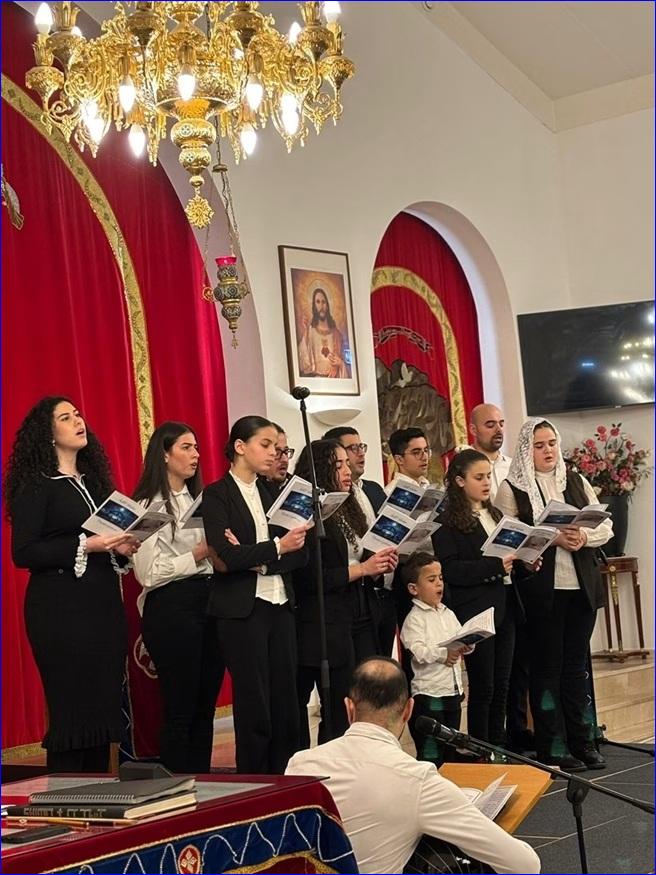
Instead, the community is trying to make the old language accessible to a new generation. Screens provide translations during services. Young people are encouraged to participate in the choirs and church activities. Education and youth programs give them opportunities to encounter the language and history beyond Sunday liturgy.
There is a quiet tension in all of this. Preserving a tradition requires holding on to what came before. But keeping it alive requires allowing the next generation to encounter it in ways that make sense in their own lives. The community is learning to do both.
Memory without Living in the Past
The Syriac Orthodox story is inseparable from the difficult history of Christians in the Middle East. Families carry memories of persecution and of the inferior status Christians experienced under the former Ottoman Empire. For some, the history is part of family memory; for others, it is something learned through stories passed from grandparents to grandchildren.
But in Rijssen, that history does not necessarily dominate daily life. There is work. There is school. There are weddings and funerals, church activities, and family gatherings. There are children growing up with Dutch friends and parents whose lives have become deeply rooted in the Netherlands.
The past is present, but it is not the only thing present. That may be the community's greatest achievement. It has managed to carry an ancient identity into a new country without turning that identity into a museum piece.
The Sunday Table
After the liturgy, the church changes character. The solemnity of the service gives way to conversation. Families gather in the large meeting hall. Food is served. People catch up, laugh, and exchange news. Children move between tables. The gathering is social, but it is also a form of continuity.
A child who learns a hymn, a teenager who joins the choir, a family that returns every Sunday -- these are small acts, almost invisible individually, through which a community reproduces itself.
The Syriac Orthodox diaspora extends far beyond Rijssen, reaching communities across Europe. Yet the ties to the Dutch town remain strong.
For those who built their lives here, belonging does not have to mean choosing between Rijssen and the places their families came from. It can mean carrying both.
Fifty Years from Now
The question that hangs over the community is not whether its history matters. It is whether the next generation will feel that it belongs to them. That is why the church's work increasingly extends beyond the liturgy itself. Translation screens, youth programs, education and participation are all attempts to make an ancient inheritance legible to children who are growing up in a very different world from that of their grandparents.
Ilhan Coga has a simple hope for what that future might look like. "I hope that in 50 years there will still be a living community gathering here," he said. "That we will continue to pass our rich history on to the next generation."
On Sunday mornings, the evidence of that future is already visible. A child sings an ancient hymn. A young person serves at the altar. Parents speak with friends in the hall after the service. Somewhere between the incense and the chatter, between Syriac prayers and Dutch conversation, the past and present meet.
The church is not trying simply to preserve what was. It is trying to make sure that what was can continue to become.
or register to post a comment.