


 Dr. Declan Hayes)
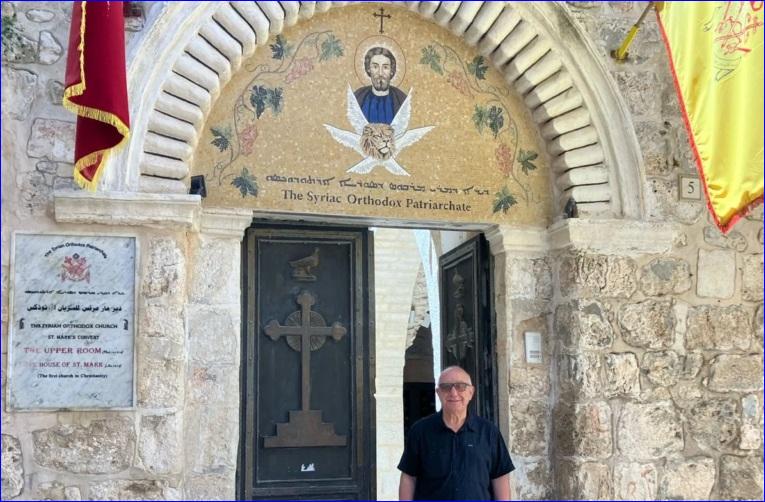
The Syriac Orthodox Church, which now has just north of 2,000 members between Bethlehem and Jerusalem, personifies how imperilled the entire Church is in the Holy Land. Unless pilgrims and tourists return in great numbers soon, they cannot hold on, and their schools and churches will have to close as they no longer have the cash base to support them.
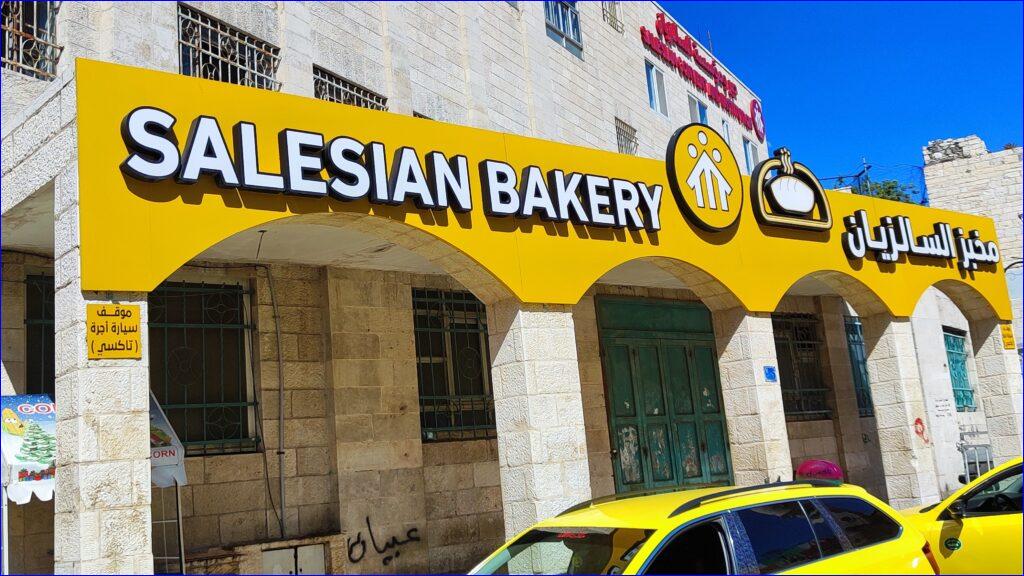
The same holds true in Bethlehem (the City of Bread), where not only the French and Polish orphanages but the wider Christian community are literally depending on the Salesian Bakery for their daily bread. Bethlehem's Church of the Nativity, jointly administered and run by a coalition of the Greek Orthodox Church, the Armenian Apostolic Church, and the Roman Catholic Church, stands empty. The Franciscan hostel beside it is shuttered, as are the nearby rows of souvenir shops, while Manger Square is so empty it might as well be in a ghost town.
The all-Christian town of Taybeh, a little over an hour's drive past Ramallah to the north, is likewise on its last legs. The Khoury family have shuttered their hotel, their beer factory is running at a loss, and, like for the rest of the village, settler roadblocks and vandalism stop them from accessing their crops. Faced with all this, Christians continue to flee via Jordan to claim refugee status in Portugal. And I, for one, do not blame them.
While the Christians are down, they are not yet out. Taybeh Catholic parish priest Fr. Bashar Fawadleh is not only busily fundraising, but the Catholic parish is now the town's biggest employer, thanks to the various schools, medical clinics, and social clubs they run. The Orthodox Khoury family is more entrepreneurial, but all they can do for now is hang in and hope, even against their better judgement, that better days will return before Taybeh's Christian presence--which stretches back to Jesus Himself--finally ends.
The same can be said about the Salesians, who maintain a massive presence in Bethlehem, where they continue not only to bake their famous bread but also to equip generations of teenagers with technical skills that would guarantee employment if the economy ever recovers.
The Christian cup is half empty, but it is also half full, in no small measure thanks to Poland. Wiesław Kuceł, the chief Polish representative in Ramallah, told me that thousands of Polish pilgrims are waiting to fly to Bethlehem's rescue. Yet, as long as the EU and its member states maintain their travel warnings, the travel companies, the backbone of the tourist and pilgrim industries, cannot obtain the necessary insurance from Allianz or other insurers, who have their own fair share of uninformed critics to deal with.
This is not to say that the Poles or the wider Catholic Church are inactive in Bethlehem and beyond. Nuns from the Polish Sisters of St. Elizabeth of Hungary run Bethlehem's Polish orphanage, otherwise known as the House of Peace. As with Bethlehem's much longer-established La Crèche Orphanage, which the French order of the Daughters of Charity of St. Vincent de Paul runs, they have no shortage of abandoned children to look after.
Like most other Christian enterprises, they mainly depend on donations. Both orphanages increasingly rely on the bread the Salesians bake every morning and donate to them. Their highlight of the year was pizzas Elias of the Bethlehem City Hostel made for them with money donated from faraway Australia. Fr. Jesudoss Arockiam, rector and director of the Salesian Institution in Bethlehem, explained at length the practical work the Salesians undertake across the city. My own focus, however, was on how to raise money for them during these straitened times, when many of those they help have not a brass farthing between them.
 Dr. Declan Hayes)
I have struck gold for them in Australia, but Australia alone is nowhere near enough. When pro-Palestinian activists launched their recent Ṣumūd flotilla, they spent over $10 million achieving precisely nothing, beyond a handful of headlines and an inappropriate appropriation of the Ṣumūd concept. 'Ṣumūd' describes the Palestinian determination to cling to their homeland no matter how hopeless the odds.
The Palestinians I spoke to were universally unimpressed by such wastefulness. If anybody is displaying true Ṣumūd, it is those Palestinians who cling to their land and those who remain on their land, together with figures such as Latin Patriarch Cardinal Pierbattista Pizzaballa, Archbishop Mor Anthimos Jack Yakoub, and the good-hearted Australians who stand shoulder to shoulder with them--not only in Gaza, Bethlehem, and Taybeh but throughout the Holy Land. The Latin Patriarchate of Jerusalem also has a donation page.
There are, of course, many European and Australian Christian groups rowing in behind them. Even so, nowhere is Jesus' invocation in Matthew 9:35--38--"The harvest is plentiful, but the labourers are few"--more apt than in the very land where He lived. That land now needs not only our love and prayers, but all the practical help we can send.
or register to post a comment.