


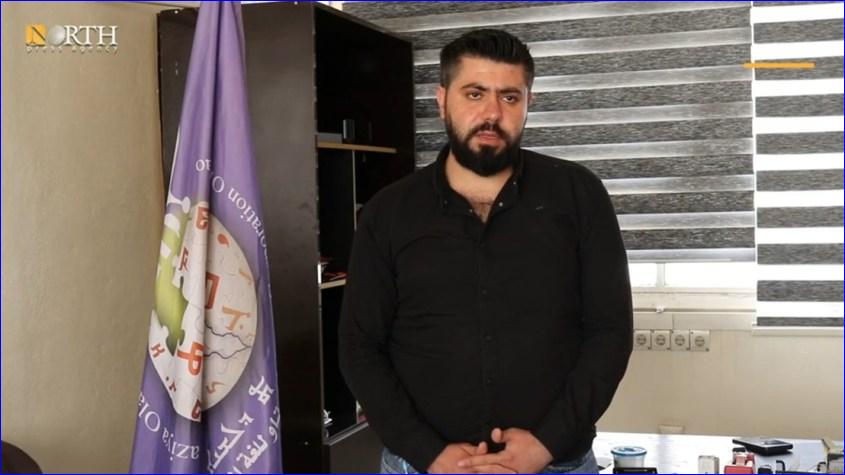
Representatives of the Olaf Taw Association for Assyrian Language, say Syria's constitution drafting process presents a historic opportunity to move beyond general calls of cultural diversity by adopting real legislation and executive decrees that formally safeguard the linguistic and cultural rights of the Assyrian people.
Malek Asmar, Director of the Olaf Taw Association, said the constitutional declaration provides an important foundation but falls short of establishing concrete protections. Article 7, Paragraph 3 of the constitutional declaration states that the state guarantees the cultural and linguistic rights of all Syrians regardless of their languages. While describing that provision as a positive step, Asmar argued that it must be followed by specific legislation recognizing and protecting the Assyrian language and the rights of the Assyrian people.
"The constitutional text offers an important starting point," Asmar said. "But what is still missing is a clear legislative framework that explicitly guarantees the rights of the Assyrian people and protects their historic language."
He called on Syrian authorities to issue clear legal decrees affirming the status of Assyrian as an integral part of Syria's historical and cultural heritage, saying such measures would help ensure the language's preservation for future generations.
The demands were asserted in a video report published by North Press Agency, in which Olaf Taw educators, students, and cultural activists described the challenges facing Assyrian-language education in the absence of official recognition.
Noura Malki expressed disappointment that the Assyrian language has not been recognized as an official language within Syria's educational system. She said the lack of recognition has limited opportunities to teach the language in public schools and universities, despite continued hopes that the Syrian government will eventually adopt policies supporting its instruction.
Although Assyrian continues to be taught in churches and church-affiliated institutions, she said expanding education into public institutions would require official state recognition and support.
Read Also: Assyrian Progressive Youth holds sit-in in Hasakah demanding national rights and recognition of Assyrian language
Malfono Yaqub Barsoum, a Assyrian language teacher at the Olaf Taw Foundation, said the absence of official recognition has also affected younger generations' attitudes toward the language. According to Barsoum, without recognition as a national language, Assyrian education will receive no dedicated state funding, forcing churches, political organizations, and community institutions to finance language programs independently.
Despite those challenges, he said the community remains committed to preserving its linguistic heritage. "We are determined to keep our language alive in our hearts and continue to spread throughout the world," he said.
Students also described the personal impact of studying primarily in languages other than their mother tongue. Simon Gabro, a student at the Olaf Taw Foundation, said that limited opportunities to use Assyrian in daily life, education, and public institutions gradually distance younger generations from their linguistic heritage, often without them realizing it.
He argued that official recognition would strengthen public confidence in learning the language and encourage more young people to preserve it. "Our language is one of Syria's ancient languages," Gabro said. "Recognition as an official language would encourage young people to learn it and give it greater strength and visibility."
The renewed appeals come amid broader debates over Syria's political future and constitutional outline. For advocates for Assyrian rights, constitutional recognition alone is viewed as only the first step. They argue that lasting protection will require enforceable legislation, institutional support, and public investment to ensure that one of the region's oldest linguistic traditions remains an active part of Syria's national identity.
The preservation of the Assyrian language is not solely a cultural issue but a fundamental component of equal citizenship, historical justice, and the creation of a democratic and pluralistic Syria that fully recognizes all its indigenous peoples.
or register to post a comment.