


Related: Read the full article (Russian)
Central to this story are two major figures in Russian Oriental studies: V. V. Struve and I. M. Dyakonov. Struve represents the crucial transition from pre-revolutionary scholarship to Soviet historiography, while Dyakonov emerged as the dominant interpreter of the ancient Near East during the later Soviet period.
Although Dyakonov later minimized Struve's intellectual influence, presenting himself as largely independent of his teacher's methods and conclusions, the documentary record suggests a closer connection. Struve appears to have regarded Dyakonov as part of his scholarly lineage, even if not among his closest disciples. The discrepancy is revealing, highlighting the extent to which academic traditions are shaped not only by intellectual inheritance but also by retrospective acts of self-fashioning.
Dyakonov's writing on Assyria began early in his career. Long before his mature works of the 1950s and 1980s, he had already developed the basic architecture of what he called the "Assyrian logos." Dyakonov analysis elaborate on known fact to establish a narrative framework for understanding the course of the Assyrian Empire forward: how it began, what drove it forward, what internal contradictions it contained, and why it eventually fell apart.
At the heart of Dyakonov's interpretation is the primacy of economic and social structures. Assyria does not emerge as a state through the actions of great rulers alone. Its origins are rooted in geography, commerce, and the strategic position of Ashur -- the first great Assyrian city, located on a plateau above the Tigris River near what is today known as Qal'at Sherqat -- within long-distance trade networks. Political authority develops in response to economic conditions, a perspective that reflects both Marxist historical assumptions and Dyakonov's broader interest in material processes. The rise of Shamshi-Adad I therefore appears not as the founding moment of a mature state but as a transitional stage in a longer process of political consolidation. His importance lies less in personal achievement than in the institutional possibilities he created.
The same interpretive logic governs Dyakonov's treatment of the Middle Assyrian period. Expansion is presented not as a straightforward story of military success but as a process marked by growing tensions between political ambitions and social realities. Here the Marxist foundations of the narrative become particularly visible. Historical change is explained through the interaction of classes, property relations, coercive institutions, and competing social interests. Military conquest serves not merely as a political event but as a mechanism through which underlying social structures are transformed. Yet, these transformations generate contradictions that progressively undermine the stability of the state.
Dyakonov's account reaches its fullest expression in his interpretation of the Neo-Assyrian Empire. Assyria becomes the ancient Near East's first true imperial power, but its success contains the seeds of its own destruction. Particularly important is Dyakonov's argument that the ruling elite was divided between competing visions of empire. One faction favored predatory expansion and military extraction, while another sought more sustainable economic integration of conquered territories. The resulting conflict provided the underlying structure through which political events, administrative reforms, and dynastic struggles could be understood. Individual rulers mattered, but only insofar as they operated within these larger structural constraints.
This framework is especially evident in Dyakonov's treatment of major rulers such as Ashurnasirpal II, Shalmaneser III, and Tiglath-Pileser III. The first two exemplify the expansionist phase of Assyrian development, while Tiglath-Pileser III represents a critical attempt to resolve the contradictions generated by earlier conquests. Military reorganization, administrative centralization, and large-scale population transfers are interpreted as necessary responses to structural crises, rather than reforms enacted on moral grounds. Nevertheless, these measures ultimately fail to eliminate the tensions inherent within the imperial system. The empire's final collapse is therefore explained not as the consequence of a single military defeat but as the culmination of unresolved contradictions embedded in its social and political organization.
This interpretive model was largely complete by the late 1930s. Dyakonov's mature narrative emerged considerably earlier than is often assumed, as evidenced in archival materials prepared for the Soviet World History project. The central themes that would later define his scholarship -- the significance of trade, the fragility of early state structures, the importance of military organization, and the conflict between competing elite interests -- are already clearly visible in these unpublished manuscripts. Subsequent revisions refined the argument and incorporated new evidence, but they did not fundamentally alter its conceptual foundations.
Dyakonov's work is situated within a broader historiographical tradition. Earlier scholars such as B. A. Turaev had produced detailed political narratives of Assyrian history, while Struve supplied a more explicitly Marxist framework emphasizing economic pressures, class conflict, and structural explanations of historical change. Dyakonov's achievement was to synthesize these traditions. He combined the empirical richness of the older Orientalist scholarship with the explanatory ambitions of Soviet historical materialism, producing a narrative that was simultaneously descriptive, analytical, and ideological.
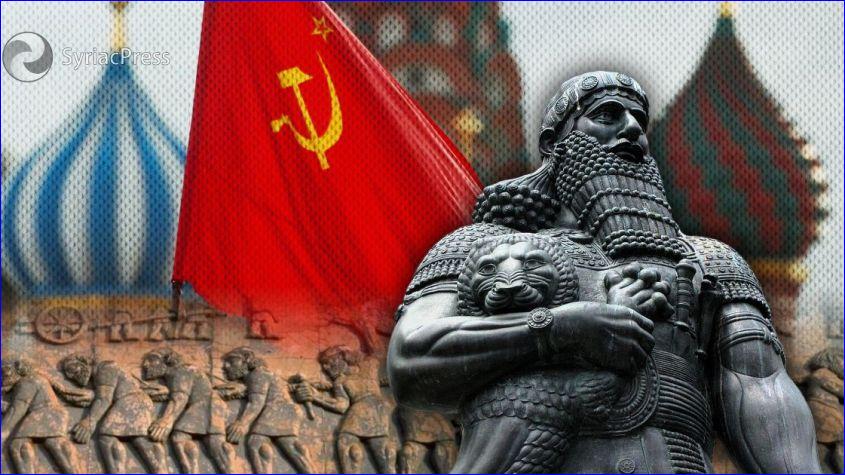
Rather than a transparent reflection of the ancient past, Soviet historiography is itself as a historical phenomenon. The central question is not simply what Assyria was, but how Soviet historians understood it, which intellectual traditions shaped their interpretations, and how the concerns of their own era influenced the histories they produced. This perspective reveals the reciprocal relationship between historical interpretation and intellectual context.
Post-Soviet scholarship has, largely, retained much of the Soviet historiography. Recent editions of World History retain many elements of Dyakonov's narrative framework while revising its explanatory foundations. Earlier emphasis on conflicts between military and priestly factions has been reduced or abandoned, while greater attention is now given to the emergence of a semi-autonomous military apparatus whose growing independence weakened the state from within. The persistence of the broader narrative alongside changing explanations demonstrates both the durability and adaptability of Dyakonov's historiographical legacy.
In their work, Soviet historians did more than reconstruct Assyria, they reimagined it according to the intellectual priorities of their own scholarly environment. Through Assyria, they explored questions of economic development, coercive power, imperial governance, reform, and social contradiction. The resulting historiography became an expression of Soviet historical thought. In this sense, the discussion extends beyond the history of Assyrian studies in the Soviet Union. It offers an examination of how historical narratives are constructed, transmitted, revised, and contested across successive generations of scholarship.
or register to post a comment.