


Related: The Assyrian Genocide
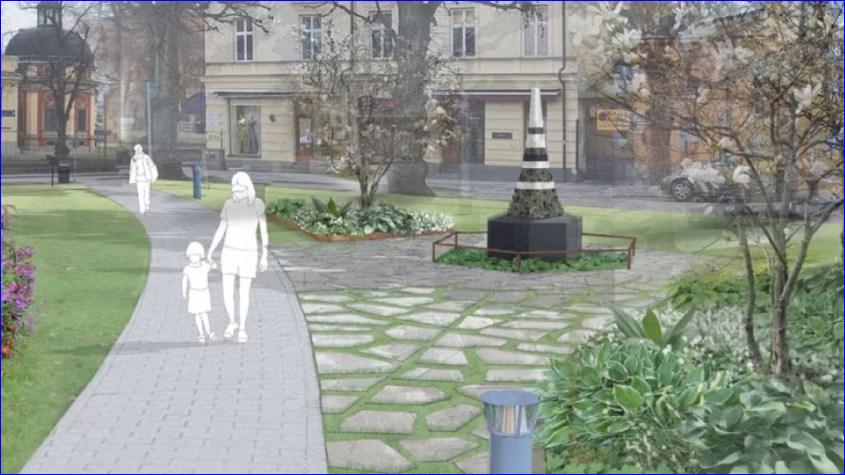
Early June, the municipal council decided on the design and location of the memorial. The design was unveiled only a few days ago but was altered at the last moment after complaints were received. One week after the council minutes were amended, a Södertälje resident appealed the decision to erect the Sayfo monument, arguing that the issue of Sayfo is political in nature and, therefore, falls within the realm of foreign policy, an issue in which municipalities have no authority.
For its part, the Södertälje Municipality defended the project, stating that it was intended to demonstrate local solidarity with the victims of the massacres, noting that more than one-third of the city's residents belong to the affected ethnic communities, particularly the Assyrian community. Nevertheless, the Administrative Court upheld the appeal and annulled the municipality's decision. The court ruled in favor of the complainant, ruling that the construction of the memorial constituted a position on a foreign political issue, which violates local government legislation. The court emphasized that "foreign policy matters are the responsibility of the state and not a concern of the municipality."
According to the Swedish newspaper LT, mayor Boel Godner (Social Democratic Party), expressed surprise at the court's decision, saying: "We believe this is an important issue, and political blocs reached a joint decision on it. There is considerable public interest in the matter, and it affects a large segment of Södertälje's population."
Godner explained that she and the leaders of all other political parties in Södertälje now intend to appeal the ruling before the Administrative Court of Appeal. A decision regarding the memorial is expected to be discussed during a municipal council meeting on Friday. The mayor stated: "We need to strengthen and reinforce the arguments we presented previously. Our defense and evidence were solid."
In a statement to SyriacPress Agency, European Syriac Union (ESU) Internal Affairs official Jacob Mirza said that efforts to establish the memorial date back to 2004. Since then, Assyrian political parties and institutions have continuously submitted requests to the municipality to erect a Sayfo monument, enabling the Assyrian community to remember and commemorate their ancestors and martyrs who were killed without having committed any crime.
"Every year, the municipality promised that the monument would be erected. Last year, it pledged that the monument would be completed and inaugurated on 24 April 2026." Mirza added, "However, under Swedish law, municipal decisions are referred to the courts if one or more individuals file a complaint. In the case of the Södertälje memorial, the argument was that the monument was designated as a national Swedish memorial, which the court considered a matter of foreign policy."
"As European Syriac Union, and in agreement with other Assyrian political parties, we never disagreed over which name of our people should appear on the memorial. Our objective has always been to fulfill our promise to our ancestors and the martyrs of the genocide by establishing a memorial in their honor. Today, we call on all Assyrian parties and institutions in Sweden, particularly in Södertälje, to unite and adopt a common position regarding our goals, especially concerning the Sayfo memorial, whether it is designated as a Swedish memorial or a Södertälje memorial."
Jacob Mirza stressed that Assyrian political parties and institutions should not rely solely on Swedish political parties. The Swedish government and many of the parties have not officially recognized the Sayfo Genocide. Instead, efforts should unite their voice and focus on encouraging Swedish political parties to officially recognize the genocide or, at the very least, support the construction of the memorial in Södertälje. "The Assyrian parties and institutions must unify their position, regardless of their political affiliations or ties to Turkey or Swedish parties," Mirza said. "Political issues are one thing, while Sayfo is something entirely different. The memorial is a legitimate right for our people."
Mirza further noted that the Assyrian people are frustrated by the municipality's decision and by the repeated delays in establishing the memorial. They have grown weary of the uncertainty and annual postponements. This sentiment clearly is reflected in statements and social media posts by Assyrian activists. However, he emphasized that expressions of outrage and condemnation alone are insufficient without political, institutional, and popular unity behind a common cause.
or register to post a comment.