


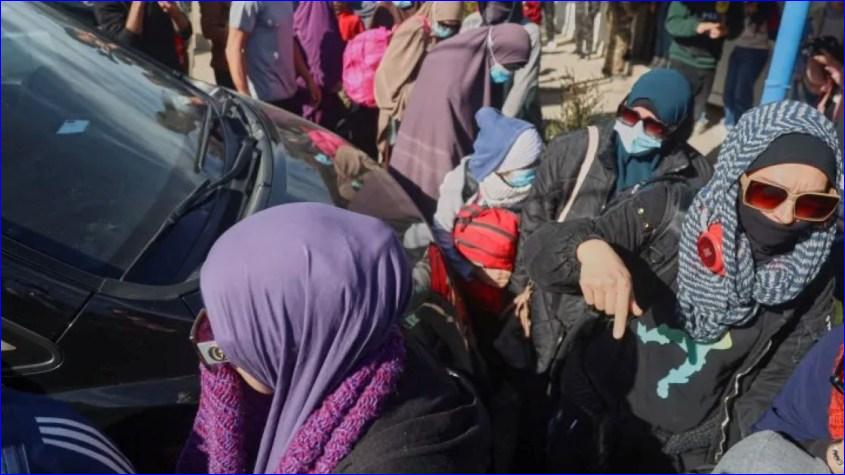
The group, consisting of four women and nine children, arrived in Australia after years in Al-Roj Camp in northeastern Syria, despite earlier refusals by the Australian government to repatriate them. Australian authorities confirmed that three of the women were immediately arrested and charged with terrorism-related offenses and alleged crimes against humanity connected to the enslavement of Yezidi women during ISIS's rule in the region.
Members of Australia's Yezidi community, many of whom resettled in regional New South Wales and Queensland after fleeing ISIS atrocities, say the returns have caused widespread anxiety among survivors of the conflict.
Shelan Khodedah, a Yezidi community worker in Wagga Wagga, told SBS News that many people feel unsafe and traumatized by the development. Survivors who escaped ISIS captivity or lost relatives during the 2014 attacks on Shigur (Shengal / Sinjar) have reportedly sought additional counseling and medical support since the news broke.
CANBERRA -- Australia's Yezidi and Syriac communities are expressing deep concern following the recent return of several women and children linked to the Islamic State (ISIS) from detention camps in northern Syria, reopening painful memories of the extremist group's campaign of violence and genocide across Iraq and Syria.
The group, consisting of four women and nine children, arrived in Australia after years in Al-Roj Camp in northeastern Syria, despite earlier refusals by the Australian government to repatriate them. Australian authorities confirmed that three of the women were immediately arrested and charged with terrorism-related offenses and alleged crimes against humanity connected to the enslavement of Yezidi women during ISIS's rule in the region.
Members of Australia's Yezidi community, many of whom resettled in regional New South Wales and Queensland after fleeing ISIS atrocities, say the returns have caused widespread anxiety among survivors of the conflict.
Shelan Khodedah, a Yezidi community worker in Wagga Wagga, told SBS News that many people feel unsafe and traumatized by the development. Survivors who escaped ISIS captivity or lost relatives during the 2014 attacks on Shigur (Shengal / Sinjar) have reportedly sought additional counseling and medical support since the news broke.
In 2014, ISIS carried out a systematic campaign against the Yezidi people after capturing large areas of northern Iraq, particularly in Nineveh Plains, home to a large Yezidi and Chaldean--Syriac--Assyrian population. The United Nations later formally recognized the atrocities as genocide. According to advocacy organizations, more than 5,000 Yezidis were killed and over 6,000 women and children were abducted and enslaved during the campaign.
The issue has also resonated strongly among Syriacs (Arameans--Assyrians--Chaldeans) in Australia, a community that similarly endured mass displacement and persecution by ISIS.
Mukleas Habash of Australia's Syriac community said many people have expressed disappointment over how the Australian government managed the return of ISIS-linked families from Syria.
In comments to SBS Arabic, Habash said the government did not consult communities that were directly affected by ISIS in Iraq in 2014.
"We came to Australia hoping to begin a healing journey and leave those traumatic memories behind us," he said.
Prime Minister Anthony Albanese has denied accusations that the government actively facilitated the return of the families, stating that Australia merely fulfilled its legal obligations to citizens. Security agencies, including ASIO and the Australian Federal Police, say the returning adults will remain under close monitoring and that children will receive integration and rehabilitation support.
The debate has reignited broader questions about achieving justice for victims of ISIS crimes and holding perpetrators accountable. In recent years, several European courts have prosecuted former ISIS members for crimes against Yezidis, including genocide and slavery offenses.
Earlier this year, a French court convicted ISIS militant Sabri Essid of genocide and crimes against humanity against Yezidis in what observers described as a landmark ruling.
German authorities have also pursued prosecutions tied to the enslavement of Yezidi girls by ISIS members.
Meanwhile, efforts continue in Syria and Iraq to locate missing Yezidi women and children abducted during the conflict. Local security forces in northeastern Syria have helped free hundreds of captives over the past several years, though thousands are still believed to be missing.
For many survivors now living in Australia, the return of ISIS-linked individuals is a reminder of unresolved trauma and the continuing struggle for justice after one of the darkest chapters in recent Middle Eastern history.
or register to post a comment.