


Related: The Assyrian Genocide
The genocide of Greeks, alongside the Armenian and Assyrian genocides during the final years of the Ottoman Empire, is one such history. Between 1914 and 1923, the Ottoman genocidal campaign directed systematic violence against these populations across Eastern Thrace, Asia Minor, including Pontus, and surrounding regions, resulting in the deaths of approximately 2.5 to 3 million Christians. It was a process that unfolded during a period of political division and territorial loss within the Empire, combining mass killing, deportation, and the destruction of long-established communities viewed as unassimilable and as internal enemies. Today, it exists not only as a matter of historical record, but at the intersection of memory, identity, and denial.
Stories shared, lives carried
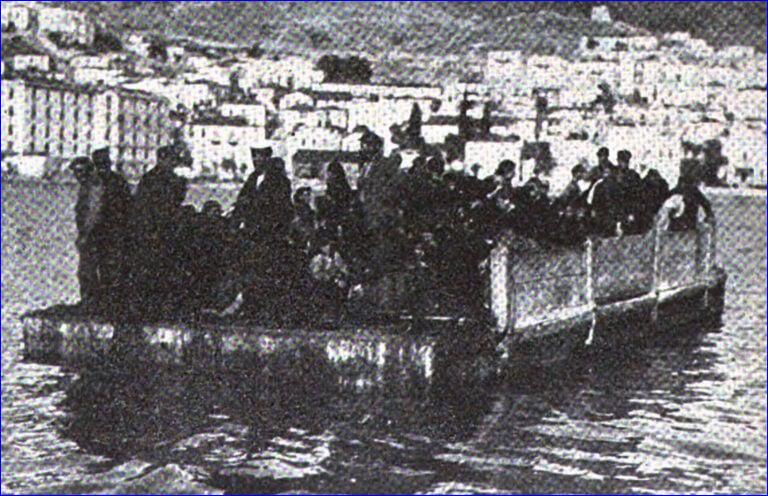
The stories shared in my research make clear that when traumatic memories of the past were passed down to descendants, they often left them with the shock, curiosity, and even responsibility of coming to terms with unresolved trauma. These stories speak of families forced to abandon their homes with little warning, of villages set alight, and of civilians driven into flight or forced on marches to their death, exposed to violence, disease, and exhaustion, while those left behind often faced horrific and unspeakable fates. They recount separation: men taken away and never returning, many suffering in labour battalions; women and children left to navigate displacement and ongoing danger alone.
Some stories describe communities confined inside churches, waiting for their end, hearing cries through the night, aware that women and children had been burnt alive in nearby churches. Others recount women facing sexual violence even within the most sacred spaces, such as the church altar.
Survival depended on decisions no person should ever be required to make, including accounts of a mother sacrificing her newborn to prevent the discovery and certain death of those in hiding. These traumatic experiences formed part of a wider system of violence endured by Greek, Armenian, and Assyrian communities alike, carried into family life in Australia, often in unspoken forms, shaping how memory persists across generations.
For many descendants, knowledge of this past does not begin with formal education. It emerges within family life, through conversations, silences, and fragments of cultural expression. These are rarely complete narratives. They do not always provide clarity or coherence. Instead, they leave impressions: a place mentioned in passing, a story cut short, expressions of grief that raise questions without full context, a survivor in tears. In this way, the past is encountered indirectly, yet persistently present.
Within families, memory operates differently, shaped by emotion, silence, and the difficulty of articulating trauma. The result is often a partial inheritance that later generations must piece together. But these stories extend beyond the family. When the past is denied, it speaks to a need for recognition, and collaboration can begin among victim communities seeking justice, in this instance the Armenians, Greeks, and Assyrians.
Australia, Gallipoli, and a forgotten context
The events of 1914 to 1923 marked a period of profound upheaval across the Ottoman Empire. Beyond the immediate human toll, these processes reshaped the physical and cultural landscape. Armenian, Greek, and Assyrian populations were removed, dispersed, or reduced to remnants, and their presence was gradually obscured.
In Australia, these events are not as remote as they may first appear. The Gallipoli campaign of 1915, which occupies a central place in Australian historical consciousness, unfolded at precisely the same moment and in the same regions that violence against Armenian, Greek, and Assyrian populations was intensifying across the Ottoman Empire.
Australians did not encounter these events only indirectly. Anzac soldiers, humanitarians, and correspondents witnessed aspects of this broader context, and reports appeared in the Australian press. From 1915 onwards, humanitarian responses emerged across Australia. Anglican churches, community organisations, and relief committees organised fundraising campaigns, collected food and clothing, and supported efforts to assist displaced Armenian, Greek, and Assyrian survivors. These initiatives formed part of a wider international humanitarian movement that extended into the interwar period. Between 1915 and approximately 1930, Australian aid contributed to relief efforts for refugees across countries such as Greece, Syria, and Lebanon.
This shaping of memory in Australia is influenced by the post-war reconciliation between Australia and Turkey. The emphasis on a story of the birth of two nations around the shared remembrance of Gallipoli, along with the prominent place accorded to Mustafa Kemal Atatürk within this narrative and his alleged words of reconciliation addressed to Anzac mothers, reinforced an approach that highlights friendship and mutual respect. It also underpins annual Anzac Day commemorations in Gallipoli and access to Anzac graves, as well as the broader narrative of modern Turkey's emergence under Atatürk. Within this framework, the genocide against Armenians, Greeks, and Assyrians that took place at the same time in the Ottoman Empire, as well as the Australian humanitarian response to their suffering, have often remained at the margins of national memory or have been overlooked entirely.
Remembering the past
The question of recognition has periodically entered public discussion in Australia, often in the form of parliamentary motions or community advocacy. These moments can generate debate shaped by political considerations and geopolitical relations. This is despite Australians having witnessed these events and responded through humanitarian efforts. Recognition is not only a matter of official declarations, but of how the past is acknowledged, discussed, and integrated into collective understanding. It is about telling a more complete history of Australia and contributing to the prevention of future violence.
The legacy of these events extends into the ways in which memory is carried across generations. For descendants, the inheritance of this history is often partial and mediated, shaped as much by what is left unsaid as by speech. The passing of memory across generations does not simply preserve the past. It transforms it, and for descendants, it becomes their own to carry.
Migration adds another dimension to this process. In the diaspora, distance from the place of origin can both weaken and reshape connections to the past. Over time, memory can recede, particularly as new generations become more integrated into their surrounding society. At the same time, diaspora can create space for reflection, allowing individuals and communities to engage more openly with histories that may have been difficult to articulate in earlier contexts, far removed from the regions of violence and geopolitical limitations.
The ways in which the Greek experience has been remembered have also been shaped by different regional identities, including those of Pontus, Asia Minor, and Eastern Thrace. In Greece itself, the aftermath of the Greco-Turkish War (1919--1922) contributed to criticism, self-blame, and a narrowing of how this past was understood. As a result, the broader genocidal process experienced by Greeks between 1914 and 1923 has often been overshadowed by the war and its political consequences, with silence often maintained in Greece in the interest of preserving friendly relations between neighbours. After 1923, the persecution of the remaining Greek communities in Turkey did not come to an end. In Imbros, Tenedos, and Constantinople, Greek populations faced restrictions, discrimination, and episodes of persecution in the decades that followed.
In Greece, early recognition efforts from the 1980s were led in significant part by Pontian Greeks, who revived their identity and organised remembrance and advocacy around their historical experience, followed by Asia Minor and Eastern Thracian Greek groups. The issue of recognition became closely associated with Pontian memory, reflecting the leading role played by Pontian communities in early recognition efforts. However, the broader genocidal process experienced by all Greeks has often remained fragmented in public understanding. In the diaspora, there is increasing emphasis on what historians, as well as many descendants of survivors and advocates, describe as the Greek genocide. This broader framing encompasses all regional experiences in a single narrative and reflects the evolving nature of memory.
The present and the persistence of memory
The question of recognition is not confined to the past. The genocide of Assyrians in Iraq and Syria between 2014 and 2017, the Simele massacre of 1933 in Iraq, as well as the ethnic cleansing of over 100,000 indigenous Armenians from Artsakh in 2023 point to the ways in which vulnerability, violence, and displacement can persist across time, especially where denial continues. They reflect enduring patterns that remain relevant to how such histories are understood.
Commemoration of genocide is not only an act of remembrance. It is also a refusal of erasure, and a recognition that the past continues to shape how people understand themselves and the world around them. Since the 1960s, Armenians have led the international pursuit of recognition, establishing the conditions, the framework, and the model through which Greek and Assyrian communities have shaped their advocacy beyond the homeland, conducted research, and brought their histories into public view. The cooperation among Armenian, Greek, and Assyrian communities today reflects how memories do not always compete. New memories can emerge from dialogue around a common experience, strengthening the collective pursuit of recognition.
Denial is not a neutral absence of acknowledgment. It is an attempt to complete the crime by erasing its traces and removing it from history. These traces persist, and descendants seek recognition on behalf of the survivors who passed without it, often in the face of troubling claims that their suffering was not real or not as they understood it. In this sense, the violence is experienced twice: first in its physical form, and then again through the denial and distortion of memory. As generations pass and distance from the past grows, the responsibility to remember and seek recognition becomes more urgent for the descendants of victims and survivors. Without remembrance and recognition, the genocidal process is completed through denial, as the traces of the crime are erased and memory fades. In this way, it does not end, but may yet find expression in new forms of violence.
Dr Themistocles Kritikakos is a Greek-Australian historian and writer. He holds a PhD in History from the University of Melbourne. He is the author of Armenian, Greek, and Assyrian Genocide Recognition in Twenty First Century Australia: Memory, Identity, and Cooperation (Palgrave Macmillan, 2026).
or register to post a comment.