


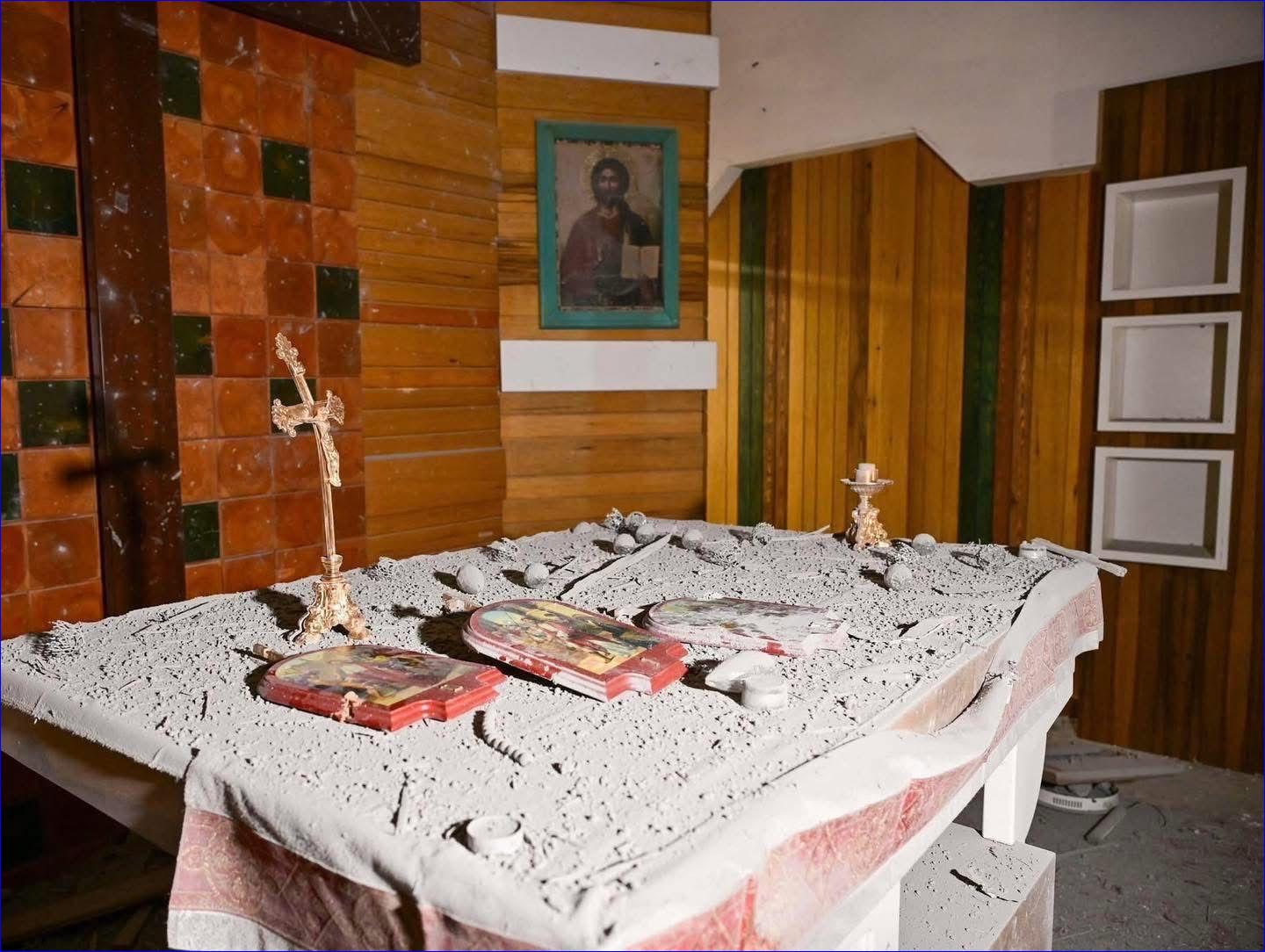
On March 4, the Blessed Michael McGivney Apartment complex in Ankawa, a predominantly Christian suburb of Erbil, was struck in an apparent drone attack. The complex is owned by the Chaldean Archdiocese of Erbil and houses diocesan workers and young Christian families. It was built in 2018 with the support of the Knights of Columbus in the United States through its Christians at Risk charitable campaign. Fortunately the complex had been evacuated and no injuries were reported.
In 2014, Islamic State extremists stormed across central and northern Iraq, seizing territory, including the city of Mosul, and slaughtering Yazidis, Shiite Muslims and Christians who stood in their path. Thousands of Christians from Nineveh province fled into the Kurdistan region, finding refuge under the protection of the Archdiocese of Erbil.
Others fled to the south of Iraq or left the country altogether, joining a vast exodus of this ancient Assyrian Christian community from their homeland. Numbered at more than 1.4 million before the Gulf War began in 1991, the Christian community's losses continued after the U.S. invasion of Iraq in 2003 and accelerated sharply during the rampage by the Islamic State.
U.S. and Iraqi forces, backed by Iran-affiliated Shiite militia now targeted by the United States, drove Islamic State fighters out of Nineveh in 2017. A slow recovery of Christian communities and numbers began.
Throughout years of turmoil, one steadfast presence in Erbil has been Chaldean Archbishop Bashar Warda. He has been at the forefront of efforts to build schools, housing and a hospital in Erbil with the aim of protecting the region's Christians and other religious minorities and providing hope for a future for them in Iraq. America interviewed Archbishop Warda over email on March 10.
Are you concerned with the after-effects of the Israel/U.S. attacks on Iran in terms of their possible impact on the region's Christians?
The repercussions of any new war in our region are rarely only immediate or direct. They are often deeper and cumulative, especially for small and vulnerable communities such as the Christians of Iraq and the wider Middle East. Over the past decades, Iraqi Christians have endured repeated wars, violence, displacement and emigration. As a result, their numbers have declined dramatically since 2003. Despite this, the church--together with priests, religious sisters and brothers, and lay leaders--has worked tirelessly to accompany families and help them rebuild their lives.
After the waves of violence that affected Christians in Baghdad, Mosul and other areas following 2003, thousands of Christian families chose Erbil as a safe place to live. Over time, Erbil became a center of renewed Christian life in Iraq.
Many churches were built, schools were opened, a Catholic university was established, and a hospital and various pastoral and social institutions were created to serve families and young people. With the solidarity and support of Christians around the world, many families were able to rebuild their lives with dignity.
Yet the painful irony today is that Erbil itself--once a refuge for displaced families--has become one of the Iraqi cities most frequently exposed to missile and drone attacks as regional tensions escalate. A drone attack on March 4 struck the convent of the Chaldean Daughters of Mary Immaculate and a residential apartment complex belonging to the archdiocese, where Christian families displaced by earlier violence have been living.
Thankfully there were no casualties, but the physical damage was significant and the psychological impact on the families was profound, as it revives memories of years marked by fear and instability.
Are Christians of the region sometimes held responsible for the actions of the United States and other Western powers?
As far as concerns about retaliatory attacks against Iraqi Christians seen as proxies for the United States or the West, I do not believe this is the most likely danger at the present time. Public discourse and media in the region clearly portray the current tensions as conflicts between states and political actors.
Moreover, the Christian population in Iraq has become so small that it is no longer seen as a significant factor in regional political calculations. Therefore, the greater concern is not direct retaliation, but that Christians once again become indirect victims of conflicts in which they have no part.
The real challenge we face is that every new war in the region weakens families' confidence that a stable future is possible here. The families we accompany pastorally come to us with very practical concerns: the education of their children, opportunities for employment, access to health care and the basic security of daily life. Many of these concerns fall beyond the traditional responsibilities of the church, yet people turn to the church because they trust it and because state institutions often have limited capacity to respond.
With the help of Christians around the world, we have tried to support families through education, social services, housing initiatives and efforts to create employment opportunities for young people. However, when wars and economic crises continue to erupt, many people feel that what has been built patiently over many years can collapse in a single moment. At that point, some families begin to consider emigration again--not because they want to abandon their faith or their roots, but because they want to secure a safe future for their children.
For this reason, yes, this crisis is forcing us to rethink our priorities. In addition to encouraging people to remain, we are increasingly focused on how to sustain and accompany the remaining Christian community and to cultivate what we might call a culture of active Christian presence in society--so that those who remain understand that their presence carries a mission and that life here can still be lived with dignity.
What do you ask of American Christians as this crisis unfolds?
My message to American Christians is first to pray for peace and for wisdom among political leaders. But prayer alone is not enough. We also need sustained and practical solidarity: support for education, social initiatives, health care institutions and especially projects that create employment opportunities for young people. In our current reality, helping even one family remain in their homeland with dignity is not merely social assistance--it is also a way of preserving the historic Christian presence in this region.
The Middle East is not simply a stage for geopolitical struggles. It is the homeland of peoples and communities that have lived here for centuries. Christians in this region simply seek to live their faith and serve their societies in peace and dignity. The greatest danger we face is not only the destruction caused by war, but the loss of hope among ordinary people. And when hope disappears, families begin to leave.
For this reason, the spiritual, human and practical solidarity of Christians around the world remains essential if the Christian presence in the land where Christianity was born is to endure.
or register to post a comment.