


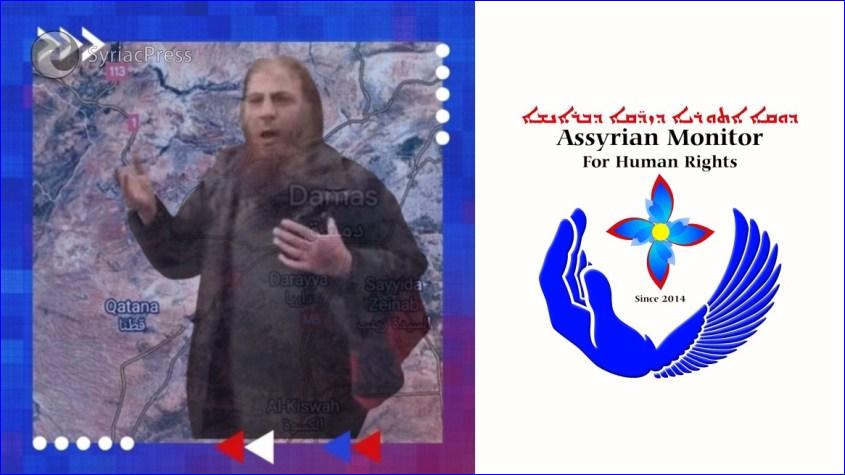
In a statement released on Sunday, 15 February 2026, AMHR said it was "monitoring with grave concern" a series of incidents that it characterized as systematic and provocative, culminating in an episode on Friday, 13 February, outside the Syriac Catholic Church of Our Lady of Salvation in the Daramsuq suburb of Qatana.
AMHR said an extremist individual engaged in acts of intimidation at the church gates, an incident it condemned as part of a broader and "alien" phenomenon that has unsettled Christian residents in recent months. According to the monitor, vehicles broadcasting religious slogans have been patrolling predominantly Christian neighborhoods in Daramsuq, contributing to what it described as an atmosphere of fear and anxiety.
"These systematic actions do not merely represent an assault on places of worship, but constitute a fundamental undermining of the concept of citizenship that the Syrian people, in all their diversity, have long upheld," the statement said.
The incident in Qatana drew particular attention after SyriacPress reported that tensions flared outside the church earlier that week. Video footage circulating on social media showed individuals gathered near the entrance chanting a verse from the Quran -- Surah An-Nisa (4:157) -- which states, "But they neither killed nor crucified him, it was only made to appear so." The verse is traditionally interpreted in Islamic theology as rejecting the crucifixion of Jesus, a foundational belief in Christianity.
Christian civilians told SyriacPress that the chanting was perceived as a deliberate provocation aimed at undermining their religious identity. While no physical assault was reported, clergy and residents described the episode as part of a broader pattern of harassment that has grown more visible in recent months.
AMHR described the developments not only as attacks on Christian symbols and spaces but as a test of the Syrian state's commitment to pluralism. It held Syrian authorities legally and morally responsible for ensuring the protection of citizens and safeguarding places of worship, calling for immediate action to hold accountable those involved in the Qatana incident and those deploying what it termed "inciting vehicles" in the capital's streets.
AMHR warned that silence in the face of such practices could accelerate the emigration of Syria's remaining Christians, a community that has already dwindled dramatically during more than a decade of conflict and instability.
or register to post a comment.