


The Wars That Changed Iraq
For many younger readers, the Iraq wars are distant headlines. However, they reshaped the Middle East, and Assyrians were caught in the midst of the desert storms.
The First Gulf War (1990-1991) began when Saddam Hussein's Iraq invaded neighboring Kuwait. A U.S.-led coalition, backed by the United Nations, responded with a massive air and ground campaign. Though the war was short, the aftermath left Iraq under crippling sanctions throughout the 1990s. For ordinary Iraqis (including Assyrians) daily life meant shortages of food, medicine, and opportunity.
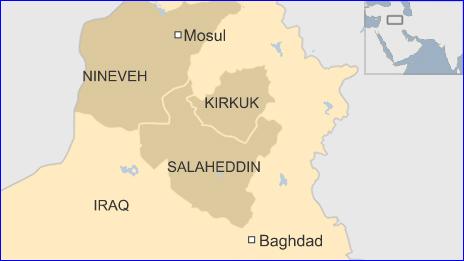
The Second Gulf War (2003-2011), often called the Iraq War, was far bloodier. The U.S. and its allies invaded Iraq in March 2003, citing weapons of mass destruction (later proven to be false intelligence) and Saddam Hussein's rule as threats. Within weeks, Saddam's government fell, but what followed was years of insurgency, sectarian violence, and foreign occupation. Cities like Baghdad and Mosul, once home to thriving Assyrian neighborhoods, became battlegrounds.
For coalition forces, one challenge was immediate and constant: language. Soldiers couldn't navigate local dialects, negotiate with tribal leaders, or gather intelligence without interpreters. For Assyrians, with their multilingual heritage and unique position in Iraq's social fabric, that challenge became both an opportunity and a deadly risk.
Why Assyrians?
When U.S. and coalition forces invaded Iraq in 2003, they relied on thousands of Iraqi interpreters. Among them, Assyrians stood out. Many Assyrians were multilingual, speaking Assyrian at home, Arabic in public, and English from schools or relatives in the diaspora. Moreover, Christians were often viewed by American officers as "less entangled" in Sunni--Shia rivalries. Finally, many Assyrian families in Chicago, Detroit, San Jose, and Turlock sent bilingual volunteers back as contractors or soldiers, filling a desperate need.
The U.S. Army's Iraqi Linguist Program, run by Titan Corporation (later L-3), recruited thousands. For commanders, interpreters weren't optional -- they were lifelines. "They became our ears and tongues," one officer said of Iraqi linguists.
How Many Served?
There is no official public breakdown by ethnicity, but we can anchor a conservative estimate using credible figures. At the 2008 peak, L-3/Titan alone had "almost 7,000" translators in Iraq; other contracts and direct hires push the theater total higher. Reporting during and after the war consistently notes that minorities -- especially Kurds and Iraqi Christians (Chaldo-Assyrians/Syriacs) --were overrepresented among interpreters relative to their share of Iraq's population. Before 2003, Christians made up roughly 3-6% of Iraq's population.
If Christians accounted for even 10-20% of local interpreters (a cautious range given the overrepresentation noted above), then in the peak year alone that implies roughly 700-1,400 Christian interpreters working with U.S. forces in Iraq. Because most Iraqi Christians belong to the Assyrian (including Chaldeans and Syriacs) community, a substantial share of that number would have been Assyrian by heritage/ identity. For scale, at least 360 interpreters employed by Titan/L-3 were killed (2003-2008), with more than 1,200 injured, a toll higher than any coalition partner except the U.S. itself.
The Cost of Speaking Out
The pay was good, approximately six times the salary of an Iraqi school teacher, but the risks were brutal. Human Rights Watch documented how interpreters were branded "traitors" and assassinated. Militias followed them home, bombed their cars, or targeted their families.
Many lived in hiding, moving house to house, disguising their voices in public.
For Assyrians, the danger was doubled. Not only were they hunted as collaborators, they were also marked as Christians in a country growing more sectarian by the day. Entire neighborhoods of Baghdad's Assyrian community emptied out, families fleeing to Syria and Jordan with little more than their passports.
The Allies America Left Behind
Kirk Johnson, a former U.S. aid worker in Iraq, later described the interpreters as "the Iraqis America left behind." His book, To Be a Friend Is Fatal (2013), documents how many of these men and women, including Assyrians, waited years for promised U.S. Special Immigrant Visas, stuck in limbo even as death threats piled up.
Some eventually resettled in America, joining existing Assyrian communities in Chicago, Detroit, Phoenix, Los Angeles, and Turlock, while others were less fortunate. Their stories remain scattered, remembered only in family circles and diaspora churches.
Echoes in History
The Assyrian translators of the Iraq wars were not the first to stand at the crossroads of empires. Their role as cultural intermediaries reaches deep into history, stretching back centuries before the U.S. Army ever entered Baghdad.
In the 13th century, Assyrian Christians, members of the Church of the East, served as scribes, physicians, and translators in the Mongol courts of Genghis Khan and his successors. Figures like Simeon Rabban Ata, a Syriac monk recognized by Mongol rulers as an overseer of Christian affairs, traveled widely across Asia and mediated between Eastern and Western churches. These Assyrian scholars were fluent in Syriac, Persian, Turkic, and Mongol, making them invaluable at a time when the Mongol Empire stretched from China to Europe.
Their influence reached as far as the Tang dynasty in China, where the Xi'an Stele (781 A.D.) records how East Syriac Christians brought both religious and scholarly texts to the imperial court. In Baghdad during the Islamic Golden Age, Syriac-speaking Christians like Hunayn ibn lshaq (809-873 A.D.) preserved Aristotle, Galen, and Hippocrates for the medieval world by translating them into Arabic.
Across the centuries, Assyrians were often caught in the same paradox their descendants faced in Iraq: they were indispensable as interpreters and mediators, yet vulnerable as minorities within larger powers. In the Mongol courts, their favor with one khan could mean persecution under the next. In Iraq, their service to the U.S. military made them both highly valued and highly targeted.
This continuity gives the modern story of Ass, translators in the Iraq wars a haunting resonance. Just as their ancestors once gave voice to dialogue between Mongols, Persians, and Europeans, Assyrian interpreters in Baghdad gave voice to conversations between Americans and Iraqis. Both groups carried the same burden: to bridge worlds that would otherwise collide.
Forgotten by Many but Not by Us
Today, the wars in Iraq have faded into memory for many. But for Assyrians, the legacy remains raw. Families were uprooted, communities scattered, and the very act of translation, bridging two worlds, became a matter of life and death.
The Assyrian translators of Iraq's wars were not just auxiliaries. They were cultural ambassadors, living shields, and, too often, forgotten casualties. Their sacrifice deserves to be remembered, not only as a chapter in Assyrian history, but as a reminder of the cost of war borne by those who lend their voices.
* Name changed for safety.
or register to post a comment.