


Related: The Assyrian Genocide
This essay argues that the legacy of the millet system not only explains our historical trauma, but also our contemporary political weakness. Eastern Christianity survived historically not as a political people, but as an administratively managed religious category. Institutional continuity was preserved, while political subjectivity was systematically suppressed. Only by understanding this legacy can we chart a path beyond perpetual emigration, fragmentation, and institutional stagnation.
A People Who Survived Catastrophes, But Never Gained Power
Two interconnected processes have shaped our modern history:
- Recurring massacres combined with statelessness
- A church-centered leadership formed by the logic of the millet system
When the church was recognized as the sole legitimate representative, no civil or popular leadership was allowed to develop. The people were reduced to objects of governance rather than subjects of political representation. This pattern persisted even after the fall of the Ottoman Empire. New nation-states reproduced sectarian violence and discrimination, while ecclesiastical institutions often aligned themselves with the ruling power rather than empowering their own people.
Massacres That Exposed Statelessness
The massacres in Hakkari in the 1840s, carried out by the Kurdish emir Badr Khan, led to the destruction of large parts of our communities. When Ottoman central authority collapsed in Lebanon and Syria in 1860, tens of thousands of Christians were left unprotected.
The message to individuals was brutally clear: there was no leadership, neither religious nor political, that could guarantee safety. Loyalty to the church protected the institution, but not the people. Statelessness thus became not only a collective condition, but also a personal experience of powerlessness.
The Millet System: The Governance Model That Shaped Us
The millet system was not merely a 19th-century reform, but an ideological framework with roots in the 15th century. After the fall of Constantinople in 1453, Sultan Mehmed II recognized the Greek Orthodox Patriarchate as an autonomous religious authority. In the 16th and 17th centuries, this system was institutionalized: church leaders became responsible for taxation, internal discipline, and, crucially, ensuring the loyalty of their communities to the state.
During the Tanzimat reforms, this arrangement was codified in law. The church became both a religious and administrative institution, without popular mandate and without accountability to the population. Over generations, this model was internalized. Survival became synonymous with silence, obedience, and adaptation, a political culture that continues to shape our institutions today.
The Church as an Institution, and the Limits of Political Emancipation
The church developed strong incentives to preserve its exclusive position. Any emergence of civil or popular leadership risked undermining its role as sole intermediary between the people and the state. Later ecclesiastical splits, between Syriac Orthodox, Chaldean, Assyrian, and other churches, had consequences far beyond theology.
Each split created a new administrative division of the same people, with each institution dependent on state recognition. This represents "divide-and-rule" in its most effective form, an institutional legacy that continues to structure political fragmentation.
When Institutions Survived but the People Perished
The Hamidian massacres of 1895, the genocide of 1915 (Sayfo), and the Simele massacre of 1933 followed the same pattern. Entire communities were wiped out, yet church hierarchies endured. Scholars such as Joseph Yacoub and Ugur Ümit Üngör demonstrate how institutional survival increasingly became decoupled from the survival of the people.
Land, homes, security, and political representation were lost, while institutions continued to exist, often in exile. This created the illusion that institutional continuity could substitute for territorial presence and demographic survival.
Migration as a Structural Outcome
Large-scale emigration from the 1950s onward was not an expression of rootlessness, but a rational response to permanent insecurity. When neither the state nor local leadership can protect individuals, leaving becomes the only viable option.
Diaspora is not a failure. It is a symptom of a deeper political and institutional collapse.
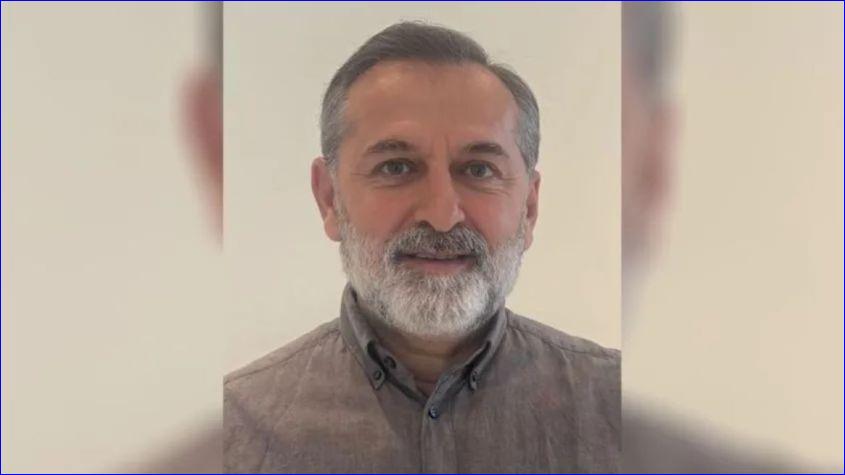
Metin Rhawi is the Head of Foreign Affairs at the European Syriac Union and a long-time activist for the rights of the Assyrian people.
or register to post a comment.