


 AA)
AA)
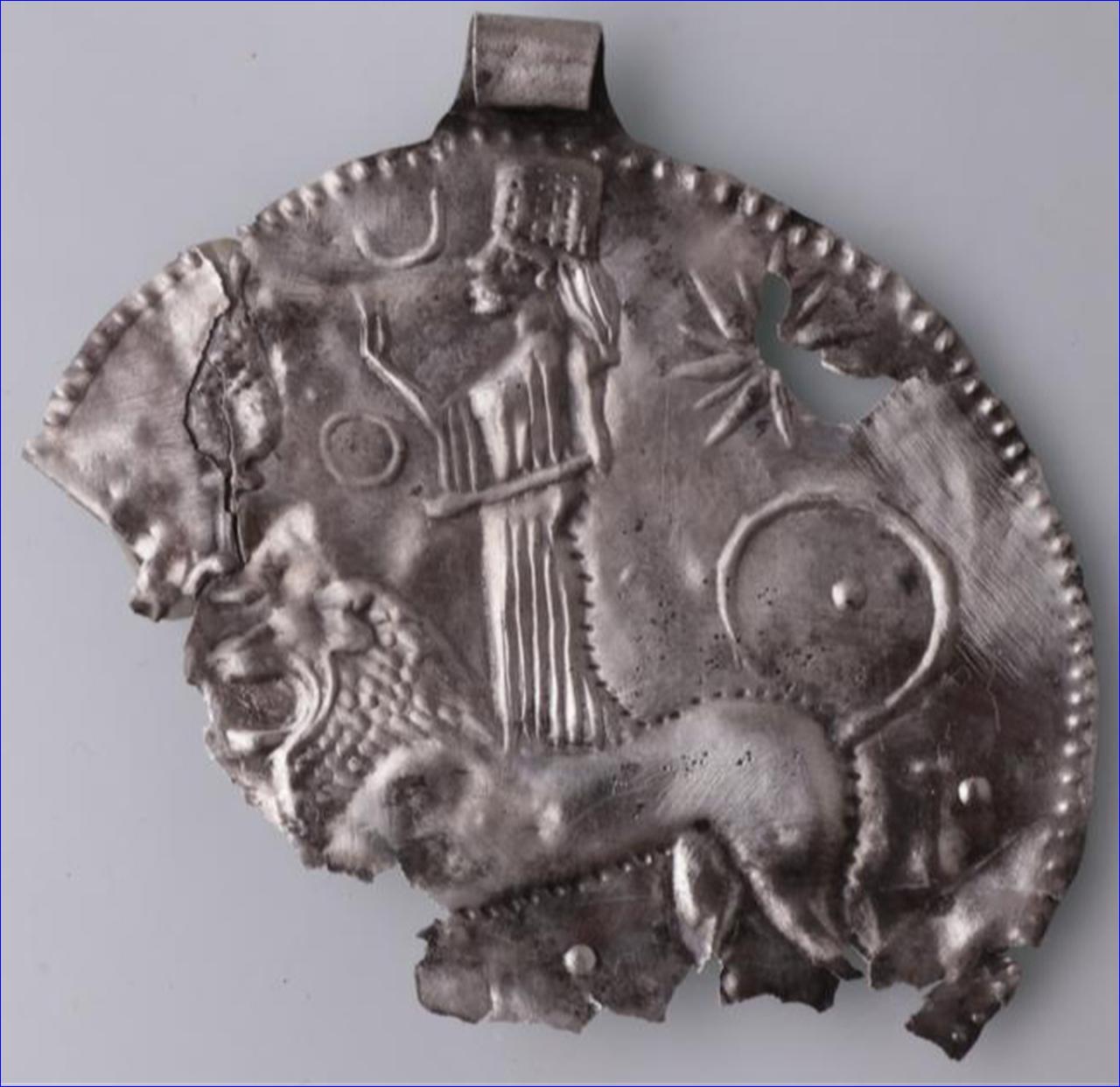
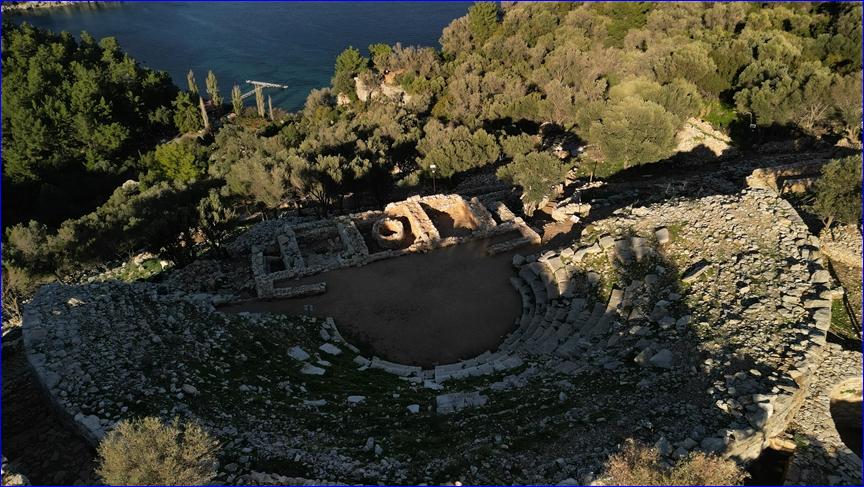
The artifact was discovered at the 2,200-year-old site, located on Asarcik Hill in the Marmaris district, where excavations have been carried out uninterrupted throughout 2025 under the leadership of archaeologist Mehmet Gurbuzer from Mugla Sitki Kocman University.
Gurbuzer told Anadolu that each excavation season brings new and exciting discoveries, noting that this year a silver necklace depicting the Assyrian goddess Ishtar, featuring a lion figure and an eight-pointed star, was uncovered.
He said the find, associated with Ishtar, known as "Inanna" in Sumerian culture, indicates that Amos once possessed significant cultural, economic and commercial power.
Pointing out that advanced cultural elements of the Near East began to be transmitted to the Mediterranean world through commercial and military relations in the 7th century BC, Gurbuzer said that Amos was integrated into the world of its time and was a strategic port city known by many major civilizations.
He emphasized that early-period finds provide important clues about the city's history and underlined that Amos held remarkable economic and cultural strength.
Noting that excavations at Amos are relatively recent, Gurbuzer added that work in the 2026 excavation season will continue at the residential structures and the Temple of Apollo Samnaios.
Archaeological excavations at the Amos Ancient City, granted official status by a 2022 presidential decree, are conducted under the Ministry of Culture and Tourism's Heritage for the Future Project, with support from the Marmaris Chamber of Commerce, Marmaris Municipality, and Marti Hotel and Marina.
The site was first excavated in 1948 by British archaeologist G.E. Bean. Lease contracts discovered during those early excavations, documenting land rentals managed by the city, contributed to Amos gaining recognition in academic circles and offered important insights into its ancient economic structure.
or register to post a comment.