


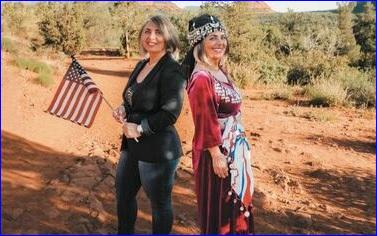
As a Christian Assyrian who speaks the Eastern dialect of modern Assyrian, she carries a deep personal connection to the history of displacement, resilience, and cultural preservation that has shaped her people for generations.
Her academic and professional path mirrors this commitment to understanding identity in motion. After building her life across Philadelphia, California, and later Arizona, Sophia pursued a Bachelor's in International Business, an MBA, and ultimately an Ed.D. in Organizational Development in Higher Education. Her doctoral research examines acculturation, focusing on the psychological challenges faced by immigrants and refugees - those who flee trauma, endure cultural marginalization, or struggle to rebuild a sense of belonging in new lands. Today, as a Career Advisor at Bryan University, she continues to advocate for cultural understanding and community empowerment.
It is from this lived experience and scholarly lens that Dr. Isaac brings us her book, Straddled Between Two Cultures, a work that redefines the conversation around immigration. At a time when immigration is often portrayed through a lens of crisis and controversy, her book turns toward a different narrative - one grounded in legal, purposeful migration and the extraordinary strength required to rebuild a life "the right way."
Rather than politics, Dr. Isaac tells stories that center on people: individuals and families who arrived in the United States with hope, determination, and a commitment to contribute. They honor their roots while embracing the responsibilities and opportunities of their new home. Through their voices, the book highlights what immigration can look like when it is anchored in courage, accountability, and the pursuit of a better future.
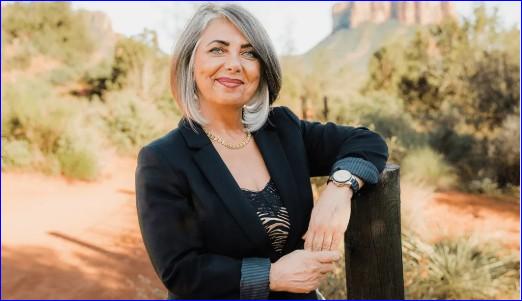
Dr. Isaac invites readers to step into this in-between space - where sacrifice and strength coexist, where hope outlasts hardship, and where the immigrant experience becomes not just a political topic, but a deeply human one. Her book encourages compassion, understanding, and a renewed appreciation for the quiet triumphs of those who journey legally, responsibly, and bravely toward a new beginning.
The following interview was conducted with the author over the Christmas holidays.
Abdulmesih BarAbraham (AB): In your book, you deliberately position Straddled Between Two Cultures as a counter-narrative to the dominant "immigration as crisis" framing. Why was it important for you to tell this story now?
Dr. Sophia Isaac (SI): It was important for me to tell this story now because the dominant narrative around immigration has become increasingly narrow and crisis-driven, often reducing human lives to statistics, headlines, or political talking points. In that framing, immigrants are frequently portrayed as problems to be managed rather than people shaped by loss, resilience, faith, and contribution.
Straddled Between Two Cultures offers a counter-narrative rooted in lived experience and research. Many immigrants, particularly those fleeing persecution, war, or genocide, did not come to the United States by choice alone, but by necessity. Their stories are not defined by crisis; they are defined by courage, adaptation, and hope. By sharing my family's journey from Iran before the revolution, alongside the voices of others from Iraq, India, and beyond, I wanted to humanize immigration and restore dignity to those often spoken about but rarely listened to.
This moment also demands greater understanding. Immigration is being discussed with increasing fear and polarization, yet very little attention is given to the long-term psychological and cultural work of integration. Using frameworks such as John Berry's Acculturation Theory, the book reframes immigration as a process of belonging, identity negotiation, and resilience over time, not a single event or emergency.
Telling this story now is about shifting the conversation from fear to understanding, from crisis to context. It is an invitation to see immigrants not as outsiders, but as contributors whose layered identities enrich the social, cultural, and moral fabric of this country.
AB: You also emphasize that resettlement is not a single event but an ongoing psychological process. What kinds of trauma tend to surface during this transition, and why are they so often misunderstood?
SI: Yes, Resettlement is not a single event but an ongoing psychological process. The trauma that often emerges manifests as acculturative stress, the strain of adapting to a new culture while striving to preserve one's identity and roots. These struggles are frequently misunderstood, as legal status is often assumed to eliminate hardship. In reality, the emotional toll of integration persists long after arrival.
Within the Assyrian community, adults, especially those raising children, carry deep emotional ties to the homeland they left behind, including family bonds, cultural traditions, and deeply rooted memories. While younger generations may find it easier to adapt to a new environment, family remains central to Assyrian identity as an Indigenous people of the Middle East. Consequently, navigating and conforming to the customs of a new country can be especially challenging. Yet, despite these difficulties, our community demonstrates remarkable resilience and an enduring capacity to adjust.
As I discuss in my book, factors such as age, socioeconomic background, and gender significantly influence the process of adaptation. My research further reveals that certain traumas often resurface later in life. Many immigrants are initially consumed with survival -integrating into society, establishing stability, and raising families, leaving little time or space to process the emotional weight of resettlement.
During interviews with women who have lived in the United States for 30 to 50 years, several questions about their migration journey prompted tears as they reflected on their experiences with acculturation. For many, these emotions had remained unexamined for decades, not because they were absent, but because the demands of building a life in a new country left no room to fully process the trauma until much later.
The process also unfolds differently across age groups: children may wrestle with identity confusion, adolescents with peer acceptance, and older adults with loss of status or isolation. Gender adds another layer; men and women often acculturate differently, with men facing pressures around work and providing, while women may carry the dual burden of caregiving and navigating cultural expectations. Recognizing these nuances is essential because resettlement is not just about logistics but about the lifelong reconciliation of past and present identities.
AB: Interestingly, rather than portraying language as a barrier, you highlight its advantages. How can bilingualism or multilingualism become a source of resilience and identity for immigrants?
SI: Bilingualism and multilingualism build resilience because language is more than words; it carries culture, identity, and ways of being. Immigrants often communicate through a blend of speech, gestures, facial expressions, and body language, reflecting the cultures they come from. A study by an anthropologist showed that much of human communication is nonverbal, and these cues carry emotional and cultural meaning.
For immigrants, navigating multiple languages and communication styles strengthens adaptability, empathy, and cultural awareness. What may seem like a "language barrier" is actually a deeper communicative skill set, an ability to read people, contexts, and unspoken signals across cultures. This multilingual and multicultural fluency becomes a source of pride, identity, and resilience, allowing immigrants not only to survive in new environments but to connect, bridge differences, and enrich the societies they join. Just think about when we entered a new culture in America, we experienced culture shock until we learned to adjust to the nuances of the language and communication styles, providing us with a buffer during resettlement.
AB: As a Christian Assyrian originating from an Islamic country, how did your religious and cultural identity shape your integration into American society? In what ways, if any, did it ease your transition or create unique points of connection in the United States?
SI: After navigating the early stages of integration, it became easier to understand what freedom truly meant: freedom to practice Christianity without fear. For me, as a child immigrant, the adjustment was different. But for my parents, who were in their early forties, I can only imagine the weight of the challenges they faced.
I remember seeing how happy they were. They loved working, building a life, and simply knowing they were safe. Yet while you can take people out of a country, you cannot take the country, or its heritage, out of the people. Despite living in a Christian country where they felt protected, adjusting still took time.
All their lives, they had known what it meant to be a minority. In America, they were still a minority, but in a different way, one marked by acceptance and belonging among a majority that shared their faith. Even so, a quiet sense of distrust lingered. This, too, is human nature: we carry caution with us until we learn how a new environment works and understand where we truly fit.
AB: You devote attention to celebrations and cultural traditions. Why are these rituals so essential in preserving identity and fostering belonging across generations?
SI: Cultural celebrations and traditions serve as anchors of identity, especially for communities navigating life between cultures. For immigrants and their children, these rituals preserve memory, meaning, and continuity in the midst of transition. They are not merely nostalgic practices; they are living expressions of history, faith, values, and belonging.
Across generations, rituals create a shared language between elders and youth. They allow children born or raised in a new country to connect with their heritage in tangible ways, through food, music, storytelling, and faith practices, while still forming an identity rooted in their present context. Without these traditions, cultural identity risks becoming abstract or lost altogether.
These practices also foster resilience. In the face of displacement, discrimination, or cultural erasure, celebrations affirm worth and dignity. They remind individuals that their story did not begin at migration and does not end with assimilation. Instead, identity is carried forward, adapted, and strengthened.
Ultimately, rituals cultivate belonging by offering a space where individuals do not have to choose between cultures. They affirm that one can integrate into a new society while honoring the past, creating continuity, pride, and a sense of home across generations.
AB: In addressing the immigrant woman's struggle, what unique pressures emerge at the intersection of gender, culture, and migration?
SI: By highlighting these dynamics, my book seeks to shed light on the invisible labor and strength of immigrant women, affirming their critical role in family and community adaptation while advocating for greater understanding and support.
AB: You reflect deeply on parental obligations and role reversals within immigrant families. How does this dynamic shape both parents' sacrifices and children's identities?
SI: These dynamics underscore a central theme of Straddled Between Two Cultures: integration is a family process, not just an individual one. Often, children become interpreters for their parents, helping navigate doctors' appointments, government systems, or other critical services. At the same time, parents, while seeking respect and maintaining cultural values, may unintentionally place heavy expectations on their children, requiring them to meet family needs and uphold the family's reputation. This can create tension and even rebellion as children try to find their own path in a new society. I recall a story a professor shared about an immigrant family whose adult daughter was in college: her parents' advice to her was simply not to bring shame on the family name. That weight stayed with her, shaping her sense of responsibility and identity in profound ways.
AB: Your Iceberg Theory suggests that much of the immigrant experience remains invisible. What do educators, service providers, and policymakers most often fail to see beneath the surface?
SI: What is most often overlooked beneath the surface is the depth of invisible labor immigrants carry as they integrate into a new society. While institutions tend to focus on what can be easily measured - language proficiency, employment status, or academic performance - they frequently miss the psychological, cultural, and emotional dimensions of adaptation.
Beneath the surface are experiences of trauma from war, persecution, or displacement; grief over family members left behind; and the pressure to succeed not only for oneself, but for an entire family or community. Many immigrants are simultaneously navigating cultural role shifts, intergenerational tension, and identity fragmentation, all while learning to function within unfamiliar systems.
Educators may not see the cognitive load placed on children who translate for parents or balance two cultural value systems. Service providers may miss the impact of cultural shame, faith, or fear of authority that prevents individuals from seeking help. Policymakers often underestimate how long integration actually takes, assuming legal status or economic participation equates to belonging.
The Iceberg Theory calls institutions to slow down and look deeper, to move beyond surface-level compliance toward relational understanding. When educators, service providers, and policymakers recognize the unseen resilience, skills, and contributions immigrants bring, they can design systems that support not just access, but dignity, belonging, and long-term success.
AB: What do you hope readers, especially those outside the immigrant experience - gain from these stories about legal, purposeful migration and responsibility?
SI: I hope readers, especially those who have not lived the immigrant experience, come away with a deeper sense of understanding, responsibility, and curiosity. These stories humanize legal, purposeful migration by revealing the discipline, sacrifice, and intentionality required to rebuild a life in a new country. Immigration is not simply about arrival; it is about commitment, learning the language, respecting the laws, contributing to communities, and investing in future generations.
To further humanize this group, I intentionally incorporate the Iceberg Theory as a visual and conceptual framework. What is visible on the surface, accents, customs, or differences, is only a small portion of who immigrants are. Beneath that surface lie stories of persecution, resilience, faith, loss, education, work ethic, and deep loyalty to the country that offered refuge. The Iceberg Theory invites readers to look beyond assumptions and take an active role in learning who these individuals truly are.
Ultimately, my hope is that readers recognize immigrants not as abstract figures in a debate, but as contributors whose values and labor help sustain the nation. America was built by those willing to sacrifice, adapt, and contribute, and these stories affirm that legacy. When readers look beyond the surface and seek understanding, empathy can replace fear, and appreciation can replace misunderstanding.
AB: For individuals who feel perpetually "straddled" between cultures, what message of affirmation or hope would you want them to take from your book?
SI: Living between cultures requires resilience, adaptability, and deep emotional intelligence, even when it feels isolating or misunderstood. The tension you carry is not a sign that you failed to belong; it is evidence that you learned to navigate multiple worlds.
This book affirms that integration does not require erasing who you are or where you come from. Through both personal narrative and research, I emphasize that honoring your heritage while engaging fully in a new society is not only possible, but healthy. The struggle many immigrants and children of immigrants feel is a natural part of the acculturation process, not a personal flaw.
My hope is that readers come away with a sense of validation and healing, understanding that their identity is layered, meaningful, and worthy of respect. You do not have to choose one culture over another to be whole. You are allowed to belong to both, and in that space, you can build a future rooted in dignity, purpose, and hope.
or register to post a comment.