


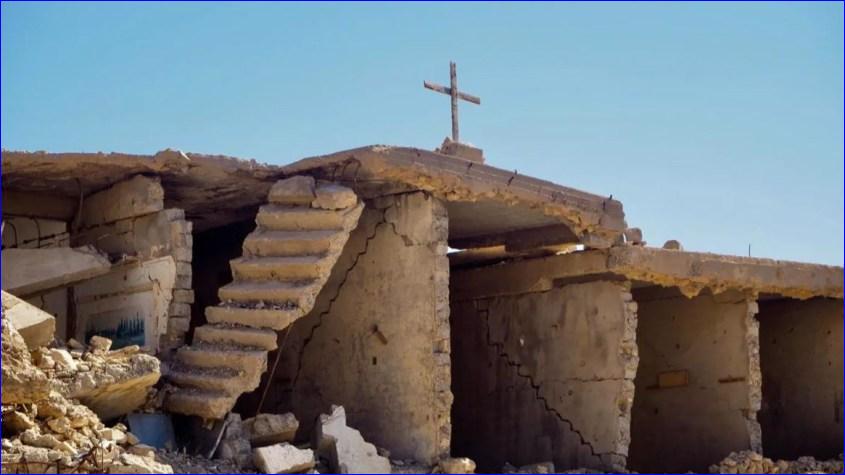
In a statement, the Foundation said that Iraq, with its long history and diverse social fabric, has over the decades witnessed genocides and serious violations targeting Yezidis, as well as Assyrians, in addition to Shias, Kurds, Faylis, Shabaks, and other communities.
The statement emphasized that the common thread linking these crimes, despite differences in time and perpetrators, is the targeting of identity and efforts to erase existence and destroy the social and cultural fabric of entire communities.
It stressed that the Yezidi tragedy is far from over, as thousands of women and children remain missing and the effects of the crimes committed against the community are still visible in displacement camps, destroyed villages, and in the lives of those carrying the burden of pain and deprivation.
The Foundation called for intensified efforts to free those still in captivity, describing this as a moral and national obligation that cannot be delayed. It also stressed that compensating victims and rebuilding devastated areas are essential steps toward achieving transitional justice and preventing the recurrence of such crimes.
In this context, the Foundation urged the Iraqi government to exert maximum effort to create the conditions necessary for the safe and sustainable return of the displaced to Shigur by ensuring security, providing basic services, clearing landmines, and reconstructing infrastructure, measures that would guarantee a dignified life and restore hope to thousands of waiting families.
Sinjar's infrastructure remains in severe disrepair, with progress on reconstruction slow and uneven. Large parts of the water, electricity, health, and education systems are still nonfunctional or only partially restored, leaving many neighborhoods without reliable power or piped water and forcing families to rely on generators and water trucks. Roads, homes, and public buildings destroyed during the war have not been rebuilt at the scale required, and understaffed clinics and damaged schools limit access to basic services. These conditions make daily life extremely difficult for those who have returned and actively deter large-scale return of the displaced.
The continued presence of Popular Mobilization Forces (PMF) has become a major obstacle to stabilization and recovery. Armed groups maintain checkpoints, control movement, and interfere in local administration, creating an atmosphere of intimidation and lawlessness. Their dominance undermines civilian governance, discourages international investment in reconstruction, and fuels fears of arbitrary detention, extortion, and land seizure. The resulting fragmented security environment has prevented the implementation of meaningful local authority and stalled efforts to normalize life in the district.
The displacement of Assyrians from Shigur has become effectively permanent for much of the community. Churches, homes, and community infrastructure were destroyed during ISIS' occupation, but unlike some other groups, most Assyrian families have not returned due to insecurity, lack of services, and fear of militia harassment and property confiscation linked to PMF-aligned actors. Assyrian IDPs relocated to the Kurdistan Region of Iraq (KRI) or emigrated abroad, accelerating the collapse of the community's historic presence in the region. Today, only a very small number of Assyrian families remain, and demographic change driven by insecurity and weak governance continues to reshape Shigur.
or register to post a comment.