


Before the start of the Syrian war in 2011, the Christian population of Dayro Zcuro (Deir ez-Zor) was estimated at around 4,000 people. The city had sheltered Assyrians and Armenians for a century. They survived the Sayfo Genocide carried out against both peoples in 1915 by the Ottoman Empire and allied Kurdish tribes. The Sayfo resulted in the killing and mass deportation of millions. Many were deported or fled their original homes in southeastern Turkey to Syria, ending up in regions such as Dayro Zcuro, where they lived and blended with the area's other communities, including Arabs and Kurds.
According to Assyrian Tomi Maroki, who is from Dayro Zcuro, Christians once lived a safe and normal life in the city, bound together by relationships of fraternity and mutual affection with other local groups. "But with the outbreak of war in 2011, these relations were shaken as tensions increased among the Arab tribes in the area, and harassment of Christians became more frequent. They were threatened with death or forced to abandon their lands and homes." Most Christians ultimately left the country, while those who remained fled to other provinces in search of safety.
Seven Assyrian families and four Armenian families fled to Hasakah, in Gozarto (Jazira) Canton of the Democratic Autonomous Administration of the Region of North and East Syria (DAARNES). The vast majority of Dayro Zcuro's Christians, however, emigrated to European countries.
"We left our homes in 2011. There were no signs of life left in the city because of the daily shelling," recounted Tony Malkoun, an Armenian native of Dayro Zcuro, to SyriacPress. "We had hope that we might return, but when ISIS emerged and besieged the area, even that glimmer of hope vanished."
The terrorist group destroyed what remained of the churches that had not already been hit by shelling by the former regime in Dayro Zcuro. The Syriac Orthodox Church had been fully bombed in 2011, while ISIS desecrated the Armenian Catholic, Armenian Orthodox, and Latin Catholic churches. They removed the crosses from their domes, scrawled offensive slogans against Christianity on the walls, demolished the Syriac al-Wahda School, and converted the hall of the Armenian Catholic Church into a courthouse run by ISIS militants.
After the group's territorial defeat in 2019, following battles with the Syrian Democratic Forces (SDF), the Armenian Catholic Archdiocese in Hasakah decided to send clergy to Dayro Zcuro to inspect the condition of the church and its associated properties. Father Housip Bedoyan, accompanied by his father Father Krikor Sanoyan and Tony Malkoun, set out for Dayro Zcuro. But before reaching the city, their vehicle was targeted in the town of Al-Shahil along the banks of the Euphrates River. The attack resulted in the martyrdom of Father Housip and his father, while Father Krikor and Tony Malkoun survived miraculously by hiding in the Euphrates waters.
According to Malkoun, the attack was likely carried out by an ISIS-affiliated militant amid the unstable security situation caused by Turkey's invasion of North and East Syria, though no party claimed responsibility at the time.
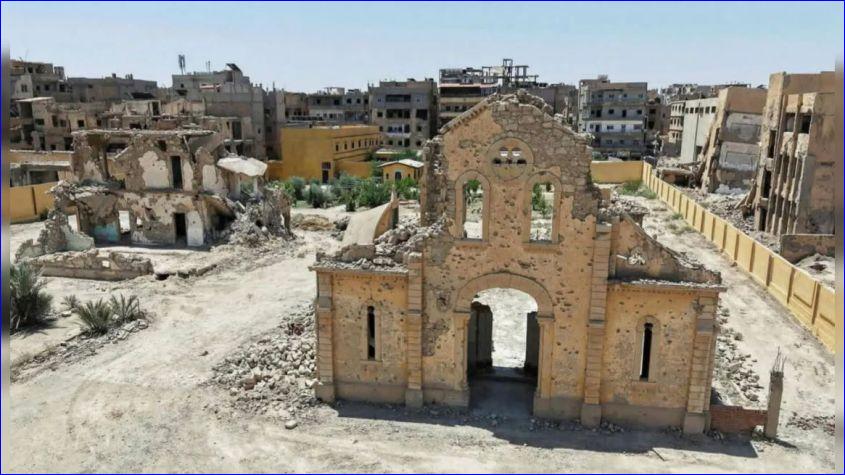
Despite the hopes of Church leaders to revive Christian life in the city, and despite their repeated calls for members of their communities to return to their homes, efforts to restore and rehabilitate the churches ultimately failed. Among the sites they attempted to revive were the historic Church of Christ the King. Built in 1930 and belonging to the Capuchin Fathers, the church is -- or was -- one of Dayro Zcuro's most prominent landmarks, alongside the Mother Teresa Home for the Elderly. Yet all attempts came to nothing. The churches remained ruins -- stones without a soul.
Today, only four Christians still live in the city, among them university professor George Constantine, who strives tirelessly to affirm that Christian presence endures in the first city along the Euphrates River to have known monasticism. However, the remaining Christians -- including Tony Malkoun -- consider the area uninhabitable, declaring that the past of their once beautiful city had gone and would never return. The empty streets of Dayro Zcuro were left missing their Christian people, and the shuttered windows of their homes signaled an absence that can never be replaced.DAYRO ZCURO, North and East Syria -- Along the banks of the Euphrates River stretches Deir ez-Zor Province, a region with an ancient history marked by the succession of Mesopotamian and Roman civilizations, and later modern Syrian cultures. Once a place rich in cultural and civilizational diversity, the city today retains only scattered remnants in its alleyways -- faint traces of what once gave life to its soil.
Before the start of the Syrian war in 2011, the Christian population of Dayro Zcuro (Deir ez-Zor) was estimated at around 4,000 people. The city had sheltered Assyrians and Armenians for a century. They survived the Sayfo Genocide carried out against both peoples in 1915 by the Ottoman Empire and allied Kurdish tribes. The Sayfo resulted in the killing and mass deportation of millions. Many were deported or fled their original homes in southeastern Turkey to Syria, ending up in regions such as Dayro Zcuro, where they lived and blended with the area's other communities, including Arabs and Kurds.
According to Assyrian Tomi Maroki, who is from Dayro Zcuro, Christians once lived a safe and normal life in the city, bound together by relationships of fraternity and mutual affection with other local groups. "But with the outbreak of war in 2011, these relations were shaken as tensions increased among the Arab tribes in the area, and harassment of Christians became more frequent. They were threatened with death or forced to abandon their lands and homes." Most Christians ultimately left the country, while those who remained fled to other provinces in search of safety.
Seven Assyrian families and four Armenian families fled to Hasakah, in Gozarto (Jazira) Canton of the Democratic Autonomous Administration of the Region of North and East Syria (DAARNES). The vast majority of Dayro Zcuro's Christians, however, emigrated to European countries.
"We left our homes in 2011. There were no signs of life left in the city because of the daily shelling," recounted Tony Malkoun, an Armenian native of Dayro Zcuro, to SyriacPress. "We had hope that we might return, but when ISIS emerged and besieged the area, even that glimmer of hope vanished."
The terrorist group destroyed what remained of the churches that had not already been hit by shelling by the former regime in Dayro Zcuro. The Syriac Orthodox Church had been fully bombed in 2011, while ISIS desecrated the Armenian Catholic, Armenian Orthodox, and Latin Catholic churches. They removed the crosses from their domes, scrawled offensive slogans against Christianity on the walls, demolished the Syriac al-Wahda School, and converted the hall of the Armenian Catholic Church into a courthouse run by ISIS militants.
After the group's territorial defeat in 2019, following battles with the Syrian Democratic Forces (SDF), the Armenian Catholic Archdiocese in Hasakah decided to send clergy to Dayro Zcuro to inspect the condition of the church and its associated properties. Father Housip Bedoyan, accompanied by his father Father Krikor Sanoyan and Tony Malkoun, set out for Dayro Zcuro. But before reaching the city, their vehicle was targeted in the town of Al-Shahil along the banks of the Euphrates River. The attack resulted in the martyrdom of Father Housip and his father, while Father Krikor and Tony Malkoun survived miraculously by hiding in the Euphrates waters.
According to Malkoun, the attack was likely carried out by an ISIS-affiliated militant amid the unstable security situation caused by Turkey's invasion of North and East Syria, though no party claimed responsibility at the time.
Despite the hopes of Church leaders to revive Christian life in the city, and despite their repeated calls for members of their communities to return to their homes, efforts to restore and rehabilitate the churches ultimately failed. Among the sites they attempted to revive were the historic Church of Christ the King. Built in 1930 and belonging to the Capuchin Fathers, the church is -- or was -- one of Dayro Zcuro's most prominent landmarks, alongside the Mother Teresa Home for the Elderly. Yet all attempts came to nothing. The churches remained ruins -- stones without a soul.
Today, only four Christians still live in the city, among them university professor George Constantine, who strives tirelessly to affirm that Christian presence endures in the first city along the Euphrates River to have known monasticism. However, the remaining Christians -- including Tony Malkoun -- consider the area uninhabitable, declaring that the past of their once beautiful city had gone and would never return. The empty streets of Dayro Zcuro were left missing their Christian people, and the shuttered windows of their homes signaled an absence that can never be replaced.
or register to post a comment.