


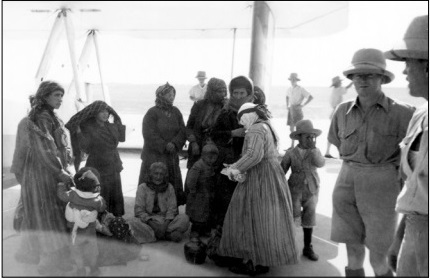
The Simmele Massacre of 1933 was not an abstract tragedy, nor a mutual conflict. It was a systematic massacre of the indigenous Assyrian people, carried out by the Iraqi army, supported by armed Kurdish tribal elements, resulting in the killing of thousands of unarmed Assyrian civilians, the destruction of dozens of villages, and the forced displacement of an entire people from their ancestral lands. This crime stands as one of the earliest documented cases of ethnic cleansing in the modern Middle East.
To commemorate such a crime without acknowledging its perpetrators, or worse, by allowing those same political structures and their heirs to control the narrative, is an insult to the dead and a betrayal of the living.
Related: The 1933 Massacre of Assyrians in Simmele, Iraq
A Pattern of Violence, Not an Isolated Event
The Simmele Massacre was not an isolated incident. In 1969, Assyrians in the village of Soria were again massacred--this time by forces linked to Kurdish militias, demonstrating a recurring pattern of violence, dispossession, and impunity. These events are connected by a single thread: the systematic targeting of Assyrians for elimination, removal, or assimilation from their homeland in northern Iraq.
Today, this pattern continues under new political branding. Under the so-called Kurdistan Regional Government (KRG), Assyrians face land confiscation, demographic change, political marginalization, and intimidation, often carried out through proxy actors and enforced silence. What has changed is not the reality on the ground, but the sophistication of denial.
Memorialization Without Accountability Is Historical Theft
A memorial that does not name the Iraqi state, the Iraqi army, and collaborating Kurdish forces as responsible for the Simmele Massacre is not a memorial, it is historical revisionism. It transforms victims into symbols while absolving perpetrators. It turns genocide into a neutral tragedy, disconnected from power, policy, and intent.
Even more disturbing is the participation of Assyrian figures who have aligned themselves with dominant political powers in exchange for recognition, protection, or personal influence. When religious or communal leaders lend legitimacy to such projects, they do not represent reconciliation, they enable erasure.
No church authority, no political appointee, and no externally manufactured "Christian representative" has the moral right to legitimize the rewriting of Assyrian history. The blood of Simmele cannot be laundered through ceremonies, stones, or speeches emptied of truth.
The Assyrian People Do Not Need Permission to Remember
The Assyrian people are not guests in their own homeland, nor are they beneficiaries of anyone's goodwill. They are an indigenous people of Mesopotamia, with an uninterrupted presence spanning millennia. Their memory, identity, and martyrs do not require validation from the very systems that sought, and continue to seek, their removal.
True commemoration requires:
- Clear acknowledgment of perpetrators
- Recognition of Assyrians as an indigenous people
- Accountability for historical and ongoing crimes
- An end to land theft and demographic engineering
- Independent Assyrian representation, free from coercion
- Anything less is not remembrance--it is complicity
Conclusion
A memorial built on denial is a second massacre--this time of memory, truth, and justice. The Assyrian people reject symbolic gestures that conceal responsibility and normalize oppression. Simmele is not a shared tragedy; it is a documented crime. And crimes cannot be commemorated by those who refuse to confront their role in committing them.
History will not be rewritten by foundation stones. It will be remembered by those who refuse to forget.
Guest Editorial Policy
or register to post a comment.