


Some of these recipes were recorded on clay tablets and later on papyrus, in forms resembling the cookbooks and recipe collections familiar today.
These ancient recipes caught the attention of Arim Hawsho, who recently presented the culmination of seven years of work on his book The Table of Gods in Stockholm. The book is being published with support from a crowdfunding campaign on Kickstarter, which initially aimed to raise $1 million (€862,670.
The campaign attracted such heavy traffic that the Kickstarter website temporarily crashed because of server overload. By 22 August 2026, contributions had surpassed $1.3 million (€1.12 million), reaching 132% of the original target. By 1 September, the campaign had raised $2.03 million (€1.75 million), or 203% of its goal. The campaign is scheduled to end on 21 September.
In The Table of Gods, Hawsho has assembled around 70 recipes dating back approximately 4,000 years to the ancient Assyrian civilization and recorded on clay tablets. The book's success and international reach point to strong interest not only in ancient Assyrian-Mesopotamian cuisine, but also in the history and cultural traditions behind it.
Hawsho began working on the book in 2019, dedicating himself to reconstructing the culinary culture of ancient Beth Nahrin. His interest was sparked by the pioneering work of French Assyriologist Jean Bottéro, which included translations of Babylonian recipes inscribed on clay tablets dating to around 1700 BC.
Turning the ancient texts into recipes that could be understood and prepared by modern readers, however, proved challenging. Hawsho spent years working at the intersection of Assyriology, archaeology, and practical culinary arts to interpret the ancient instructions and adapt them into a usable form.
His research took him to Tur Abdin, the ancient city of Ashur, and Suraya (Chaldean--Syriac--Assyrian) villages in northern Iraq, where he searched for culinary traditions that have survived into the present day.
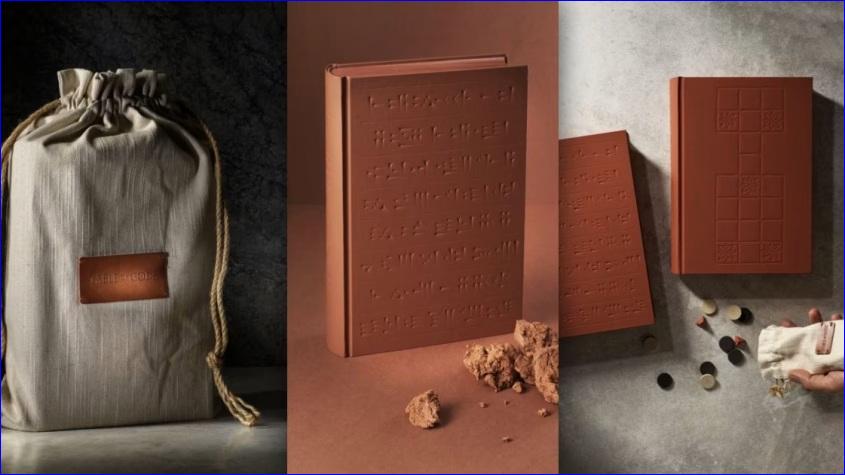
The book features vegetarian dishes as well as recipes for making beer and wine, drawing on traditions from 11 ancient cities in Beth Nahrin. It is also richly illustrated and designed to resemble a historical artifact. Its hardcover and approximately 550 pages are intended to give readers the sensation of holding a clay tablet, with raised cuneiform inscriptions featured on the cover.
The book also includes a playable version of The Royal Game of Ur, one of the world's oldest known board games. Everyone who orders the book through Kickstarter will receive the game pieces.
Before the campaign began, Hawsho had a waiting list of more than 200,000 people and more than 1.1 million followers on social media. His audience extends well beyond the Suroyo community, while the book has received praise from internationally recognized chefs, culinary historians, and archaeologists.
With its combination of ancient texts, archaeological research, and reconstructed recipes, The Table of Gods seeks to bring the culinary heritage of ancient Mesopotamia to a modern international audience.
or register to post a comment.