


Related: Assyrians: Frequently Asked Questions
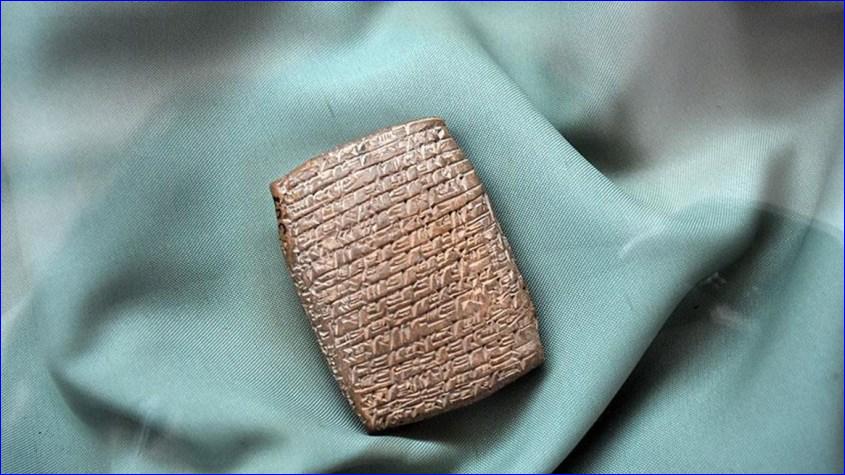
A study published in Adalya analyzed two previously unread cuneiform tablets by scholars from Ankara and Gaziantep universities in Turkey, dating between 1950 and 1750 BC. These tablets shed light on business records and personal correspondence among Assyrian merchants during the period of the Assyrian trade colonies.
References to "blood money" appear in letters, treaties, legal documents, and debt contracts under the term "damum." The process typically involved investigating a murder, issuing a judgment, and transferring compensation to the victim's family or legal representative.
Because no formal legal texts from the early Assyrian period have survived, it remains unclear whether blood money was codified into law. As a result, the primary sources of information are cuneiform tablets discovered at Kültepe -- ancient Kanesh, the most important commercial center of the Assyrian colonies -- which served populations in Anatolia and northern Syria. These texts indicate that legal cases were handled differently depending on whether the disputing parties were Assyrian or Anatolian.
Related: Brief History of Assyrians
When both parties were Assyrian, cases were typically adjudicated in Assyrian courts by local authorities. When one party was Anatolian, local Anatolian authorities participated in the proceedings and contributed to the administration of justice.
Documents referencing damum show that blood money settlements were sometimes handled solely by Assyrian authorities and, at other times, jointly with Anatolian rulers. Treaties between Assyrians and Anatolian kingdoms are among the most important sources on the subject. In these agreements, local rulers granted Assyrians the right to reside and trade within their territories and pledged compensation for losses caused by violence or looting.
The treaties also stipulated that if an Assyrian was killed within a kingdom's territory, the ruler was required to hand over the perpetrator for execution in addition to paying blood money.
For instance, a treaty between Kanesh and Assur required local authorities to pay a specified amount of compensation and surrender the killer, explicitly prohibiting substitution by another individual. Similar provisions appear in other agreements, such as the treaty between Hahhum and Assur, which also emphasized both compensation and the transfer of perpetrators.
Interestingly, some texts omit explicit mention of compensation and focus solely on surrendering the killer, suggesting variations in legal procedures. Although the principle of blood money aimed to compensate victims' families, these treaties reveal a dual approach to justice, combining financial restitution with criminal punishment. In some cases, compensation was paid while the perpetrator was also executed.
Two documents concerning the blood money of Ennamaya, son of Assur-Rabi, show that a city council resolved the case. The victim's grandson arranged for a representative to travel to Kanesh, where compensation was eventually paid to his son, Su'en-taya. Another document confirms the implementation of this ruling, noting that Su'en-taya presented the council's decision and collected the payment in the presence of witnesses.
It is likely that Ennam-Ashur, the individual involved in the agreement, was Assyrian -- possibly the perpetrator or a relative -- though the documents do not specify the amount of compensation or whether additional punishment was imposed.
Another document from the Buzutaya archive refers to blood money for the killing of the son of Assur-Nada, indicating that Bozutaia would swear he had not received the compensation and that the victim's other children would not later contest the settlement.
Some texts also detail procedural aspects of such cases. One letter requests the gathering of witness testimony regarding a child's death during a fight, in preparation for a formal claim. In another case, a merchant who had killed his servants and lost copper to theft awaited the intervention of a local ruler to secure compensation and recover the stolen goods.
While certain treaty texts outline clear obligations when Assyrians were killed by Anatolians, they do not always clarify procedures in the reverse situation. Nevertheless, some documents suggest joint involvement of Anatolian rulers and Assyrian councils, with merchants occasionally required to compensate local authorities.
Other texts indicate that local authorities could compel Assyrians to pay blood money if they killed Anatolians, reflecting a system of mutual obligations -- though these arrangements may have been disrupted during periods of unrest or rebellion.
When both parties were Assyrian, disputes were often resolved within trade centers (karum). Evidence suggests that these institutions could intervene to enforce compensation, even seizing property as leverage. One document describes a trade center confiscating textiles and tin as payment, demonstrating its executive authority.
Notably, the sources do not provide consistent information about the amount of blood money. Available evidence suggests that compensation varied depending on factors such as the victim's identity, social status, wealth, and the influence of their family or representatives.
or register to post a comment.