


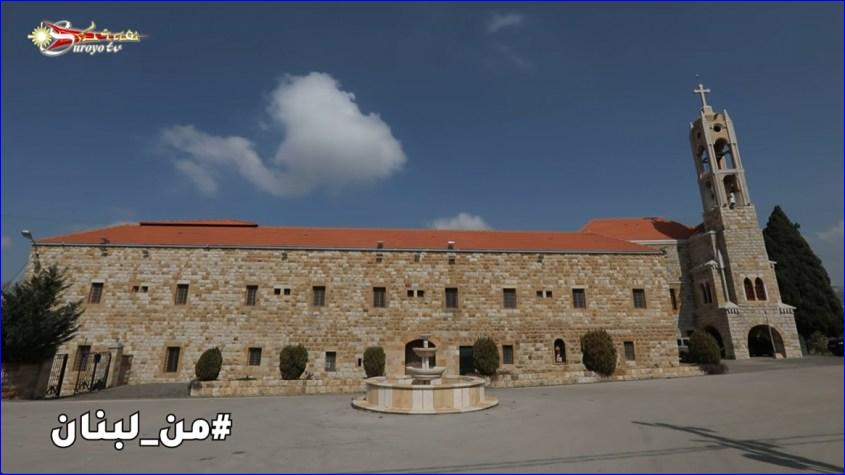
From this quiet site overlooking the surrounding villages and valleys, a message of faith and resilience has emerged, preserving the identity of the land. To learn more about the monastery's history, its secrets, and its spiritual role across generations in the Metn area, Suroyo TV Lebanon's Rania Zahra Charbel interviewed Father Salim Rais, head of the Monastery of Saints Peter and Paul, Karm El Tin.
In its early beginnings, the monastery consisted of only two small houses without a church, before monks expanded it. Bishop Mar Abdallah Qaraali mentions this event in his memoirs, explaining how the monastery later became one of the foundational monasteries of the monastic order. In 1724, it was restored to include around twenty rooms to house monks.
Bishop Mar Abdallah Qaraali wrote in his memoirs: "In 1712, we inaugurated the Monastery of Peter and Paul, which was granted to us by Bishop Habakkuk from the Habakkuk Youhanna family. At the time, it was a small farm with only two houses."
Over time, the monastery became a parish center, until the Church of the Transfiguration of the Lord was built on land donated by the Syriac Maronite Mariamite monastic order to the townspeople, and was inaugurated in 2016 in the presence of Syriac Maronite Patriarch Mar Bechara Boutros Raï.
Founder Bishop Mar Abdallah Qaraal also notes that the monastery served as a house for novices and a place of prayer and witness. Nearby, monks built a hermitage dedicated to the Virgin Mary and a church named after Saint Roch, Patron Saint of Plague Victims and Healing. A number of hermits lived in this hermitage, spreading a spirit of holiness in the region.
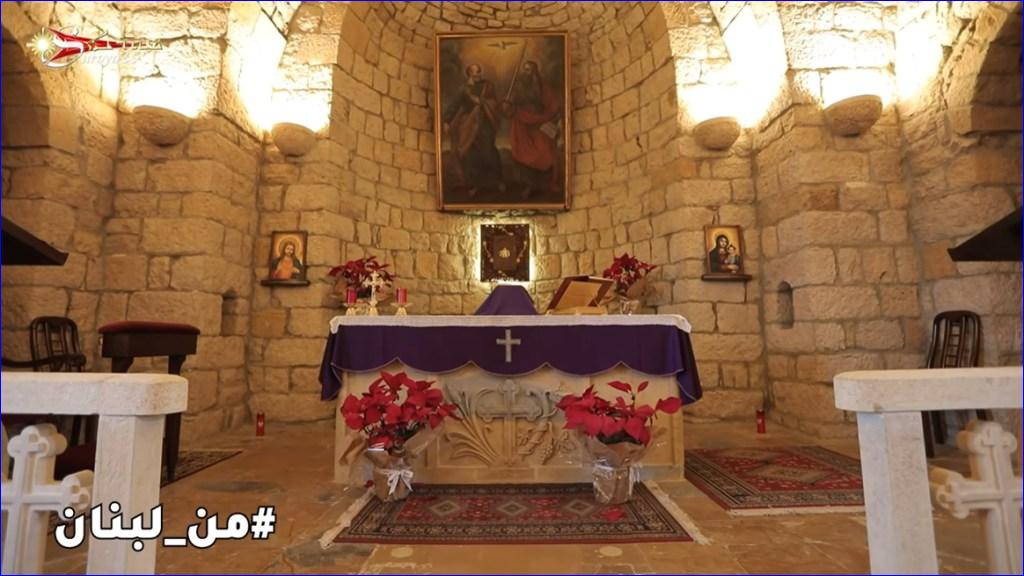
In the 1980s, the monastery was restored during the tenure of Abbot Mersal Abi Khalil. The monastery church is distinguished by its beautiful stone arch and houses an oil painting of Saints Peter and Paul that was painted in Rome. Its architecture reflects the traditional Syriac Maronite style through its arches and inner courtyard.
Today, the monastery hosts spiritual retreats for monks and novices. It oversees the nearby parish of Saints Peter and Paul as well as the Church of the Transfiguration.
As for Saints Peter and Paul, they are among the pillars of the Church. Saint Peter is considered the head of the apostles, to whom Christ entrusted the keys to the Kingdom of Heaven, saying: "Whatsoever thou shalt bind on earth shall be bound in Heaven, and whatsoever thou shalt loose on earth shall be loosed in Heaven" (Matthew 16:19). The largest cathedral in Rome was built in his name. Saint Paul, on the other hand, is the apostle of the Word and a key figure in spreading the Christian faith.
In conclusion, it is worth noting that the hermits who lived in this hermitage were attributed with many miracles, including the monastery bell ringing on its own before the death of one of them, and the miracle of blessed water that protected vineyards from locusts, an event reportedly witnessed by the Ottoman governor himself.
Like many monasteries in Lebanon, the Monastery of Saints Peter and Paul, Karm El Tin has played a fundamental role in protecting the land and preserving the identity of the villages. It also served as a center of cooperation between monks and residents in agriculture and daily life.
Despite changing circumstances, the monastery remains a witness to the memory of the place, not only as a religious landmark, but as part of the spiritual and cultural heritage.
or register to post a comment.